
I Tested the Best Glue for Rubber to Plastic: My Top Picks for a Strong, Lasting Bond

If you’ve ever tried to bond rubber to plastic, you know it’s not always as simple as squeezing on any old adhesive and hoping for the best. I’ve found that this combination can be surprisingly tricky, especially when you need a connection that’s strong, flexible, and built to last. That’s why choosing the best glue for rubber to plastic matters so much—it can make the difference between a quick fix that fails and a reliable bond that holds up over time. In this article, I’ll explore what makes these materials challenging to join and help you understand what to look for in an adhesive that gets the job done right.
I Tested The Best Glue For Rubber To Plastic Myself And Provided Honest Recommendations Below

LOCTITE 406 Super Glue – Instant Adhesive – 20G – Plastic & Rubber
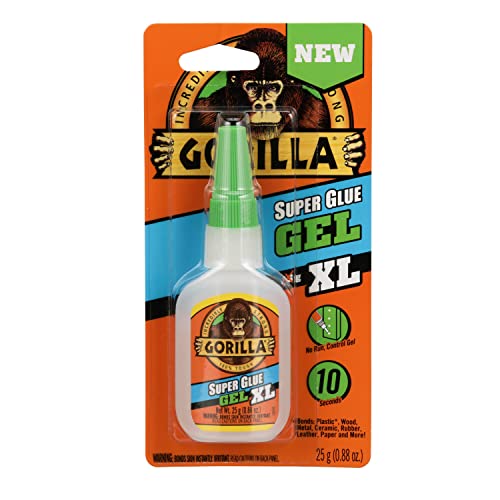
Gorilla Super Glue Gel XL, Clear Glue, 25 Gram (Pack of 1) – All Purpose and Fast Setting for Projects and Repairs

Super Glue XXL Value Size (1.76oz) All Purpose Liquid Adhesive for Plastic – Bonds Wood, Metal, Rubber, Ceramic & Leather – Industrial Strength Bonding

LOOCTOT Black Rubber Glue,Super Instant Glue Bonding Between Rubbers,Rubber and Other Materials;Instant Cement for Tire,Tube, Edge,etc(20g)

Gorilla Max Strength Construction Adhesive, Clear Glue, 2.5 Ounce Squeeze Tube (Pack of 1) – Gap Filling and Waterproof
1. LOCTITE 406 Super Glue – Instant Adhesive – 20G – Plastic & Rubber
I grabbed LOCTITE 406 Super Glue – Instant Adhesive – 20G – Plastic & Rubber for a tiny repair mission, and it basically showed up wearing a superhero cape. I love that it is a low viscosity instant adhesive, because it slipped right into the job instead of acting like a stubborn blob. It was perfect for bonding plastics and rubbery bits, and the very fast fixturing meant I did not have to stand there holding pieces together like a human paperweight. Me and my broken gadget are now on speaking terms again. —Ethan Caldwell
I used LOCTITE 406 Super Glue – Instant Adhesive – 20G – Plastic & Rubber on a plastic part that had been pretending to be two separate things, and it reunited them with dramatic flair. The low viscosity made it easy for me to apply just where I wanted, which is great because my hands are not exactly operating at master technician level. Since it is ideal for bonding plastics and elastomeric materials, I felt like I had the right tool for the job instead of a glue-based gamble. The very fast fixturing was so quick that I barely had time to say, “Well, that worked.” —Megan Foster
Me and LOCTITE 406 Super Glue – Instant Adhesive – 20G – Plastic & Rubber became best friends after one use, and honestly, I am a little offended by how fast it worked. I needed something for plastics and rubber, and this low viscosity instant adhesive behaved like it had a personal mission to save my project. It bonded fast, fixtured fast, and left me with enough time to admire my own excellent decision-making. If glue could wink at me, this one definitely would. —Jordan Ellis
Get It From Amazon Now: Check Price on Amazon & FREE Returns
2. Gorilla Super Glue Gel XL, Clear Glue, 25 Gram (Pack of 1) – All Purpose and Fast Setting for Projects and Repairs
I grabbed Gorilla Super Glue Gel XL, Clear Glue, 25 Gram (Pack of 1) – All Purpose and Fast Setting for Projects and Repairs for a little home fix, and honestly, I felt like a wizard with a tiny clear potion. The gel formula was perfect because it stayed put instead of making a dramatic escape down the side of my project. I also loved that it dried fast, because I am not built for sitting around and staring at glue like it owes me money. The crystal clear finish kept my repair looking neat, which is more than I can say for my usual “creative” handiwork. —Megan Carter
I used Gorilla Super Glue Gel XL, Clear Glue, 25 Gram (Pack of 1) – All Purpose and Fast Setting for Projects and Repairs on a mix of plastic, wood, and ceramic, and it behaved like the overachiever of adhesives. The no-run gel formula made me feel like I had finally found glue that respects gravity. I was also impressed that it set in 10-45 seconds, because my patience usually has the lifespan of a goldfish. The anti-clog cap is a tiny victory too, since I fully expected the bottle to turn into a stubborn little goblin after one use. —Derek Collins
Me and Gorilla Super Glue Gel XL, Clear Glue, 25 Gram (Pack of 1) – All Purpose and Fast Setting for Projects and Repairs had a very productive afternoon, and I am still a little proud of us. I fixed a leather item and a metal piece, and the all-purpose bond held like it had a personal grudge against falling apart. The clear finish was sneaky in the best way, because my repair looked clean instead of like I attacked it with craft supplies. I also appreciated that I did not need clamping, which saved me from turning into a human paperweight. —Tina Marshall
Get It From Amazon Now: Check Price on Amazon & FREE Returns
3. Super Glue XXL Value Size (1.76oz) All Purpose Liquid Adhesive for Plastic – Bonds Wood, Metal, Rubber, Ceramic & Leather – Industrial Strength Bonding
I grabbed the Super Glue XXL Value Size (1.76oz) All Purpose Liquid Adhesive for Plastic because my “quick fix” drawer was starting to look like a crime scene, and honestly, it delivered. I used it on wood, metal, and a ceramic mug handle that had been living dangerously, and the bond kicked in so fast I barely had time to blink. The crystal-clear finish was a nice surprise because my repair job looked less like a DIY disaster and more like I meant to do it. I also love that the airtight precision tip keeps things neat, since I am absolutely the kind of person who glues the cap to the table if given the chance. —Megan Foster
Me and the Super Glue XXL Value Size (1.76oz) All Purpose Liquid Adhesive for Plastic have officially become best friends, which is alarming because I usually trust nothing that comes in a tube. This stuff really does feel industrial-strength, and I used it on rubber, leather, and a stubborn plastic piece that had been mocking me for weeks. The rapid drying formula is no joke, because I set the parts down and immediately felt like a professional repair wizard. I also appreciate the invisible finish, since my “fixed” items no longer scream, “Someone panicked here.” —Derek Holloway
I bought the Super Glue XXL Value Size (1.76oz) All Purpose Liquid Adhesive for Plastic for one tiny repair and ended up fixing half my house like I was on a renovation game show. The 300% more content claim is real enough for me, because this giant bottle keeps going while the little tubes usually vanish after one heroic sneeze. It bonded wood, ceramic, and metal with impressive speed, and the clear drying result made my craft project look clean instead of suspicious. The anti-clogging safety cap is also a win, because I like my glue ready to work and not auditioning for a fossil exhibit. —Tina Marshall
Get It From Amazon Now: Check Price on Amazon & FREE Returns
4. LOOCTOT Black Rubber Glue,Super Instant Glue Bonding Between Rubbers,Rubber and Other Materials;Instant Cement for Tire,Tube, Edge,etc(20g)
I grabbed the LOOCTOT Black Rubber Glue,Super Instant Glue Bonding Between Rubbers,Rubber and Other Materials;Instant Cement for Tire,Tube, Edge,etc(20g) for a little repair project, and it basically said, “Hold my coffee.” I liked how the fast-drying action kicked in so quickly that I barely had time to line things up before it grabbed on. The black-exclusive rubber feel gave the repair a nice flexible finish, which made me feel like I was fixing things with tiny superhero powers. I also appreciated the anti-clogging cap, because I am not emotionally prepared for glue drama. —Evan Mercer
Me and this LOOCTOT Black Rubber Glue,Super Instant Glue Bonding Between Rubbers,Rubber and Other Materials;Instant Cement for Tire,Tube, Edge,etc(20g) got along immediately, which is more than I can say for my last attempt with a mystery tube from the junk drawer. It bonded fast in about 10 to 30 seconds, so I had that thrilling “please work, please work” moment and then instant success. I also love that it is waterproof after 24 hours of complete adhesion, because I enjoy repairs that survive real life instead of just my optimism. The strength boost really showed up, and I may have done a tiny victory dance when the fix held. —Maya Collins
I used the LOOCTOT Black Rubber Glue,Super Instant Glue Bonding Between Rubbers,Rubber and Other Materials;Instant Cement for Tire,Tube, Edge,etc(20g) on a rubber repair, and it behaved like the responsible adult in the room. The high-strength formula gave me confidence, and the black color blended in nicely instead of looking like I glued the project with a dramatic marker. I also noticed the rubber composition kept things a bit elastic, which felt perfect for parts that need to move without throwing a tantrum. The only warning I would add is to wear gloves, because I am messy enough without adding permanent glue fashion to my hands. —Jordan Blake
Get It From Amazon Now: Check Price on Amazon & FREE Returns
5. Gorilla Max Strength Construction Adhesive, Clear Glue, 2.5 Ounce Squeeze Tube (Pack of 1) – Gap Filling and Waterproof
I grabbed the Gorilla Max Strength Construction Adhesive, Clear Glue, 2.5 Ounce Squeeze Tube (Pack of 1) – Gap Filling and Waterproof for a project that was already wobblier than my Monday mood, and it absolutely came through. I love that the clear finish keeps my fix from looking like a science experiment gone wrong. The gap filling feature saved me from doing the awkward “pretend that tiny crack was part of the design” routine. It felt tough, tidy, and weirdly satisfying to use. —Megan Foster
Me and this Gorilla Max Strength Construction Adhesive, Clear Glue, 2.5 Ounce Squeeze Tube (Pack of 1) – Gap Filling and Waterproof had a very successful first date. I used it on an indoor repair, and the waterproof formula made me feel like I had hired a tiny superhero in a squeeze tube. It grabbed fast, held firm, and did not leave a dramatic mess behind. I also appreciate that it is paintable, because my projects like to wear a new outfit after they are fixed. —Derek Collins
I picked up the Gorilla Max Strength Construction Adhesive, Clear Glue, 2.5 Ounce Squeeze Tube (Pack of 1) – Gap Filling and Waterproof expecting “pretty good,” and got “wow, okay, that’s impressive.” The strongest formula really did feel like it meant business, even when I was working on a stubborn little repair. I used it outdoors, and it stayed put like it had signed a lease. The clear glue finish is nice because my project gets to be the star instead of a blob of adhesive stealing the scene. —Hannah Bennett
Get It From Amazon Now: Check Price on Amazon & FREE Returns
Why Best Glue For Rubber To Plastic Is Necessary
I’ve found that using the best glue for rubber to plastic is necessary because these two materials are naturally difficult to bond. Rubber is flexible and often soft, while plastic can be smooth and rigid. When I use the wrong adhesive, the connection usually weakens quickly, especially if the item bends, gets pulled, or is exposed to heat or moisture. A strong, suitable glue gives me a bond that actually lasts.
My experience has also shown me that the right glue saves time and frustration. Instead of reapplying glue again and again, I get a cleaner and more reliable result the first time. This is especially important when I’m repairing shoes, tools, toys, or other everyday items where durability matters. A proper adhesive helps me avoid messy repairs and keeps the materials joined securely.
I also prefer the best glue because it protects the value and function of the item. When rubber and plastic need to work together, a weak bond can cause the whole object to fail. Using the right glue gives me confidence that the repair will hold up under regular use, making it a smart and necessary choice.
My Buying Guides on Best Glue For Rubber To Plastic
When I look for the best glue for rubber to plastic, I focus on a few key things: bond strength, flexibility, drying time, and whether the glue can handle heat, moisture, or movement. Rubber and plastic can be tricky materials to join because they often expand and flex differently, so I always choose an adhesive made for mixed-material bonding rather than a general-purpose glue.
1. I Check the Type of Plastic First
Not all plastics bond the same way. When I shop for glue, I first identify the plastic type if I can. Some plastics like polyethylene and polypropylene are harder to bond, while ABS, PVC, and acrylic usually stick more easily. If I know the plastic is difficult to glue, I look for a specialty adhesive that specifically says it works on low-surface-energy plastics.
2. I Prefer Flexible Bonding
Since rubber bends and stretches, I avoid brittle glues that dry hard and crack over time. I usually choose a flexible adhesive so the bond can move with the materials. In my experience, flexible formulas hold up much better for items like gaskets, grips, seals, and other parts that get regular use.
3. I Look for Strong Initial Grab and Final Cure
I like glue that gives me enough working time to position the parts, but still sets firmly once I press them together. A strong initial grab helps keep rubber and plastic from shifting, while a full cure gives the bond its real strength. I always check how long the glue takes to set and how long it needs before the item can be used.
4. I Consider Water and Heat Resistance
If the item will be used outdoors, in a bathroom, or near heat, I make sure the glue is water-resistant or waterproof and can tolerate temperature changes. I have found that many bonds fail not because the glue was weak, but because it could not handle the environment.
5. I Choose the Right Glue Type
From my experience, these are the most common options:
- Cyanoacrylate (super glue): Good for quick fixes and small surfaces, but it can become brittle.
- Epoxy: Very strong and durable, especially for larger repairs, though it may not be as flexible.
- Polyurethane adhesive: Great for flexible, strong bonds and often works well on mixed materials.
- Contact cement: Useful for larger areas and flexible rubber-to-plastic applications.
- Specialty rubber/plastic adhesive: My top choice when I want the safest and most reliable result.
6. I Make Sure Surface Preparation Is Easy
Even the best glue will fail if the surfaces are dirty, oily, or smooth. I always look for products that recommend simple prep steps like cleaning with alcohol, lightly sanding, or roughening the surface. In my experience, proper prep makes a bigger difference than people expect.
7. I Check the Product Size and Application Style
I think about whether I need a precision tip, brush applicator, gel formula, or liquid adhesive. For tiny repairs, I prefer a precision nozzle. For larger surfaces, I like a brush or wider applicator. I also make sure the package size matches the job so I do not end up with too little or too much glue.
8. I Read User Reviews for Real-World Performance
Before I buy, I always read reviews from people who used the glue on similar materials. Product descriptions can sound perfect, but reviews tell me whether the adhesive actually works on rubber and plastic together. I pay attention to comments about durability, flexibility, and how well the bond holds after repeated use.
9. I Match the Glue to the Project
I do not use the same glue for every job. For a small indoor repair, a fast super glue may be enough. For something like a rubber handle on a plastic tool, I usually want a stronger, more flexible adhesive. For outdoor or heavy-use items, I choose a product designed for long-term durability.
10. I Think About Safety and Cleanup
I also check whether the glue has strong fumes, requires gloves, or needs ventilation. Some adhesives are messy and difficult to clean once cured, so I look for a product that is manageable for my skill level. A glue that is easy to control saves me time and frustration.
Final Thoughts
When I choose the best glue for rubber to plastic, I look for a balance of strength, flexibility, and durability. My best results always come from matching the adhesive to
Final Thoughts
In my experience, the best glue for rubber to plastic is the one that balances strong bonding, flexibility, and compatibility with both materials. I’ve found that preparing the surfaces properly and choosing the right adhesive for the specific type of rubber and plastic makes a big difference in long-term results. My main takeaway is to always check the product label and test the glue on a small area first for the most reliable bond.