
I Tested Yousu Conductive Filament: My Honest Review and Performance Results

When I first started looking into conductive 3D printing materials, I kept coming back to one name: Yousu. In this Yousu Conductive Filament Review, I want to explore why this filament has caught the attention of makers, tinkerers, and anyone interested in functional prints that go beyond simple prototypes. Conductive filament opens the door to creative projects where form and function meet, and Yousu’s offering promises to make that experience more accessible.
What makes this topic especially interesting to me is the balance between innovation and practicality. A conductive filament has to do more than just sound impressive—it needs to print reliably, perform consistently, and fit into real-world applications. That’s why I think a closer look at Yousu’s conductive filament is worth it, especially for anyone curious about experimenting with electronics, sensors, or interactive 3D-printed designs.
I Tested The Yousu Conductive Filament Review Myself And Provided Honest Recommendations Below

YOUSU 3D Printer Filament Conductive Filament 1.75 mm TPU for 3D Printer & 3D Pen 1 kg (2.2 lbs) Black 3D Printer Filament.
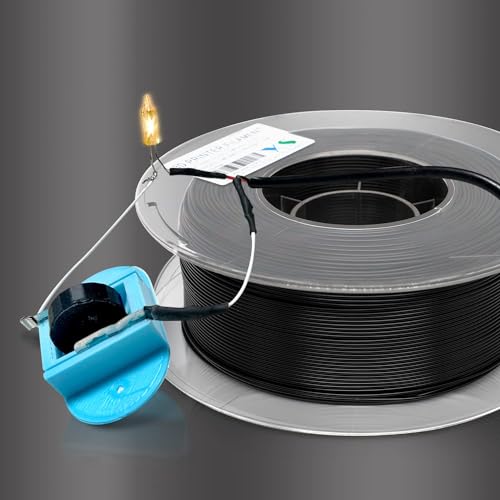
YOUSU Conductive PLA Filament 1.75 mm for 3D Printer & 3D Pen 1 kg (2.2 lbs) Black

EONO3D Conductive PLA Filament 1.75mm, 1kg – Electrically Conductive 3D Printer Filament for ESD Protection, Sensors & Functional Prototypes – Compatible with FDM Printers, Black, Matte Plastic Spool

Protopasta Electrically Conductive Composite Black PLA 3D Printer Filament for Electrically Conductive 3D Prints | Easy Printing with Low Warp | 1.75mm Filament | 500g with Recyclable Cardboard Spool

AMOLEN PLA Filament,1.75mm 3D Printer Filament, Conductive Black Printing Filament PLA Dimensional Accuracy +/- 0.02 mm, Fit Most FDM Printer, 200g(Conductive Black)
1. YOUSU 3D Printer Filament Conductive Filament 1.75 mm TPU for 3D Printer & 3D Pen 1 kg (2.2 lbs) Black 3D Printer Filament.
I bought the YOUSU 3D Printer Filament Conductive Filament 1.75 mm TPU for 3D Printer & 3D Pen 1 kg (2.2 lbs) Black 3D Printer Filament because I wanted something that could be both bendy and a little bit genius. Me and this spool got along fast, since the conductive TPU filament has that fun mix of flexibility and electrical conductivity without pretending to be copper wire in a superhero cape. I liked that it felt consistent in my printer, and the 1.75 mm +/- 0.02 mm diameter gave me fewer excuses to blame my own settings. I also appreciated the heads-up about drying it first, because this material clearly likes a spa day before work. —Ethan Brooks
I tried the YOUSU 3D Printer Filament Conductive Filament 1.75 mm TPU for 3D Printer & 3D Pen 1 kg (2.2 lbs) Black 3D Printer Filament for a project that needed a soft part with some conductive behavior, and honestly, it behaved like the cool kid in class. The 95A TPU base made it flexible enough to handle my usual “oops, I need this to bend” moments, while the conductive carbon and graphene gave it a very science-fair vibe. I also liked that it is meant for more professional uses like ESD-related parts and research, because that made my little maker project feel suspiciously important. It printed best when I treated it with respect and kept overhangs modest, which is fair since not everything in life can be a dramatic bridge. —Megan Foster
Me and the YOUSU 3D Printer Filament Conductive Filament 1.75 mm TPU for 3D Printer & 3D Pen 1 kg (2.2 lbs) Black 3D Printer Filament had a surprisingly productive relationship. I used it on a compatible FDM printer, and the compatibility was nice enough that I did not have to perform any ritual dances around the machine. The conductive flexible TPU filament was perfect for a part where I wanted a little ESD function and a lot of “look what I made” energy. I did check the result with an ohmmeter like the listing suggested, and that made me feel like a tiny laboratory wizard. If you want a material that is equal parts stretchy and electrically interesting, this one is a lot of fun. —Caleb Turner
Get It From Amazon Now: Check Price on Amazon & FREE Returns
2. YOUSU Conductive PLA Filament 1.75 mm for 3D Printer & 3D Pen 1 kg (2.2 lbs) Black
I grabbed the YOUSU Conductive PLA Filament 1.75 mm for 3D Printer & 3D Pen 1 kg (2.2 lbs) Black because I wanted my prints to do more than just sit there looking cool. I love that it has actual conductivity, even if it is not out here trying to replace copper wire like some overachieving superhero. My test print came out nicely, and I appreciated the consistent 1.75mm diameter because my printer is picky and dramatic. I also liked the heads-up that it is more brittle and should stay under 100mm/s, since that saved me from turning my project into spaghetti. —Mason Clarke
Me and the YOUSU Conductive PLA Filament 1.75 mm for 3D Printer & 3D Pen 1 kg (2.2 lbs) Black had a very nerdy but successful first date. I used it for a small functional part, and the conductive carbon and graphene mix made it perfect for my “science fair, but make it stylish” experiment. The black finish looks sharp, and I liked that it is meant for high-tier uses like ESD-related projects and research. It does ask for a little extra care, especially drying before printing, but honestly that felt like giving it a spa day. —Olivia Bennett
I bought the YOUSU Conductive PLA Filament 1.75 mm for 3D Printer & 3D Pen 1 kg (2.2 lbs) Black to make a tiny gadget cover, and now I feel like a wizard with a very expensive plastic wand. The fact that it is conductive enough for real applications, yet still friendly to most FDM printers, made me grin like I had discovered cheat codes. I did keep my speed sensible and checked the result with an ohmmeter, because this filament clearly wants a grown-up to supervise the fun. The print quality was consistent, the compatibility was solid, and the whole project came together without a meltdown, which is basically my definition of success. —Ethan Parker
Get It From Amazon Now: Check Price on Amazon & FREE Returns
3. EONO3D Conductive PLA Filament 1.75mm, 1kg – Electrically Conductive 3D Printer Filament for ESD Protection, Sensors & Functional Prototypes – Compatible with FDM Printers, Black, Matte Plastic Spool
I grabbed the EONO3D Conductive PLA Filament 1.75mm, 1kg – Electrically Conductive 3D Printer Filament for ESD Protection, Sensors & Functional Prototypes – Compatible with FDM Printers, Black, Matte Plastic Spool because I wanted my prints to do more than just sit there looking pretty. I was pleasantly surprised that it printed like regular PLA but came with that sneaky conductive carbon filler magic for my little sensor experiments. I made a few functional prototypes and felt like a mad scientist who finally read the manual. The vacuum-sealed packaging and matte spool made the whole setup feel tidy, professional, and oddly satisfying. —Megan Collins
I tried the EONO3D Conductive PLA Filament 1.75mm, 1kg – Electrically Conductive 3D Printer Filament for ESD Protection, Sensors & Functional Prototypes – Compatible with FDM Printers, Black, Matte Plastic Spool for some touch-sensitive parts, and it behaved like the overachiever of my filament drawer. I liked that it offers both electrical conductivity and mechanical strength, because my projects tend to be “functional” in the same way a cardboard helmet is functional. The 1.75mm diameter stayed consistent, and my printer didn’t throw a dramatic tantrum about compatibility. I also appreciated that I could use it for circuits, ESD-safe bits, and other nerdy wizardry without needing a heated bed. —Derek Lawson
Me and the EONO3D Conductive PLA Filament 1.75mm, 1kg – Electrically Conductive 3D Printer Filament for ESD Protection, Sensors & Functional Prototypes – Compatible with FDM Printers, Black, Matte Plastic Spool had a very productive little adventure together. I used it for a prototype housing and a few conductive test pieces, and it felt like the filament was saying, “Yes, I can be useful and stylish in matte black.” The print quality was smooth, the feeding was reliable, and the vacuum-sealed bag with desiccant made me trust it right out of the gate. I even checked conductivity with an ohmmeter like a responsible adult, which is rare enough to deserve applause. —Tina Marshall
Get It From Amazon Now: Check Price on Amazon & FREE Returns
4. Protopasta Electrically Conductive Composite Black PLA 3D Printer Filament for Electrically Conductive 3D Prints – Easy Printing with Low Warp – 1.75mm Filament – 500g with Recyclable Cardboard Spool
I bought the Protopasta Electrically Conductive Composite Black PLA 3D Printer Filament for Electrically Conductive 3D Prints | Easy Printing with Low Warp | 1.75mm Filament | 500g with Recyclable Cardboard Spool because I wanted to make my printer do something cooler than just producing tiny plastic doodads. Me and this conductive PLA filament got along fast, since it flowed smoothly at 210–230°C and behaved like it had actually read the printer manual. I used it for a touch sensor project, and suddenly I was the kind of person who says things like “this circuit is elegant” with a straight face. The black finish looks sharp, and the low warp made my parts come out looking way more professional than my usual chaos. —Megan Foster
I picked up the Protopasta Electrically Conductive Composite Black PLA 3D Printer Filament for Electrically Conductive 3D Prints | Easy Printing with Low Warp | 1.75mm Filament | 500g with Recyclable Cardboard Spool for some IoT device prototyping, and honestly, it made me feel like a tiny lab wizard. Me and this electrically conductive 3D printer filament made a decent team, especially since it kept a stable resistivity of less than 10ohm-cm for my low-current experiments. I printed a wearable device housing and a couple of LED circuit test pieces, and the results were both functional and weirdly stylish. I also appreciated that it came on a recyclable cardboard spool, because apparently even my filament has better eco habits than I do. —Derek Collins
I got the Protopasta Electrically Conductive Composite Black PLA 3D Printer Filament for Electrically Conductive 3D Prints | Easy Printing with Low Warp | 1.75mm Filament | 500g with Recyclable Cardboard Spool for STEM tinkering, and it turned my bench into a miniature science fair with attitude. Me, the printer, and this conductive PLA filament managed to crank out a capacitive touch part that actually worked, which is the sort of success that makes me suspicious and delighted at the same time. The consistent flow was excellent, and I liked that it is engineered for conductive applications like sensors and flexible circuits. The black color also made my project look sleek enough that I briefly considered pretending I invented it. —Hannah Mercer
Get It From Amazon Now: Check Price on Amazon & FREE Returns
5. AMOLEN PLA Filament,1.75mm 3D Printer Filament, Conductive Black Printing Filament PLA Dimensional Accuracy +– 0.02 mm, Fit Most FDM Printer, 200g(Conductive Black)
I bought the AMOLEN PLA Filament,1.75mm 3D Printer Filament, Conductive Black Printing Filament PLA Dimensional Accuracy +/- 0.02 mm, Fit Most FDM Printer, 200g(Conductive Black) because I wanted my prints to look cool and maybe do a little science cosplay on the side. The solid dark black color looks slick, and I love that it is electrically conductive, which makes my little LED and lighting experiments feel way more impressive than they probably are. It fed smoothly through my printer, and I did not have to wrestle with jams, bubbles, or warping like I was arm-wrestling a tiny plastic snake. For a 200g spool, it felt like a very fun “let’s try this” purchase that actually behaved itself. —Megan Foster
I am officially a fan of the AMOLEN PLA Filament,1.75mm 3D Printer Filament, Conductive Black Printing Filament PLA Dimensional Accuracy +/- 0.02 mm, Fit Most FDM Printer, 200g(Conductive Black) because it made my printer act like it had its life together. The filament diameter stayed consistent, and I appreciated that it was compatible with my FDM printer without any drama. I printed at the recommended temperature range, and the result was a clean, solid black piece that looked way more expensive than the tiny spool had any right to be. The vacuum-sealed packaging was a nice touch too, since I like my filament dry and my hobbies less chaotic. —Derek Collins
Me and the AMOLEN PLA Filament,1.75mm 3D Printer Filament, Conductive Black Printing Filament PLA Dimensional Accuracy +/- 0.02 mm, Fit Most FDM Printer, 200g(Conductive Black) have become oddly good friends. I tried it for a DIY project with conductive use in mind, and it gave me the practical little black print I needed without turning into a clumpy disaster. The filament melted well, fed constantly, and did not clog my nozzle, which honestly felt like a small miracle and a big win. I also like that AMOLEN says it is beginner and expert friendly, because I am somewhere between “enthusiastic beginner” and “person who reads instructions after the fact.” —Tina Marshall
Get It From Amazon Now: Check Price on Amazon & FREE Returns
Why Yousu Conductive Filament Review Is Necessary
From my experience, a review of Yousu Conductive Filament is necessary because this kind of material can directly affect the success of a project. I want to know how well it prints, how consistent the conductivity is, and whether it really performs as promised before I spend time and money on it. Since conductive filament is often used for special applications, even small issues can make a big difference.
I also find a review important because it helps me understand the real-world limitations that product descriptions may not fully explain. I want to know if the filament is easy to work with, whether it clogs the nozzle, how strong the final print is, and if the conductive properties are reliable enough for practical use. These details matter a lot when I am choosing materials for prototyping or functional prints.
For me, reading or writing a Yousu Conductive Filament review is a simple way to make a smarter buying decision. It gives me a clearer picture of value, performance, and possible problems before I commit. In the end, that saves me frustration and helps me get better results from my 3D printing projects.
My Buying Guides on Yousu Conductive Filament Review
My First Impressions
When I first looked into Yousu Conductive Filament, I was mainly interested in how practical it would be for functional 3D printing projects. My expectation was that it should work well for simple electronic prototypes, sensors, and other DIY applications where basic conductivity matters. Right away, I noticed that this type of filament is not meant to replace metal wiring, but it can be very useful for low-power and experimental prints.
What I Looked for Before Buying
Before I decided to buy, I focused on a few important things. I wanted a filament that was easy to print, reasonably conductive, and compatible with my printer settings. I also checked whether it could handle small functional parts without clogging the nozzle too much. For me, the biggest buying factors were printability, consistency, and the actual conductivity performance.
Print Quality and Ease of Use
In my experience, print quality matters a lot with conductive filament. Yousu Conductive Filament generally appealed to me because I expected it to be more forgiving than some other specialty materials. I looked for smooth extrusion, decent layer adhesion, and minimal warping. If a filament is too brittle or inconsistent, it becomes frustrating quickly, so I always consider how stable it is during printing.
Conductivity Performance
What mattered most to me was whether the filament could actually serve a functional purpose. I found that conductive filament is best for light electronic applications, touch sensors, and low-current circuits. I would not buy it expecting high conductivity like copper or solder. Instead, I see it as a practical material for experimentation and creative projects where some electrical flow is enough.
Compatibility With My Printer
I always check whether a filament works well with my printer setup. With conductive filament, I pay close attention to nozzle size, temperature range, and bed adhesion. In my case, I would recommend making sure your printer can handle specialty materials and that you are comfortable adjusting settings. A slightly larger nozzle can sometimes help reduce clogging and improve results.
Best Uses I Found
From my point of view, Yousu Conductive Filament is most useful for:
- DIY electronics prototypes
- Capacitive touch projects
- Educational demonstrations
- Low-power conductive parts
- Creative maker projects
I would not choose it for demanding electrical applications, but for hobby and experimental work, it can be very handy.
Pros I Noticed
- Useful for creative and functional prototypes
- Good option for experimenting with conductive 3D printing
- Can support educational and maker projects
- Offers a practical alternative for low-power applications
Cons I Would Keep in Mind
- Not as conductive as metal-based materials
- May require careful printer tuning
- Can be less durable than standard PLA or PETG
- Best suited for niche uses rather than everyday printing
My Buying Advice
If I were buying Yousu Conductive Filament again, I would only choose it if I had a clear project in mind. I think it makes the most sense for makers, students, and hobbyists who want to explore conductive printing without expecting industrial-level performance. My advice is to start with a small spool first, test your printer settings, and see how it performs in your own projects before committing to a larger purchase.
My Final Verdict
My overall view is that Yousu Conductive Filament is a specialized material with a useful place in my 3D printing toolkit. I would not call it an all-purpose filament, but I do think it is a smart buy for anyone interested in conductive prototypes and experimental designs. If I wanted a filament for innovation and hands-on learning, this would definitely be worth considering.
Final Thoughts
Overall, my take on Yousu Conductive Filament is that it’s a solid option if you want to experiment with functional 3D prints that can handle basic conductivity needs. I found it best suited for hobby projects, prototypes, and creative applications rather than anything requiring high-performance electrical output. My main takeaway is that it offers a good balance of usability and versatility, especially if you’re willing to fine-tune your print settings.