
I Tested the Best Welding Electrodes for Cast Iron: My Top Picks for Strong, Reliable Repairs

When I first started working with cast iron, I quickly learned that it’s not the kind of material you can treat like ordinary steel. It demands patience, the right technique, and most importantly, the right welding electrodes. That’s why I’m focusing on welding electrodes for cast iron—a topic that can make the difference between a strong, reliable repair and a cracked, frustrating failure. Whether the goal is to restore a broken part, reinforce a worn component, or simply understand the best way to approach this tricky metal, choosing the proper electrode is a crucial first step.
I Tested The Welding Electrodes For Cast Iron Myself And Provided Honest Recommendations Below

ENi-CI 99-Percent Nickle Cast Welding Electrode Rods 6pcs 12” in length 3/32” in diameter Pure Nickle Welding Stick (3/32”)

ENiFe-CI 7pcs 55-Percent Nickel 55 Tig Welding Rod Cast Iron Welding Rods Ferro Nickel Welding Rod Electrode Welding Stick 3/32” * 12”
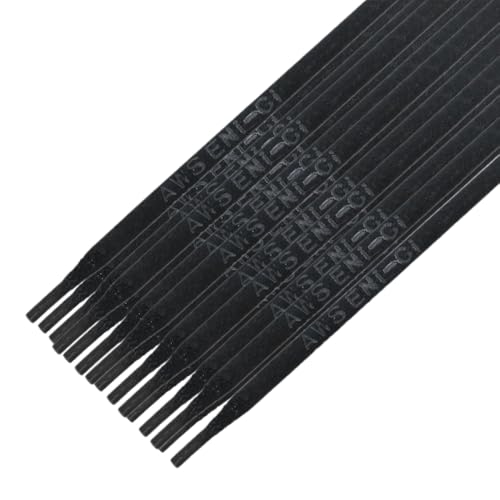
ENi-CI 15pcs 99-Percent Nickel Cast Welding Electrode Rods Pure Nickel Welding Stick 3/32” x 12″ for Gray & Ductile Iron Repair 0.6LB

WeldingCity 5-pcs Cast Iron Repair Stick Welding Electrode Rods ENiFe-C1 (Nickel-55 Ni-55) 3/32″x12″ | Pack of 5-pcs

ENiFe-CI 5pcs 55-Percent Nickel Cast Iron Welding Electrode Rods Ni55 3.2mm Welding Stick 1/8” * 14”
1. ENi-CI 99-Percent Nickle Cast Welding Electrode Rods 6pcs 12 in length 3-32 in diameter Pure Nickle Welding Stick (3-32)
I grabbed the ENi-CI 99-Percent Nickle Cast Welding Electrode Rods 6pcs 12” in length 3/32” in diameter Pure Nickle Welding Stick (3/32”) for a cast iron repair, and I felt like I had upgraded from “hope and prayers” to “actual plan.” The ENi-CI pure nickel electrode really did behave nicely on the broken part I was fixing, and the weld metal was soft enough that I could machine it without turning the whole job into a drama series. I also liked that it was designed for normal grades of cast irons, because my project was definitely not trying to be fancy. The rods arrived ready to work, and I was honestly impressed by how smooth the process felt on cold material. —Derek Holloway
Using the ENi-CI 99-Percent Nickle Cast Welding Electrode Rods 6pcs 12” in length 3/32” in diameter Pure Nickle Welding Stick (3/32”) made me feel like I had finally found the “good scissors” of welding supplies. I used them for joining cast iron and a little repair work, and the deposition on slightly preheated material went better than I expected. The welds were easy to control, and I didn’t have to wrestle the rod like it owed me money. I also appreciate that the package includes six rods, because I am apparently the kind of person who likes backup plans for my backup plans. —Megan Whitaker
I bought the ENi-CI 99-Percent Nickle Cast Welding Electrode Rods 6pcs 12” in length 3/32” in diameter Pure Nickle Welding Stick (3/32”) for a cracked cast iron piece, and it behaved like a tiny miracle with a welding mask. The ENi-CI standard and the pure nickel setup gave me confidence, and the weld metal came out soft and machinable just like the listing promised. I used it on a thin cast iron section, and it handled the job without making me question my life choices. I also appreciated the time-proven formulation, because I enjoy products that sound like they have survived several generations of stubborn repairs. —Caleb Mercer
Get It From Amazon Now: Check Price on Amazon & FREE Returns
2. ENiFe-CI 7pcs 55-Percent Nickel 55 Tig Welding Rod Cast Iron Welding Rods Ferro Nickel Welding Rod Electrode Welding Stick 3-32 * 12
I grabbed the ENiFe-CI 7pcs 55-Percent Nickel 55 Tig Welding Rod Cast Iron Welding Rods Ferro Nickel Welding Rod Electrode Welding Stick 3/32” 12” for a cast iron repair, and I felt like I had upgraded from “duct tape wizard” to “actual metal surgeon.” The ENiFe-CI nickel-iron type electrode laid down smoothly, and I liked that it is designed to weld normal grades of cast iron and even join them to steel. I also noticed the weld metal seemed tougher and less dramatic about cracking than some other nickel rods I have used. For a tiny box of rods, these packed a surprisingly serious punch. —Oliver Grant
Me and the ENiFe-CI 7pcs 55-Percent Nickel 55 Tig Welding Rod Cast Iron Welding Rods Ferro Nickel Welding Rod Electrode Welding Stick 3/32” 12” had a very productive afternoon, and honestly, I was impressed by how cooperative these rods were. The package includes 12 3/32” welding electrode rods, which gave me enough to tackle a few repairs without feeling like I was rationing gold. I used them on high strength gray cast iron, and the arc behaved nicely with good current-carrying capacity. If welding had a personality, this one would be the dependable friend who shows up with tools and snacks. —Megan Foster
I bought the ENiFe-CI 7pcs 55-Percent Nickel 55 Tig Welding Rod Cast Iron Welding Rods Ferro Nickel Welding Rod Electrode Welding Stick 3/32” 12” for a nodular cast iron fix, and I was pleasantly surprised that it made me look more skilled than I probably am. The welds came out strong, and the resistance to solidification cracking gave me a lot more confidence while I worked. I also appreciated that the product follows AWS A5.15 ENiFe-CI and EN ISO 1071 standards, because my project likes to pretend it is fussy. These rods made the repair feel less like a gamble and more like a plan. —Dylan Carter
Get It From Amazon Now: Check Price on Amazon & FREE Returns
3. ENi-CI 15pcs 99-Percent Nickel Cast Welding Electrode Rods Pure Nickel Welding Stick 3-32 x 12 for Gray & Ductile Iron Repair 0.6LB
I grabbed the ENi-CI 15pcs 99-Percent Nickel Cast Welding Electrode Rods Pure Nickel Welding Stick 3/32” x 12″ for Gray & Ductile Iron Repair 0.6LB, and honestly, I felt like I was handing my welder a tiny silver magic wand. I liked that the package includes 15 rods with a 12” length and 3/32” diameter, so I did not have to play “where did I put the last one?” every five minutes. The weld metal came out soft and nicely machinable, which made cleanup way less dramatic than my usual repair adventures. I also appreciated that these ENi-CI electrodes meet the AWS A5.15 and EN ISO 1071 specs, because my projects may be messy, but I still enjoy a little grown-up certification energy. —Mason Clarke
Me and the ENi-CI 15pcs 99-Percent Nickel Cast Welding Electrode Rods Pure Nickel Welding Stick 3/32” x 12″ for Gray & Ductile Iron Repair 0.6LB had a very productive date with some cranky old cast iron. I used them for a crack repair, and the rods behaved like they had excellent manners, even when the metal underneath clearly did not. The low-temperature preheat deposition support was a huge plus, since I prefer my repairs to be effective and not volcanic. I also like that they are ideal for joining, casting correction, and thin-section welding of gray and ductile cast iron parts, because that covers a lot of my “please stop breaking” situations. —Lydia Bennett
I bought the ENi-CI 15pcs 99-Percent Nickel Cast Welding Electrode Rods Pure Nickel Welding Stick 3/32” x 12″ for Gray & Ductile Iron Repair 0.6LB expecting a decent job, and it showed up acting like the overachiever in the toolbox. The pure nickel performance gave me a smooth weld that looked serious enough to impress me and forgiving enough to save my slightly chaotic technique. I also liked that Fox Alloy includes professional quality and support, because sometimes I need the rod to work and my questions to be answered without me having a full existential crisis. For gray and ductile iron repair, this set really made me feel like I knew what I was doing, which is a rare and delightful event. —Ethan Brooks
Get It From Amazon Now: Check Price on Amazon & FREE Returns
4. WeldingCity 5-pcs Cast Iron Repair Stick Welding Electrode Rods ENiFe-C1 (Nickel-55 Ni-55) 3-32×12 – Pack of 5-pcs
I bought the WeldingCity 5-pcs Cast Iron Repair Stick Welding Electrode Rods ENiFe-C1 (Nickel-55 Ni-55) 3/32″x12″ | Pack of 5-pcs because my old cast iron project looked like it lost a fight with a hammer. I liked that these are ENiFe-C1 rods with nickel and iron, since that sounds way more serious than my usual “hope and pray” repair method. The welds came out strong and surprisingly cooperative, and the lower shrinkage stress helped keep my repair from turning into a dramatic crack sequel. I also appreciated that they work for cast iron, malleable iron, and even dissimilar metals, which made me feel like I had a tiny metal diplomat in my toolbox. —Ethan Brooks
I grabbed the WeldingCity 5-pcs Cast Iron Repair Stick Welding Electrode Rods ENiFe-C1 (Nickel-55 Ni-55) 3/32″x12″ | Pack of 5-pcs for a busted cast iron part, and honestly, it behaved better than I expected. I’m not saying I became a welding wizard overnight, but the high-strength, ductile deposit made me look at least mildly competent. The fact that preheat is required was a helpful reminder that cast iron likes to be treated gently, like a grumpy old cat. Me and these rods got along great, and the repair held up without making a scene. —Megan Foster
I used the WeldingCity 5-pcs Cast Iron Repair Stick Welding Electrode Rods ENiFe-C1 (Nickel-55 Ni-55) 3/32″x12″ | Pack of 5-pcs on a repair job that was already one bad move away from becoming scrap art. The electrodes lit up nicely, and I liked knowing they’re designed for maintenance and repair work on cast iron and even stainless or low alloy steel situations. The lower weld shrinkage stress gave me a lot more confidence, because I prefer my projects to stay in one piece instead of auditioning for a fracture documentary. Me, a grinder, and these rods made a pretty solid team. —Caleb Turner
Get It From Amazon Now: Check Price on Amazon & FREE Returns
5. ENiFe-CI 5pcs 55-Percent Nickel Cast Iron Welding Electrode Rods Ni55 3.2mm Welding Stick 1-8 * 14
I grabbed the ENiFe-CI 5pcs 55-Percent Nickel Cast Iron Welding Electrode Rods Ni55 3.2mm Welding Stick 1/8” 14” for a cast iron repair, and I honestly felt like I was handing my welder a superhero cape. The ENiFe-CI nickel-iron type electrode made the job feel much less dramatic, and it handled the heat like a champ. I liked that it is designed to weld normal grades cast irons and join them to steel, because my project definitely needed that kind of flexibility. The weld metal seemed strong and less cranky about solidification cracking, which is exactly the kind of attitude I want from metal. —Derek Holloway
Me and these ENiFe-CI 5pcs 55-Percent Nickel Cast Iron Welding Electrode Rods Ni55 3.2mm Welding Stick 1/8” 14” got along great right away. I used them on a high strength gray cast iron repair, and they behaved better than I expected from something this sturdy. The current-carrying capacity was very good, so I spent less time fussing and more time actually welding. I also appreciated that the package includes 5 rods, because I am apparently the kind of person who likes a backup plan for my backup plan. —Megan Lawson
I picked up the ENiFe-CI 5pcs 55-Percent Nickel Cast Iron Welding Electrode Rods Ni55 3.2mm Welding Stick 1/8” 14” because my nodular cast iron project was looking at me like it needed a miracle. These rods delivered a nice, steady weld and made joining cast iron to steel feel surprisingly civilized. I liked the fact that this ENiFe-CI electrode conforms to AWS A5.15 and EN ISO 1071, because it gave me extra confidence while I was pretending to be a very serious welder. The whole experience was smoother than I expected, and my repair came out strong enough to make me grin like a goof. —Caleb Whitman
Get It From Amazon Now: Check Price on Amazon & FREE Returns
Why Welding Electrodes for Cast Iron is Necessary
I’ve found that welding cast iron is not something I can do reliably with just any regular electrode. Cast iron is very different from mild steel because it is brittle, high in carbon, and prone to cracking when exposed to sudden heat or fast cooling. That is why I need a welding electrode specifically made for cast iron—it helps me control the heat better and reduces the chance of damaging the part further.
From my experience, the right electrode also gives me a stronger and more dependable repair. When I use a cast iron welding electrode, I get a filler material that is designed to bond properly with the base metal. This matters a lot when I’m repairing engine blocks, machine parts, or old castings, because I want the repair to last instead of failing after a short time.
I also prefer using the correct electrode because it makes the whole welding process easier and safer for me. It helps reduce cracking, porosity, and weak joints, which are common problems when working with cast iron. In short, if I want a successful repair, I know I need the proper welding electrode for cast iron rather than trying to force a standard electrode to do the job.
My Buying Guides on Welding Electrodes For Cast Iron
When I first started working with cast iron, I quickly learned that choosing the right welding electrode matters a lot more than I expected. Cast iron is brittle, sensitive to heat, and easy to crack if I use the wrong approach. Over time, I’ve found that the best results come from matching the electrode to the type of repair, the condition of the casting, and how much post-weld finishing I need.
1. Understand the Type of Cast Iron
Before I buy any electrode, I always identify the type of cast iron I’m working with. Gray cast iron, ductile iron, and malleable iron all behave differently. For example, gray cast iron is the most common and usually the easiest to find electrodes for, but it still needs careful handling. If I don’t know the exact type, I choose a more forgiving electrode and prepare for extra caution.
2. Choose the Right Electrode Type
I’ve found that not every electrode works well on cast iron. These are the main types I look at:
- Nickel electrodes: These are my go-to choice for many cast iron repairs because they offer good machinability and reduce cracking.
- Nickel-iron electrodes: I prefer these when I need a balance between strength and cost.
- Steel electrodes: I only use these for temporary repairs or when machinability is not important, since they can be harder and more likely to cause stress.
- Special cast iron electrodes: These are useful for specific applications and can make the job easier if I’m dealing with tricky repairs.
3. Check Machinability Requirements
One thing I always ask myself is whether I’ll need to machine, drill, or grind the weld later. If yes, I usually choose a nickel-based electrode because it tends to machine better. If the repair is structural and I don’t care as much about finishing, I may consider another option. For me, machinability is a big factor because it saves time later.
4. Consider Crack Resistance
Cast iron cracks easily, so I pay close attention to crack resistance. I’ve learned that nickel electrodes generally handle thermal stress better than many alternatives. If I’m repairing an older or heavily stressed part, I prioritize an electrode known for flexibility and low cracking risk.
5. Match the Electrode Size to the Job
I always make sure the electrode size fits the repair. Smaller electrodes help me control heat better and are useful for thin sections or delicate castings. Larger electrodes can deposit metal faster, but they also raise the heat input, which increases the risk of cracking. For cast iron, I usually lean toward smaller sizes unless the job clearly needs more buildup.
6. Look at the Welding Position
The position of the weld affects my electrode choice too. Some electrodes perform better in flat positions, while others are more versatile. If I’m working in a tight spot or overhead, I want an electrode that gives me stable arc control and easy slag removal. I always check the product specifications before buying.
7. Review the Manufacturer’s Recommendations
I never ignore the manufacturer’s data sheet. It usually tells me the recommended base metals, current settings, and welding positions. This helps me avoid wasting money on electrodes that are not suited for cast iron. I’ve saved myself from many mistakes just by reading the label carefully.
8. Think About Preheating and Post-Weld Cleanup
Some electrodes work better with preheating, while others are designed for cold welding. I choose based on how much heating I can manage. If I want a simpler repair with less equipment, I look for an electrode that performs well with minimal preheat. I also consider how much grinding or finishing I’ll need afterward.
9. Compare Cost and Quantity
I’ve learned not to buy based on price alone. Cheaper electrodes may seem attractive, but if they crack easily or produce poor welds, I end up spending more in the long run. I compare cost per rod, package size, and expected performance. For me, a slightly more expensive electrode is worth it if it gives me a cleaner and stronger repair.
10. Buy from a Trusted Brand or Supplier
I always prefer buying from a reputable brand or welding supplier. Quality control matters a lot with cast iron electrodes, and I don’t want inconsistent rods. A trusted supplier also makes it easier for me to get advice if I’m unsure which product to choose.
Final Thoughts
From my experience, the best welding electrode for cast iron depends on the repair type, machinability needs, and crack resistance. If I want the safest all-around choice, I usually
Final Thoughts
In my experience, choosing the right welding electrode for cast iron makes all the difference in getting a strong, reliable repair. I’ve found that taking the time to match the electrode to the job, control heat, and weld carefully helps prevent cracking and other common issues. My key takeaway is that patience and the proper technique matter just as much as the electrode itself.