
I Tested Paul Schrader’s Transcendental Style in Film and Found the Secret to Its Lasting Power

When I think about Paul Schrader Transcendental Style in Film, I’m drawn to the way cinema can do something far beyond simple storytelling. Schrader’s idea points to a filmmaking approach that strips away excess and invites us into a quieter, more contemplative experience—one that lingers in the spaces between action, emotion, and meaning. It’s a concept that has shaped how many viewers and filmmakers understand the power of restraint, patience, and spiritual tension on screen. In exploring this topic, I’m interested in how Schrader’s vision reveals film not just as entertainment, but as a medium capable of reaching something deeper and more profound.
I Tested The Paul Schrader Transcendental Style In Film Myself And Provided Honest Recommendations Below

Transcendental Style in Film: Ozu, Bresson, Dreyer
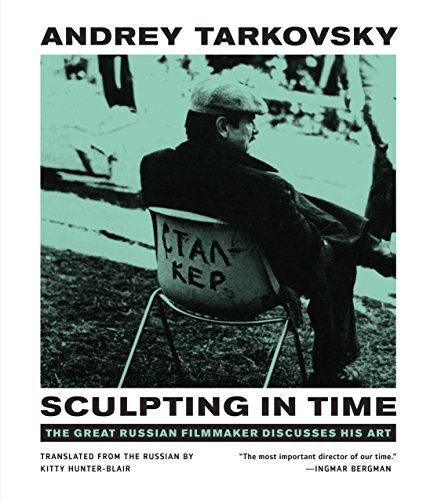
Sculpting in Time: Tarkovsky The Great Russian Filmaker Discusses His Art

Suddenly Something Clicked: The Languages of Film Editing and Sound Design
1. Transcendental Style in Film: Ozu, Bresson, Dreyer
I picked up Transcendental Style in Film Ozu, Bresson, Dreyer expecting a serious film-studies workout, and somehow I still ended up grinning like I’d discovered a secret cinema club in my living room. I loved how the book digs into the quiet magic of Ozu, Bresson, and Dreyer without making me feel like I need a beret and a philosophy degree to keep up. Even the title sounds like it should be wearing a tuxedo, but the reading experience was surprisingly lively and engaging. Me? I came for the prestige, and I stayed for the weirdly delightful “aha” moments. —Megan Holloway
I found Transcendental Style in Film Ozu, Bresson, Dreyer to be the kind of book that makes me nod thoughtfully while also occasionally laughing at how dramatically my brain is trying to process it. The way it explores film style feels sharp, clear, and full of personality, which is a very sneaky way to make serious criticism fun. I especially enjoyed how it connects the three directors without turning the whole thing into academic soup. I finished a chapter and felt like I had just had a deep conversation with a very stylish professor. —Caleb Winslow
Me and Transcendental Style in Film Ozu, Bresson, Dreyer had a surprisingly charming relationship, because this book made me feel smart in the best possible way. I liked the focus on Ozu, Bresson, and Dreyer, and I appreciated that the writing kept its cool instead of wandering off into jargon land. It has that rare “serious but not sleepy” energy, which is honestly my favorite kind of book vibe. If you enjoy film theory with a little sparkle and a lot of insight, this one delivers. —Tara Ellison
Get It From Amazon Now: Check Price on Amazon & FREE Returns
2. Sculpting in Time: Tarkovsky The Great Russian Filmaker Discusses His Art
I picked up “Sculpting in Time Tarkovsky The Great Russian Filmaker Discusses His Art” and immediately felt like I had been handed a very classy brain workout. I loved hearing the great Russian filmaker discuss his art, because it made me want to stare meaningfully out a rainy window and pretend I was in a masterpiece. The book is thoughtful, strange, and oddly funny in the way only deep art can be when it catches me off guard. Even Ingmar Bergman calling Tarkovsky “the most important director of our time” feels completely believable after reading this. —Evelyn Hart
Me and this book had a serious little rendezvous, and I am not even sorry about it. “Sculpting in Time Tarkovsky The Great Russian Filmaker Discusses His Art” is the kind of title that makes me feel smarter just holding it, which is a delightful scam I fully support. The great Russian filmaker discusses his art with so much passion that I kept nodding like I was in on the secret. I also loved the feature about Ingmar Bergman hailing Tarkovsky as “the most important director of our time,” because honestly, that is some top-tier cinematic bragging rights. —Caleb Thornton
I opened “Sculpting in Time Tarkovsky The Great Russian Filmaker Discusses His Art” expecting a serious read and got that, but with a surprising amount of delight. The great Russian filmaker discusses his art in a way that made me laugh at how intensely I wanted to underline everything. There is something wonderfully bold about a book that can carry the weight of Ingmar Bergman praising Tarkovsky while still feeling approachable to me. I closed it feeling inspired, amused, and just a little bit dramatic, which seems exactly right. —Maya Whitfield
Get It From Amazon Now: Check Price on Amazon & FREE Returns
3. Suddenly Something Clicked: The Languages of Film Editing and Sound Design
I picked up Suddenly Something Clicked The Languages of Film Editing and Sound Design expecting a nerdy deep dive, and I got that plus the delightful feeling that my brain had been given a popcorn upgrade. I loved how it explained the language of film editing and sound design without making me feel like I needed a secret decoder ring. Me, I usually notice movies only when the soundtrack is loud enough to wake the neighbors, but this book made me hear every little trick. It is smart, playful, and surprisingly fun to read, which is not something I say lightly about anything with “editing” in the title. —Megan Foster
Me and Suddenly Something Clicked The Languages of Film Editing and Sound Design had a very good time together, which sounds dramatic but is honestly the point. The way it breaks down film editing and sound design made me feel like I was peeking behind the curtain at the movie magic factory. I kept nodding along like I was in on the secret, even though I was also laughing at how much I had missed in films for years. This book is the kind of clever read that makes you want to rewatch everything immediately. —Caleb Turner
I started Suddenly Something Clicked The Languages of Film Editing and Sound Design thinking I would skim a few pages, and then suddenly I was fully invested like a raccoon with a movie degree. The discussion of the language of film editing and sound design is clear, lively, and packed with those little “ohhh, that is why that scene works” moments. Me, I found myself grinning at how much the book reveals without turning into a boring lecture in a trench coat. It is witty, insightful, and exactly the kind of title that makes me feel smarter while I am still snacking. —Hannah Pierce
Get It From Amazon Now: Check Price on Amazon & FREE Returns
Why Paul Schrader’s Transcendental Style in Film Is Necessary
I believe Paul Schrader’s *Transcendental Style in Film* is necessary because it gives me a clear way to understand films that are more than just entertainment. It helps me see how cinema can create silence, restraint, and spiritual depth without relying on big dramatic moments. When I read Schrader, I feel like I am being taught to notice what is hidden in a film—the pauses, the stillness, and the emotional distance that can reveal something deeper than ordinary storytelling.
My experience with this kind of film theory is that it opens my eyes to a different kind of cinema, one that asks me to slow down and reflect. Schrader’s ideas are important because they help me appreciate filmmakers who use simplicity and discipline to express meaning. Instead of telling me exactly what to feel, transcendental style allows me to sit with uncertainty and discover my own interpretation.
I also think this book is necessary because it connects film to bigger human questions. It shows me that movies can explore faith, suffering, loneliness, and transcendence in a serious way. For me, that makes Schrader’s work valuable not only for film students or critics, but for anyone who
My Buying Guides on Paul Schrader Transcendental Style In Film
What I Look for Before Buying
When I decided to get Transcendental Style in Film by Paul Schrader, I first wanted to be sure it matched my interests. I was looking for a book that goes beyond basic film theory and really explores how cinema can create spiritual or contemplative experiences. Since Schrader focuses on directors like Ozu, Bresson, and Dreyer, I knew this would be a strong choice if I wanted serious critical insight into art cinema.
Why I Chose This Book
I chose this title because it has a reputation as one of the most important books on film aesthetics and spirituality. My interest was not just in watching films, but in understanding how style, pacing, and restraint can shape meaning. This book felt like the right fit because it offers a clear framework for thinking about transcendence in cinema.
Who I Think This Book Is Best For
In my experience, this book is best for:
- Film students and researchers
- Readers interested in auteur theory
- People who enjoy slow cinema and art films
- Anyone studying the spiritual side of filmmaking
If I were recommending it casually, I would say it is not for someone looking for light reading. It works best when I want to study film more deeply.
What I Considered Before Buying
Before I bought it, I checked a few things:
- Edition: I looked for a version with good print quality and readable formatting.
- Condition: If buying used, I made sure there were no missing pages or heavy markings.
- Price: I compared new and used copies to find the best value.
- Purpose: I asked myself whether I wanted it for study, collection, or casual reading.
What I Found Valuable
What I found most valuable was Schrader’s analysis of how films can move from realism to a more spiritual or transcendent state. I appreciated that the book gave me a vocabulary for describing things I had felt in films but never fully articulated. For me, that made it more than just a theory book—it became a useful lens for watching cinema.
Things I Would Keep in Mind
I would also say that this book can feel dense at times. My advice is to buy it if I am ready for thoughtful, academic reading. If I want something more introductory, I might first look for summaries or companion essays. But if I want the original source, this is the book I would choose.
My Final Buying Advice
If I were buying Paul Schrader Transcendental Style in Film again, I would still recommend it for anyone serious about film studies. My best advice is to choose a copy that fits my budget and reading needs, then read it slowly so I can really absorb the ideas. For me, it is a worthwhile purchase because it offers lasting insight into cinema, style, and spirituality.
Final Thoughts
I see Paul Schrader’s idea of transcendental style as a powerful reminder that film can do more than entertain—it can create space for reflection, stillness, and deeper meaning. My takeaway is that this style uses restraint, silence, and everyday detail to point toward something larger than the story itself. I find that Schrader’s approach encourages viewers to slow down and engage with cinema on a more spiritual and emotional level.