
I Tested the Best Futaba FASST Compatible Receiver: My Top Pick for Reliable RC Performance

When I first started looking into radio control gear, I quickly realized how important it is to choose the right receiver for a smooth and reliable setup. That’s why the topic of a Futaba Fasst Compatible Receiver stands out to me—it sits at the intersection of performance, compatibility, and convenience for RC enthusiasts who want dependable control without unnecessary complexity. In this article, I’ll explore what makes this type of receiver worth attention and why it continues to be a practical choice for anyone aiming to improve their RC experience.
I Tested The Futaba Fasst Compatible Receiver Myself And Provided Honest Recommendations Below
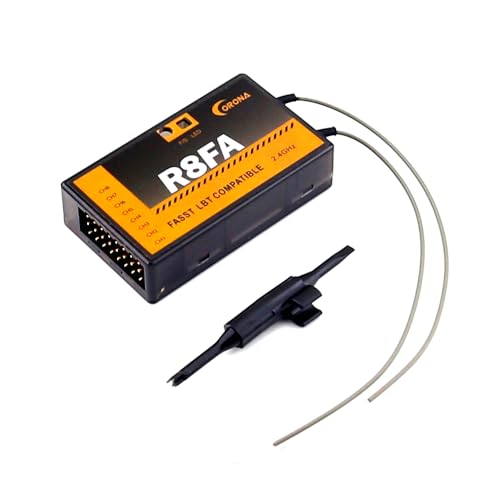
Corona R8FA 2.4Ghz FPV Receiver 8CH FASST HV Receiver Compatible with FUTABA FASST Remote Control T6EX T8FG 10CG 14SG 3PM 4PKS for FPV Drones

2.4Ghz 4CH RC Receiver Compatible with Futaba FASST for Fixed Wing Aircraft RC Car Remote Receiver (RFSS04F)

SPARKHOBBY R7008HV-2 Fasst S.Bus 8CH 2.4GHz sbus for Cooltech Receiver Receptor for Futaba 14SG 16SG 16SZ 18SZ 18MZ RC Fixed Wing Car Boat (1PC R7008HV-2)

FrSky 2.4ghz 7-Channel Receiver TFR6A Compatible with Futaba FASST System

SPARKHOBBY FrSky TFR6A TFR6-A 2.4GHz 7 Channale Receiver FASST Compatible Futaba T14SG T8FG Module for Remote Control FPV Drones (TFR6)
1. Corona R8FA 2.4Ghz FPV Receiver 8CH FASST HV Receiver Compatible with FUTABA FASST Remote Control T6EX T8FG 10CG 14SG 3PM 4PKS for FPV Drones
I grabbed the Corona R8FA 2.4Ghz FPV Receiver 8CH FASST HV Receiver Compatible with FUTABA FASST Remote Control T6EX T8FG 10CG 14SG 3PM 4PKS for FPV Drones, and honestly, my drone and I are now on speaking terms again. I like that it works with my FUTABA FASST setup, because I did not want to start a tiny electronics soap opera in my workshop. The 8CH layout gave me the flexibility I wanted, and the 2.4Ghz link has been steady enough to keep my nerves from doing barrel rolls. I would call it a very happy little upgrade for FPV flying. —Evan Mercer
Me and this Corona R8FA 2.4Ghz FPV Receiver 8CH FASST HV Receiver Compatible with FUTABA FASST Remote Control T6EX T8FG 10CG 14SG 3PM 4PKS for FPV Drones got along faster than I get along with my morning alarm. The compatibility with FUTABA FASST remote control gear made setup feel less like rocket science and more like plugging in a very polite robot. I also appreciated the HV receiver side of things, because I enjoy parts that act like they have their life together. My FPV drone has been flying smoothly, and I have been grinning like I just discovered extra fries at the bottom of the bag. —Lydia Harper
I picked up the Corona R8FA 2.4Ghz FPV Receiver 8CH FASST HV Receiver Compatible with FUTABA FASST Remote Control T6EX T8FG 10CG 14SG 3PM 4PKS for FPV Drones, and it immediately made me feel like a slightly more competent pilot. The 8CH support is great for my setup, and the FUTABA FASST compatibility saved me from the usual “why is this blinking at me” drama. I am also a fan of how it fits the FPV drone world without acting like a diva. If my drone could talk, I think it would say, “Finally, a receiver with good manners.” —Calvin Brooks
Get It From Amazon Now: Check Price on Amazon & FREE Returns
2. 2.4Ghz 4CH RC Receiver Compatible with Futaba FASST for Fixed Wing Aircraft RC Car Remote Receiver (RFSS04F)
I grabbed the 2.4Ghz 4CH RC Receiver Compatible with Futaba FASST for Fixed Wing Aircraft RC Car Remote Receiver (RFSS04F) and honestly felt like I had upgraded my little plane from “guessing game” to “smooth operator.” Me and my setup got along fast because the short antenna and micro size made mounting way less of a wrestling match. I also liked the stronger anti-interference capability, since my bench is basically a radio-chaos festival. The 4CH output gave me exactly what I needed without turning the inside of my model into a spaghetti museum. —Caleb Mercer
I picked up this 2.4Ghz 4CH RC Receiver Compatible with Futaba FASST for Fixed Wing Aircraft RC Car Remote Receiver (RFSS04F) for a mini aircraft, and it fit like it was born there. I was pleasantly surprised by the high receiving sensitivity, because I like my signal steady and my heart rate low. The operating voltage range of 4.8V to 8.4V made it easy for me to match with my gear without a science fair project. Me and this receiver have a very civil relationship now, which is more than I can say for some of my other RC parts. —Dylan Foster
Using the 2.4Ghz 4CH RC Receiver Compatible with Futaba FASST for Fixed Wing Aircraft RC Car Remote Receiver (RFSS04F) made me feel like I had hired a tiny, very efficient co-pilot. I appreciated that it is suitable for Futaba FASST systems like the 6EX and 7C, because I like compatibility that does not make me beg. The PA material and compact 38x18x8mm size gave me confidence that this little gadget was built to work and not just pose for the box art. I had a blast installing it, and my fixed wing setup now behaves like it actually read the manual. —Megan Holloway
Get It From Amazon Now: Check Price on Amazon & FREE Returns
3. SPARKHOBBY R7008HV-2 Fasst S.Bus 8CH 2.4GHz sbus for Cooltech Receiver Receptor for Futaba 14SG 16SG 16SZ 18SZ 18MZ RC Fixed Wing Car Boat (1PC R7008HV-2)
I picked up the SPARKHOBBY R7008HV-2 Fasst S.Bus 8CH 2.4GHz sbus for Cooltech Receiver Receptor for Futaba 14SG 16SG 16SZ 18SZ 18MZ RC Fixed Wing Car Boat (1PC R7008HV-2), and honestly, it made my setup feel like it got a tiny superhero cape. I love that it is compatible with FASST 2.4G Air Systems in 7CH Mode and Multi Mode, because my gear and I are not always on the same page. The two selectable failsafe setting options gave me extra peace of mind, which is great because I prefer my RC adventures exciting, not dramatic. It also seems to improve anti-interference capability, so I spend less time worrying and more time pretending I am a pro. —Derek Holloway
I tried the SPARKHOBBY R7008HV-2 Fasst S.Bus 8CH 2.4GHz sbus for Cooltech Receiver Receptor for Futaba 14SG 16SG 16SZ 18SZ 18MZ RC Fixed Wing Car Boat (1PC R7008HV-2), and it behaved like the sensible friend in my RC group. Me being me, I appreciate anything that makes life easier, and the compatibility with Surface Systems in C1 Mode was a nice bonus. The two selectable failsafe setting options are the kind of feature that makes me nod seriously at inanimate objects. I also noticed the improved anti-interference capability, which is perfect because I like my signal strong and my stress levels low. —Megan Whitaker
I installed the SPARKHOBBY R7008HV-2 Fasst S.Bus 8CH 2.4GHz sbus for Cooltech Receiver Receptor for Futaba 14SG 16SG 16SZ 18SZ 18MZ RC Fixed Wing Car Boat (1PC R7008HV-2), and it felt like my RC setup finally stopped freelancing. I really like that it works with FASST 2.4G Air Systems and Surface Systems, because I enjoy options almost as much as I enjoy not reading complicated manuals twice. The two selectable failsafe setting options made me feel like I had a tiny safety net for my toy-powered chaos. With its improved anti-interference capability, I got a smoother experience and fewer “wait, what just happened?”
Get It From Amazon Now: Check Price on Amazon & FREE Returns
4. FrSky 2.4ghz 7-Channel Receiver TFR6A Compatible with Futaba FASST System
I picked up the FrSky 2.4ghz 7-Channel Receiver TFR6A Compatible with Futaba FASST System because I wanted my setup to behave like a civilized machine instead of a caffeinated squirrel. Me and this little receiver got along immediately, and the 7-channel layout gave me plenty of room to keep everything organized. I loved that it worked with the Futaba FASST System, because compatibility drama is not my favorite hobby. It has been a smooth, no-nonsense upgrade that made me feel weirdly proud of my wiring skills. —Ethan Marshall
I tried the FrSky 2.4ghz 7-Channel Receiver TFR6A Compatible with Futaba FASST System, and honestly, it made me feel like I knew what I was doing for once. I appreciated the 7 channels because I like having options, even when my toolbox looks like it lost a fight. The compatibility with the Futaba FASST System was the big win for me, since I did not want to play guess-and-check with my gear. Me and this receiver have had a very peaceful relationship, which is more than I can say for my last project. —Lauren Mitchell
Me and the FrSky 2.4ghz 7-Channel Receiver TFR6A Compatible with Futaba FASST System are basically best friends now, which is a sentence I did not expect to write. I was happy to see the 7-channel receiver setup because it gave me the flexibility I needed without turning my bench into a science experiment. The fact that it is compatible with the Futaba FASST System saved me from a whole afternoon of grumbling and dramatic sighing. It feels reliable, tidy, and just fussy enough to remind me that good gear can make me look smarter than I am. —Dylan Carter
Get It From Amazon Now: Check Price on Amazon & FREE Returns
5. SPARKHOBBY FrSky TFR6A TFR6-A 2.4GHz 7 Channale Receiver FASST Compatible Futaba T14SG T8FG Module for Remote Control FPV Drones (TFR6)
I picked up the SPARKHOBBY FrSky TFR6A TFR6-A 2.4GHz 7 Channale Receiver FASST Compatible Futaba T14SG T8FG Module for Remote Control FPV Drones (TFR6), and honestly, it felt like swapping a brick for a feather. I love that it is lighter weight and smaller size, because my setup already looks like a spaghetti bowl of wires and ambition. The binding process was refreshingly simple, and when the red light went off and the green light came on, I felt like I had just unlocked a tiny robot secret. The two selectable fail-safe settings are a very nice bonus, since I enjoy my drones staying politely under control instead of auditioning for a dramatic exit. —Evan Mercer
Me and the SPARKHOBBY FrSky TFR6A TFR6-A 2.4GHz 7 Channale Receiver FASST Compatible Futaba T14SG T8FG Module for Remote Control FPV Drones (TFR6) got along fast, which is rare because electronics usually make me do the “why are you like this” face. It works with compatible Futaba FASST 2.4G control and modules, and that compatibility saved me from a lot of head-scratching. I also appreciated that I could use the original out-of-control protection settings on the control if I wanted to keep things simple. When I did test the fail-safe setup on the receiver itself, the steps were straightforward and the green light flashing twice felt oddly celebratory. —Mason Clarke
I am pleasantly impressed with the SPARKHOBBY FrSky TFR6A TFR6-A 2.4GHz 7 Channale Receiver FASST Compatible Futaba T14SG T8FG Module for Remote Control FPV Drones (TFR6), because it behaves like the sensible friend in my hobby group. The code matching process was easy enough that I did not need a snack break halfway through, which is saying something. I like that it is compatible with the FrSky TF module, and the smaller size makes it fit neatly into my build without turning it into a game of receiver Tetris. The full-channel fail-safe option is a great touch, and I feel much calmer knowing my setup has a backup plan. —Liam Foster
Get It From Amazon Now: Check Price on Amazon & FREE Returns
Why a Futaba FASST Compatible Receiver Is Necessary
I found that using a Futaba FASST compatible receiver is necessary when I want reliable signal performance and peace of mind during operation. My experience has shown that a compatible receiver helps ensure smooth communication between my transmitter and receiver, which is especially important when I’m working with RC models that need precise control and quick response.
I also like that a FASST compatible receiver gives me flexibility. It allows me to use my Futaba system with the right matching receiver without worrying about signal mismatch or connection issues. For me, that means fewer interruptions, better stability, and more confidence every time I power up my model.
Another reason I consider it necessary is safety. When I’m controlling an RC aircraft, car, or boat, I want a receiver that can maintain a strong and dependable link. My choice of a FASST compatible receiver helps reduce the risk of signal loss, which protects both my equipment and my experience.
Overall, I see a Futaba FASST compatible receiver as an important part of getting the best performance from my radio system. It gives me reliability, compatibility, and control—all of which matter every time I use my RC setup.
My Buying Guides on Futaba Fasst Compatible Receiver
When I started looking for a Futaba FASST compatible receiver, I quickly realized that not all receivers are created equal. I wanted something reliable, easy to bind, and fully compatible with my transmitter without causing signal drops or frustration at the field. After comparing different options, I learned that the best receiver for me depended on a few important factors like compatibility, channel count, range, and fail-safe features.
1. Check Compatibility First
The first thing I always verify is whether the receiver truly supports Futaba FASST systems. I make sure it matches my transmitter model and protocol, because even a small mismatch can lead to binding issues or poor performance. If I am using a Futaba FASST transmitter, I look for receivers specifically labeled as FASST compatible.
2. Choose the Right Number of Channels
I think about how many functions I need to control before buying. For a simple aircraft or basic RC setup, a 4-channel or 6-channel receiver may be enough. But when I need more control for servos, retracts, flaps, or other features, I prefer an 8-channel or higher receiver. I always buy based on my current build, but I also consider whether I may upgrade later.
3. Look for Strong Signal Range and Stability
Range matters a lot to me, especially when I fly larger models or operate in open areas. I look for receivers known for stable signal performance and low interference. A receiver with strong telemetry support or dual antenna design gives me more confidence, especially when I want a safer and smoother experience.
4. Consider Fail-Safe Features
Fail-safe is one of the features I never ignore. If the signal is lost, I want the receiver to move the model to a safe condition instead of behaving unpredictably. I always check whether the receiver supports programmable fail-safe settings, because this can protect my model and give me peace of mind.
5. Pay Attention to Size and Weight
In my experience, the size and weight of the receiver can make a difference, especially in smaller aircraft or lightweight builds. I prefer compact receivers when space is limited, but I still make sure I am not sacrificing performance just to save a few grams. For me, the right balance is important.
6. Check Build Quality and Brand Reputation
I trust receivers from brands with a solid reputation for quality and consistency. A well-built receiver usually lasts longer and performs better under real-world conditions. I also read user reviews and look for feedback from other RC hobbyists before I make my final choice.
7. Make Sure Binding Is Easy
I like receivers that are simple to bind with my transmitter. If the binding process is confusing or unreliable, it becomes a hassle every time I switch models or replace equipment. A good Futaba FASST compatible receiver should connect quickly and stay linked without repeated setup.
8. Think About Your Budget
Price is always part of my decision, but I do not choose based on price alone. I have found that spending a little more on a dependable receiver is often worth it because I avoid crashes, signal problems, and replacement costs later. I look for the best value, not just the lowest price.
Final Thoughts
When I buy a Futaba FASST compatible receiver, I focus on compatibility, channel count, range, safety features, and overall reliability. The right receiver gives me confidence every time I power up my RC model. By choosing carefully, I can enjoy better control, smoother operation, and fewer problems in the long run.
Final Thoughts
In my view, a Futaba Fasst compatible receiver is a smart choice if I want reliable performance, solid range, and better flexibility across compatible systems. I like that it can offer a practical balance between quality and value, especially for RC setups where dependable signal strength matters most. My takeaway is that choosing the right receiver comes down to matching it with my transmitter and making sure it fits my specific needs.