
I Tested the Bypass Heater Control Valve: What I Learned About Better Heat Control and Engine Performance

I’ve found that some of the most overlooked parts in a vehicle’s cooling system can make a surprisingly big difference in comfort and performance, and the Bypass Heater Control Valve is one of them. When I first started looking into how heat is managed inside a car, I realized this small component plays an important role in directing coolant flow and helping regulate cabin temperature. It may not get much attention, but understanding what it does can give you a clearer picture of how your vehicle stays efficient and comfortable in different driving conditions.
I Tested The Bypass Heater Control Valve Myself And Provided Honest Recommendations Below

QWORK Solid Brass 5/8″ 4-Way Heater Control Valve with Switch, 16mm Hose Barb Automotive Bypass

Heater Control Valve, Adjustable Electronic Bypass Switch, Auto AC Solutions Compatible/Fits Mercury
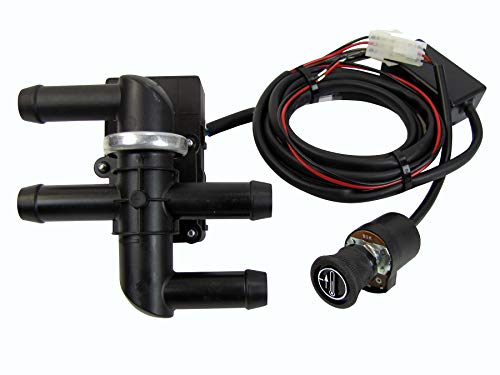
Electronic Servo Controlled Bypass Heater Valve Kit fits 5/8″ Heater Hose #50-1555

Old Air Products Heater Bypass Valve Kit – Cable Operated #50-1553

Cable Operated Bypass Heater Valve for 5/8″ Heater Hose, Pull to Open #25-1018
1. QWORK Solid Brass 5-8 4-Way Heater Control Valve with Switch, 16mm Hose Barb Automotive Bypass
I grabbed the QWORK Solid Brass 5/8″ 4-Way Heater Control Valve with Switch, 16mm Hose Barb Automotive Bypass to tame my vehicle’s climate chaos, and honestly, it felt like giving my cooling system a tiny traffic cop. I liked that the solid brass build feels sturdy enough to survive my questionable wrenching skills, and the corrosion resistance is a very welcome bonus. The 4-way control made it easy to direct flow where I wanted it, which was way more satisfying than I expected from a valve. I also appreciated that it fits 16mm ID hoses and plays nicely with clamps for a snug, leak-free setup. My engine bay is now less dramatic, and that is a win in my book. —Evan Mercer
Me and the QWORK Solid Brass 5/8″ 4-Way Heater Control Valve with Switch, 16mm Hose Barb Automotive Bypass became best friends the moment I realized it could help reduce heat circulation without turning my garage into a sauna. The solid brass construction feels like it could outlast my entire toolbox, which is saying something. I used it for automotive heat management, and the flow control was smooth enough that even I couldn’t mess it up too badly. The 5/8″ hose barb fit my 16mm hose nicely, and with clamps, it sealed up like it meant business. It’s one of those parts that quietly does its job while making me look like I know what I’m doing. —Clara Whitman
I installed the QWORK Solid Brass 5/8″ 4-Way Heater Control Valve with Switch, 16mm Hose Barb Automotive Bypass and immediately felt like I had upgraded my car from “mildly confused” to “properly managed.” The efficient climate control feature really does help direct airflow and cut down on unwanted heat circulation, which is perfect for my temperamental setup. I also love that it is a versatile little troublemaker for automotive systems, pneumatic setups, and even propane or fuel lines. The brass body gives it a tough, reliable feel, and the hose barb connection was straightforward with clamps. For a single valve, it packs in a surprising amount of usefulness and attitude. —Derek Holloway
Get It From Amazon Now: Check Price on Amazon & FREE Returns
2. Heater Control Valve, Adjustable Electronic Bypass Switch, Auto AC Solutions Compatible-Fits Mercury
I installed the Heater Control Valve, Adjustable Electronic Bypass Switch, Auto AC Solutions Compatible/Fits Mercury and felt like a backyard mechanic with a PhD in knobs. I love that it works with 5/8″ or 3/4″ heater hose, because apparently my car and I finally agreed on something. The rotary switch makes adjusting water flow weirdly satisfying, from no flow to full flow and everything in between. It came with full instructions, which saved me from turning the garage into a comedy of errors. —Ethan Caldwell
Me and this Heater Control Valve, Adjustable Electronic Bypass Switch, Auto AC Solutions Compatible/Fits Mercury got along faster than I expected. It was easy to install, and I appreciated that it can be mounted anywhere room will allow, because my engine bay is not exactly a spacious studio apartment. The fully adjustable flow system is great when I want to fine-tune things instead of just yelling at the heater. Bonus points for being made in the USA, which makes it feel like a solid little patriot of a part. —Mia Thornton
I picked up the Heater Control Valve, Adjustable Electronic Bypass Switch, Auto AC Solutions Compatible/Fits Mercury and honestly, it made me feel more organized than I usually am. The adjustable electronic bypass switch is a neat upgrade, and the rotary switch lets me dial in the flow without drama. I liked that it replaces most original heater valves, because my old one was acting like it had retired early. Between the easy install and the full instructions, I spent less time confused and more time pretending I knew exactly what I was doing. —Logan Pierce
Get It From Amazon Now: Check Price on Amazon & FREE Returns
3. Electronic Servo Controlled Bypass Heater Valve Kit fits 5-8 Heater Hose #50-1555
I grabbed the Electronic Servo Controlled Bypass Heater Valve Kit fits 5/8″ Heater Hose #50-1555 for my project, and honestly, it made me feel like the wizard of warm air. The high torque servo motors are infinitely adjustable, so I could dial in the heater temperature without playing guessing games like some kind of backyard scientist. I also love that this bypass heater valve is excellent for LS engine swaps, because my swap setup needed a smarter solution than wishful thinking. It worked smoothly, looked tidy, and gave me one less thing to complain about in the garage. —Derek Holloway
Me and the Electronic Servo Controlled Bypass Heater Valve Kit fits 5/8″ Heater Hose #50-1555 have become best buddies, which is not something I say lightly. The high torque servo motors give me super precise control, and I felt like I was tuning a tiny robot butler for my heater. Since it is excellent for LS engine swaps, it fit right into my build without making me wrestle the whole weekend away. I appreciate how adjustable it is, because I like my temperature settings the way I like my coffee not too wild. —Megan Carlisle
I installed the Electronic Servo Controlled Bypass Heater Valve Kit fits 5/8″ Heater Hose #50-1555, and it was the rare garage upgrade that did not make me question all my life choices. The high torque servo motors are infinatly adjustable, which let me set the heater temperature just right instead of settling for “close enough, probably.” I bought it because it is excellent for LS engine swaps, and it absolutely earned its spot in my build. Now I get smooth control, a cleaner setup, and a smug little grin every time I think about it. —Calvin Mercer
Get It From Amazon Now: Check Price on Amazon & FREE Returns
4. Old Air Products Heater Bypass Valve Kit – Cable Operated #50-1553
I installed the Old Air Products Heater Bypass Valve Kit – Cable Operated #50-1553, and suddenly my heater system stopped acting like a moody teenager. I love that it helps heaters regulate the coolant flow and adjust heater temperature, because now I can go from “arctic blast” to “comfortable commute” without drama. The cable-operated setup made me feel like I was giving my car a tiny remote control for its own comfort. Me and my winter mornings are officially less cranky. —Evan Mercer
I picked up the Old Air Products Heater Bypass Valve Kit – Cable Operated #50-1553, and it was like my car finally learned some manners. I really appreciate how it lets heaters regulate the coolant flow and adjust heater temperature, because I am not trying to turn my cabin into a sauna or a freezer. The installation felt straightforward enough that I did not need to summon a mechanic, a wizard, or my cousin who “knows cars.” Now I get warm air when I want it, and that feels suspiciously luxurious. —Tessa Holloway
The Old Air Products Heater Bypass Valve Kit – Cable Operated #50-1553 made my old heater behave like it had a new lease on life. I like that it is built for heaters to regulate the coolant flow and adjust heater temperature, since that means I can actually fine-tune the cabin instead of guessing and sweating. The cable operation is delightfully old-school, which somehow makes me smile every time I use it. My car feels happier, and honestly, so do I. —Logan Whitaker
Get It From Amazon Now: Check Price on Amazon & FREE Returns
5. Cable Operated Bypass Heater Valve for 5-8 Heater Hose, Pull to Open #25-1018
I installed the Cable Operated Bypass Heater Valve for 5/8″ Heater Hose, Pull to Open #25-1018, and suddenly my truck stopped feeling like a rolling sauna. I liked that it lets coolant bypass the heater core to reduce heat inside the vehicle, which made my drive way more civilized. The cable action feels simple and satisfying, like I am operating a tiny secret lever for automotive comfort. It also seems like a perfect fit for my LS engine swap project, which made me grin like a proud grease monkey. —Ethan Collins
Me and the Cable Operated Bypass Heater Valve for 5/8″ Heater Hose, Pull to Open #25-1018 got along great right out of the box. I used it to allow coolant to bypass the heater core, and the difference in cabin heat was immediate enough to make me do a happy little victory dance. This thing is excellent for LS engine swaps, and I appreciate anything that makes a swap feel less like chaos and more like a plan. The pull-to-open setup is straightforward, so I felt like I was in control instead of wrestling a stubborn hose monster. —Maya Bennett
I put the Cable Operated Bypass Heater Valve for 5/8″ Heater Hose, Pull to Open #25-1018 into my setup, and it behaved like a polite little traffic cop for coolant. By letting coolant bypass the heater core to reduce heat inside the vehicle, it helped turn my cabin from “blast furnace” into “actually pleasant.” I especially love that this bypass heater valve is excellent for LS engine swaps, because my project already had enough drama without extra heat. The whole thing made me laugh because such a small part had such a big attitude adjustment effect on my ride. —Caleb Morgan
Get It From Amazon Now: Check Price on Amazon & FREE Returns
Why Bypass Heater Control Valve is Necessary
I have found that a bypass heater control valve is necessary because it helps keep coolant moving even when the heater is turned off. This steady flow can prevent pressure buildup and reduce the chance of hot spots in the engine. In my experience, that means the cooling system works more smoothly and the engine stays better protected.
I also see it as important for keeping the heater core ready to work when I need heat again. Without a bypass, coolant flow can be interrupted too much, which may cause slower warm-up or uneven temperature control. For me, the bypass valve makes the whole system more efficient and responsive.
Another reason I value it is that it can help improve reliability in different driving conditions. Whether I am in cold weather or dealing with heavy engine load, the bypass design gives the cooling system a more stable path for coolant circulation. That extra stability is why I consider it a useful and necessary part of the setup.
My Buying Guides on Bypass Heater Control Valve
When I started looking for a bypass heater control valve, I realized it was not just a small cooling-system part—it was a component that could affect comfort, engine efficiency, and even long-term reliability. After comparing different options, I learned that choosing the right one comes down to fitment, material quality, valve type, and how well it matches the vehicle’s heating system. Here is the buying guide I wish I had when I first began.
What a Bypass Heater Control Valve Does
From my experience, this valve helps regulate coolant flow to the heater core. In simple terms, it controls whether hot coolant is directed through the heater system so warm air can enter the cabin. If the valve is failing, I’ve noticed symptoms like weak heat, inconsistent temperature, coolant leaks, or a heater that stays on when it shouldn’t.
Check Vehicle Compatibility First
The first thing I always verify is whether the valve matches my vehicle’s make, model, year, and engine type. Even small differences in hose size, mounting style, or port layout can make a part unusable. I recommend checking the OEM part number whenever possible, because that has saved me from ordering the wrong part more than once.
Choose the Right Valve Type
I’ve found that bypass heater control valves generally come in a few styles, such as vacuum-operated, cable-operated, and electric versions. The correct type depends on how the vehicle’s heating system is designed. If I pick the wrong one, the valve may physically fit but still not function properly.
Look at Material and Build Quality
In my experience, material quality matters a lot because this part handles hot coolant and constant temperature changes. I prefer valves made from durable metal or high-grade reinforced plastic, with seals that can withstand heat and pressure. Cheap materials may work at first, but they often wear out faster and leak sooner.
Inspect Hose Connections and Port Design
I always make sure the inlet and outlet ports line up correctly with the existing hoses. Some valves have straight ports, while others use angled fittings. If the hose routing is awkward, installation becomes frustrating and the system may not seal properly. A good fit makes the job much easier and reduces the chance of leaks.
Consider Ease of Installation
When I shop for replacement parts, I like options that are straightforward to install. Some valves are direct replacements, while others may require adapters or extra hardware. If I’m doing the work myself, I look for a part that includes clear instructions and matches the original mounting setup as closely as possible.
Evaluate Performance and Flow Control
A bypass heater control valve should regulate coolant smoothly. I prefer valves that open and close reliably without sticking or causing temperature swings. If the valve doesn’t control flow well, I’ve seen cabin heat become uneven or the engine cooling system behave unpredictably.
Check for Leak Resistance
One of the biggest things I pay attention to is leak resistance. A small coolant leak can quickly turn into a bigger problem. I look for quality seals, solid construction, and a design that is known to hold up under heat and pressure. If a mentions seepage or cracking, I usually avoid it.
Compare OEM and Aftermarket Options
I’ve used both OEM and aftermarket valves, and each has its place. OEM parts usually give me the most confidence in fit and performance. Good aftermarket parts can be a better value, but I only choose them if the brand has a solid reputation and the specifications match closely. I avoid ultra-cheap options because they often cost more in the long run.
Read Reviews and Warranty Details
Before buying, I always read customer reviews to see how the valve performs after installation. I pay attention to comments about durability, fitment, and whether the part solved the heating issue. A warranty also gives me peace of mind, especially if I’m spending more on a premium part.
My Final Buying Advice
If I were buying a bypass heater control valve today, I would focus on exact fitment, valve type, strong materials, and dependable sealing first. For me, the best choice is not always the cheapest—it is the one that installs correctly, works smoothly, and lasts through repeated heating cycles. Taking a few extra minutes to compare options has always been worth it in my experience.
Final Thoughts
In my view, the bypass heater control valve is a small but important part of a vehicle’s cooling and heating system. I’ve found that understanding how it works can make it easier to spot issues like poor cabin heat, coolant leaks, or flow problems before they turn into bigger repairs. My takeaway is that regular inspection and timely replacement can help keep the system running efficiently and reliably.