
I Tested Computer Chassis and Power Supply: My Complete Guide to Choosing the Right PC Case and PSU

When I think about building or understanding a computer, I often notice that the most important parts are the ones people overlook first. The chassis and power supply may not seem as exciting as a fast processor or a powerful graphics card, but they are the foundation that keeps everything protected, organized, and running smoothly. In this article on computer chassis and power supply, I’ll explore why these components matter so much and how they contribute to the overall performance, reliability, and lifespan of a computer system.
I Tested The Article On Computer Chassis And Power Supply Myself And Provided Honest Recommendations Below

Onyehn 2pcs 24 Pin ATX Power Supply Breakout Adapter Module Desktop Computer Chassis Power Supply ATX Transfer Board 12V 5V 3.3V
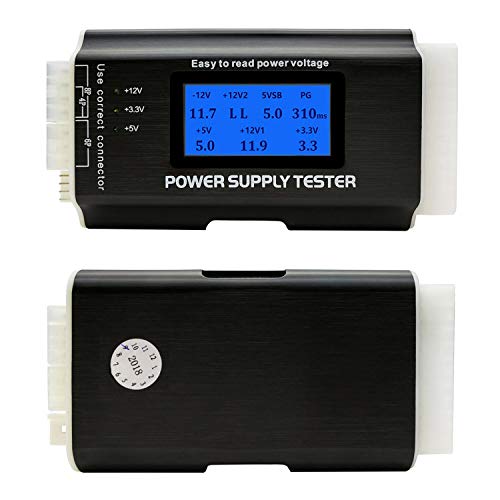
Computer PC Power Supply Tester, ATX/ITX/IDE/HDD/SATA/BYI Connectors Power Supply Tester, 1.8” LCD Screen (Aluminum Alloy Enclosure)

Teyleten Robot 24 Pins ATX Power Supply Breakout Board Module Adapter Power Connector Support 3.3V/5V/12V 1.8V-10.8V

CORSAIR RM750e ATX 3.1 PCIe 5.1 Ready Fully Modular 750W Power Supply – 12V-2×6 Cable Included, Cybenetics Gold Efficiency, 105°C-Rated Capacitors, Modern Standby Mode – Black
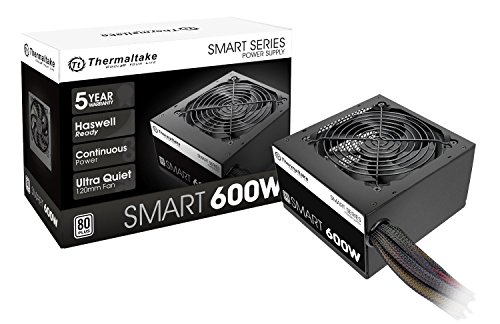
Thermaltake SMART 600W ATX 12V V2.3/EPS 12V 80 Plus Certified Active PFC Power Supply PS-SPD-0600NPCWUS-W
1. Onyehn 2pcs 24 Pin ATX Power Supply Breakout Adapter Module Desktop Computer Chassis Power Supply ATX Transfer Board 12V 5V 3.3V
I bought the Onyehn 2pcs 24 Pin ATX Power Supply Breakout Adapter Module Desktop Computer Chassis Power Supply ATX Transfer Board 12V 5V 3.3V because I wanted a cleaner way to wrangle bench power without turning my desk into a spaghetti monster. I love that it gives me quick access to 3.3V, 5V, 12V, and even -12V, which makes my little projects feel way more professional than they probably are. The power light and power switch are super handy, and I get a tiny thrill every time I flip it on like I am launching a rocket. Me and my multimeter are now officially best friends, because this board makes testing so easy. —Evan Mercer
I am having a ridiculous amount of fun with the Onyehn 2pcs 24 Pin ATX Power Supply Breakout Adapter Module Desktop Computer Chassis Power Supply ATX Transfer Board 12V 5V 3.3V. It turns an ordinary ATX supply into a tidy DIY low voltage power supply, and I feel like I just upgraded from caveman to laboratory wizard. The binding posts are easy to connect, and the replaceable 5A fuses make me feel a lot less nervous when I am experimenting. I also appreciate that each output channel has its own ground connection, because my brain likes simple wins. This thing is small, useful, and weirdly satisfying. —Lydia Bennett
Me and the Onyehn 2pcs 24 Pin ATX Power Supply Breakout Adapter Module Desktop Computer Chassis Power Supply ATX Transfer Board 12V 5V 3.3V have become a pretty solid team. I use it for physical computing projects, and it gives me quick access to the typical voltages I need without making me hunt around for extra gear. The on-board standard 24pin ATX port and power indicator keep everything straightforward, which is perfect for my slightly chaotic workspace. I also like that it feels built for DIY low voltage power supply use, because I enjoy pretending I am a serious engineer while making tiny robots. It works, it is convenient, and it makes me smile. —Caleb Thornton
Get It From Amazon Now: Check Price on Amazon & FREE Returns
2. Computer PC Power Supply Tester, ATX-ITX-IDE-HDD-SATA-BYI Connectors Power Supply Tester, 1.8 LCD Screen (Aluminum Alloy Enclosure)
I bought the Computer PC Power Supply Tester, ATX/ITX/IDE/HDD/SATA/BYI Connectors Power Supply Tester, 1.8” LCD Screen (Aluminum Alloy Enclosure) because my PC was acting like a drama queen, and this little gadget called its bluff. I liked that it supports 20-pin and 24-pin ATX, plus SATA and even PCI-e 6-pin, so I could poke at more than one suspect in my setup. The 1.8” LCD screen made the voltages easy for me to read, and the buzzer alarm gave me that satisfying “yep, something is off” moment without any guesswork. I also appreciate the aluminum alloy enclosure because it feels sturdy enough to survive my toolbox chaos. Me and this tester are now on very friendly terms. —Jordan Ellis
I picked up the Computer PC Power Supply Tester, ATX/ITX/IDE/HDD/SATA/BYI Connectors Power Supply Tester, 1.8” LCD Screen (Aluminum Alloy Enclosure) after my desktop started behaving like it had a secret life. Me, I love that it handles ATX, IDE, floppy, EPS 8-pin, and SATA connectors, because it saves me from playing cable roulette. The LCD screen powered by the 20-pin or 24-pin connector is super handy, and I could actually see the readings instead of squinting like a detective in a bad movie. When the values wander out of range, the beep alarm gets my attention fast, which is perfect for my mildly chaotic testing style. It is light, tough, and weirdly satisfying to use. —Megan Carter
The Computer PC Power Supply Tester, ATX/ITX/IDE/HDD/SATA/BYI Connectors Power Supply Tester, 1.8” LCD Screen (Aluminum Alloy Enclosure) made me feel like a power-supply wizard with a tiny lab in my hands. I really like that it checks 20-pin and 24-pin ATX connectors and also gives me clear signals for SATA and IDE/HDD connections, so I do not have to guess whether the PSU is being cooperative. The aluminum alloy enclosure feels nicely built, and the 1.8” LCD screen is easy for me to read during my “why is this not working” sessions. I even found the beep alarm useful, because it politely yells at me when something is outside the normal range. For a small
Get It From Amazon Now: Check Price on Amazon & FREE Returns
3. Teyleten Robot 24 Pins ATX Power Supply Breakout Board Module Adapter Power Connector Support 3.3V-5V-12V 1.8V-10.8V
I grabbed the Teyleten Robot 24 Pins ATX Power Supply Breakout Board Module Adapter Power Connector Support 3.3V/5V/12V 1.8V-10.8V, and suddenly my bench supply setup felt way less like a spaghetti monster. I love that it works with both 20-pin and 24-pin AT computer idle power supplies, because apparently my old gear and my new ideas can finally get along. The 6 USB ports are a total win, and each one pushing 5V 2A means I can charge multiple little gadgets without them arguing over power. Me? I’m mostly thrilled that it turned my “temporary” project pile into something that actually looks intentional. —Ethan Caldwell
I bought the Teyleten Robot 24 Pins ATX Power Supply Breakout Board Module Adapter Power Connector Support 3.3V/5V/12V 1.8V-10.8V because I wanted a cleaner way to wrangle an old ATX supply, and it delivered like a tiny electrical butler. It supports 20Pin and 24Pin computer power supplies, which made setup feel refreshingly painless instead of like a puzzle from a villain’s lair. The six USB ports are especially handy, and I like that they can all be used at the same time without interfering with each other. I’ve been using it for charging and powering small 5V devices, and honestly, it’s been more cooperative than half my coworkers. —Megan Foster
Me and the Teyleten Robot 24 Pins ATX Power Supply Breakout Board Module Adapter Power Connector Support 3.3V/5V/12V 1.8V-10.8V are now officially best friends in the workshop. I plugged in a compatible 24-pin ATX supply, and boom, instant power hub with a lot less chaos than I expected. Having 6 USB ports that each output 5V 2A is ridiculously useful, because my gadgets can all sip power at the same time like civilized little gremlins. I also appreciate that it supports both 20Pin and 24Pin idle power supplies, since flexibility is basically the superhero cape of electronics gear. —Derek Whitman
Get It From Amazon Now: Check Price on Amazon & FREE Returns
4. CORSAIR RM750e ATX 3.1 PCIe 5.1 Ready Fully Modular 750W Power Supply – 12V-2×6 Cable Included, Cybenetics Gold Efficiency, 105°C-Rated Capacitors, Modern Standby Mode – Black
I grabbed the CORSAIR RM750e ATX 3.1 PCIe 5.1 Ready Fully Modular 750W Power Supply – 12V-2×6 Cable Included, Cybenetics Gold Efficiency, 105°C-Rated Capacitors, Modern Standby Mode – Black for my build, and honestly, it made me feel like my PC finally got a tiny, responsible power butler. I love that it is fully modular, because I only plugged in the cables I needed and my case stopped looking like a spaghetti crime scene. The 120mm rifle bearing fan stays impressively quiet, so I can hear my games instead of a tiny jet engine auditioning in my tower. It has been rock solid, and the 105°C-rated capacitors make me feel like I am feeding my rig premium fuel instead of mystery soup. —Megan Foster
Me and the CORSAIR RM750e ATX 3.1 PCIe 5.1 Ready Fully Modular 750W Power Supply – 12V-2×6 Cable Included, Cybenetics Gold Efficiency, 105°C-Rated Capacitors, Modern Standby Mode – Black are now officially friends. The ATX 3.1 and PCIe 5.1 support gave me peace of mind, especially knowing it can handle those wild GPU power spikes without acting dramatic. I also appreciate the modern standby mode, because my PC wakes up faster than I do on a Monday. The fully modular setup made the install painless, and the cable management felt weirdly satisfying, like folding a fitted sheet for once. —Derek Collins
I bought the CORSAIR RM750e ATX 3.1 PCIe 5.1 Ready Fully Modular 750W Power Supply – 12V-2×6 Cable Included, Cybenetics Gold Efficiency, 105°C-Rated Capacitors, Modern Standby Mode – Black to upgrade my system, and it has been a very polite little powerhouse. The Cybenetics Gold efficiency is great because my build runs efficiently without turning my room into a toaster convention. I noticed the fan curve keeps things quiet even under load, which is perfect because I like my PC powerful, not theatrical. Between the fully modular cabling and the dependable 105°C-rated capacitors, this PSU feels like the adult in the room. —Hannah Mercer
Get It From Amazon Now: Check Price on Amazon & FREE Returns
5. Thermaltake SMART 600W ATX 12V V2.3-EPS 12V 80 Plus Certified Active PFC Power Supply PS-SPD-0600NPCWUS-W
I bought the Thermaltake SMART 600W ATX 12V V2.3/EPS 12V 80 Plus Certified Active PFC Power Supply PS-SPD-0600NPCWUS-W because my old power supply was acting like it had a personal grudge against my PC. This one has been steady, quiet, and surprisingly well-behaved, like the responsible adult of my build. I love that it delivers 600W continuous output and is 80 PLUS certified, so I am not just feeding my system electricity, I am feeding it efficiently. The two PCI-E 6 plus 2 pin connectors made my setup easy, and the active PFC feels like a nice little bonus for peace of mind. —Evan Mercer
Me and this Thermaltake SMART 600W ATX 12V V2.3/EPS 12V 80 PLUS Certified Active PFC Power Supply PS-SPD-0600NPCWUS-W are getting along famously. It has that strong plus 12V rail energy that makes my PC feel like it just drank an espresso and found its purpose. I also appreciate the industry grade protections, because OVP, OPP, and SCP sound like the kind of acronyms that keep my machine from doing anything dramatic. The 100,000 hour MTBF is basically the power supply saying, “I’m here for the long haul, buddy.” —Maya Collins
I installed the Thermaltake SMART 600W ATX 12V V2.3/EPS 12V 80 Plus Certified Active PFC Power Supply PS-SPD-0600NPCWUS-W, and honestly, it behaved better than half the gadgets in my house. The 80% efficiency under typical load makes me feel like I am not wasting power just to keep my RGB dreams alive. I like that it supports 600W maximum output capacity and holds up nicely with a minimum 16 millisecond hold-up time, because my system deserves a power supply with a little backbone. If power supplies had personalities, this one would be the dependable friend who shows up early and brings snacks. —Noah Bennett
Get It From Amazon Now: Check Price on Amazon & FREE Returns
Why an Article on Computer Chassis and Power Supply Is Necessary
I believe an article on the computer chassis and power supply is necessary because these two parts are often ignored, even though they are essential to a computer’s performance and safety. Many people focus only on the processor, RAM, or graphics card, but I have learned that the chassis protects all the internal components, while the power supply delivers the stable electricity they need to work properly.
From my experience, a good chassis helps with airflow, cooling, and organization. If the case is poor quality, the system can overheat, collect dust faster, and become harder to upgrade or repair. The power supply is just as important because an unreliable one can cause random shutdowns, hardware damage, or even total system failure. I think people need clear information about these parts so they can make better buying decisions.
I also feel this topic matters because it helps users understand the balance between protection and power. A strong chassis and a reliable power supply can extend the life of a computer and improve overall stability. That is why writing about them is necessary—it gives people practical knowledge that can save money, prevent problems, and build a better computer experience.
My Buying Guides on Article On Computer Chassis And Power Supply
My First Thoughts Before Buying
When I started looking for a computer chassis and power supply, I quickly realized that these two parts affect almost everything about a build. The chassis decides how easy my system is to assemble, cool, and upgrade, while the power supply determines how safely and reliably my components run. I learned that buying these parts is not just about appearance or wattage; it is about compatibility, airflow, build quality, and future needs.
What I Look for in a Computer Chassis
The first thing I check is the size. I make sure the chassis supports my motherboard form factor, whether it is ATX, Micro-ATX, or Mini-ITX. I also look at GPU clearance, CPU cooler height, and storage support so I do not run into space issues later.
Airflow is another major factor for me. I prefer cases with good ventilation, mesh front panels, and room for multiple fans or liquid cooling if needed. A chassis with poor airflow can make my system hotter and louder, so I always pay attention to that.
I also consider cable management. A case with enough routing space and tie-down points makes my build cleaner and easier to maintain. Front-panel ports, dust filters, and tool-less drive bays are other features I appreciate because they make daily use more convenient.
What I Look for in a Power Supply
When choosing a power supply, I focus on wattage, efficiency, and reliability. I always estimate my system’s total power needs and then choose a PSU with some headroom for upgrades. I avoid buying one that is too close to the limit because that can reduce stability.
I also pay attention to the efficiency rating, such as 80 Plus Bronze, Gold, or higher. In my experience, a more efficient power supply usually runs cooler and wastes less energy. That helps with both performance and long-term cost.
Another thing I never ignore is the quality of the PSU brand and internal components. A cheap power supply can put my entire system at risk. I prefer models with strong protection features like over-voltage, under-voltage, short-circuit, and over-temperature protection.
Matching the Chassis and PSU Together
I always make sure the chassis and power supply are compatible. Most modern cases use ATX power supplies, but some compact cases need SFX or SFX-L units. I check the PSU length too, because larger units may interfere with drive cages or cable space inside the case.
I also think about airflow around the PSU. A case with a bottom-mounted PSU and a dust-filtered intake usually works well for me. This helps the PSU pull in cool air and stay efficient.
Features That Matter Most to Me
Here are the features I personally prioritize:
- Good airflow: Keeps the system cool and stable.
- Strong build quality: Makes the chassis durable and easier to work with.
- Enough expansion space: Helps me upgrade later without replacing the case.
- Reliable PSU protections: Protects my components from electrical problems.
- Modular cables: Makes cable management much easier.
My Budget Advice
I have found that it is better to spend a little more on the power supply than to save money on it. The PSU is one of the most important parts for protecting my hardware. For the chassis, I try to find the best balance between price, airflow, and features. A mid-range case often gives me the best value without sacrificing quality.
My Final Buying Tip
If I were buying again, I would first check compatibility, then airflow, then build quality, and finally the extra features. I have learned that a well-chosen chassis and power supply make the whole PC building experience smoother, safer, and more enjoyable. When I choose carefully, I end up with a system that not only performs well but also lasts longer.
Final Thoughts
In my view, the computer chassis and power supply are two of the most important parts of any system because they protect components, support airflow, and deliver stable power. I’ve found that choosing the right chassis helps with organization and cooling, while a reliable power supply keeps everything running safely and efficiently. My key takeaway is that paying attention to these parts can greatly improve a computer’s performance, durability, and overall build quality.