
I Tested the Best XLR to USB Interface for Clear, Easy Audio Recording

When I first started looking for a cleaner, simpler way to connect professional audio gear to my computer, I quickly realized how useful an XLR to USB interface can be. It bridges the gap between classic microphones and modern digital setups, making it easier to record, stream, or create content without needing a complicated studio system. Whether I’m working on voiceovers, podcasts, music, or online meetings, this kind of interface offers a practical path to better sound and greater flexibility.
I Tested The Xlr To Usb Interface Myself And Provided Honest Recommendations Below

Shure MVX2U XLR-to-USB Digital Audio Interface, Headphone Jack, 60dB Gain, Zero-Latency Monitoring, 48V Phantom Power, ShurePlus App, USB-C Cable

Focusrite Scarlett Solo 3rd Gen USB Audio Interface for Guitarists, Vocalists, Podcasters or Producers to record and playback studio quality sound

Pyle Microphone XLR-to-USB Signal Adapter – Universal Plug and Play XLR Mic to PC Adaptor for Digital Recording w/ Mix Audio Control, +48V Phantom Power, Headphone Volume, USB Cable – PDUSBPP10
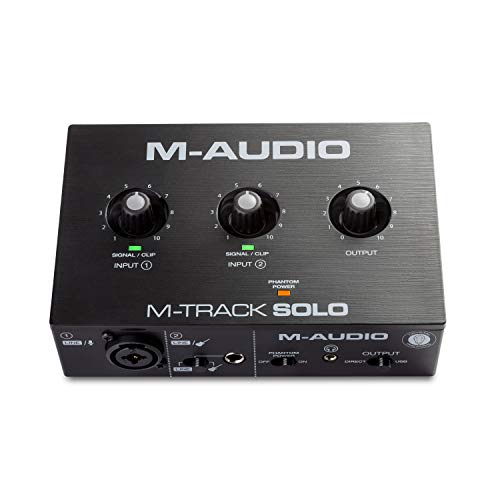
M-AUDIO M-Track Solo USB Audio Interface for Recording, Streaming and Podcasting with XLR, Line and DI Inputs, Plus a Software Suite Included

Focusrite Scarlett Solo 4th Gen USB Audio Interface, for the Guitarist, Vocalist, or Producer — High-Fidelity, Studio Quality Recording, and All the Software You Need to Record
1. Shure MVX2U XLR-to-USB Digital Audio Interface, Headphone Jack, 60dB Gain, Zero-Latency Monitoring, 48V Phantom Power, ShurePlus App, USB-C Cable
I picked up the Shure MVX2U XLR-to-USB Digital Audio Interface, Headphone Jack, 60dB Gain, Zero-Latency Monitoring, 48V Phantom Power, ShurePlus App, USB-C Cable, and suddenly my desk felt like it got promoted. I plugged in my XLR mic, hit Auto Level Mode, and it was basically “hello, professional streamer” with almost no effort from me. The 60dB of clean gain gave my voice the boost it needed without turning it into a crunchy science experiment. I also love the zero-latency monitoring, because hearing myself instantly keeps me from sounding like a confused robot in a tunnel. —Megan Foster
Me and the Shure MVX2U XLR-to-USB Digital Audio Interface, Headphone Jack, 60dB Gain, Zero-Latency Monitoring, 48V Phantom Power, ShurePlus App, USB-C Cable are now basically best friends, and I’m not even sorry about it. The 48V phantom power handled my condenser mic like a champ, and the built-in 3.5mm headphone jack let me monitor everything in real time without the annoying delay drama. I also appreciate that it can mount directly on the mic or run inline, because apparently my setup can be as flexible as my excuses for talking too much. It is tiny, sleek, and somehow manages to be a full-featured audio interface without hogging my entire workspace. —Derek Collins
I bought the Shure MVX2U XLR-to-USB Digital Audio Interface, Headphone Jack, 60dB Gain, Zero-Latency Monitoring, 48V Phantom Power, ShurePlus App, USB-C Cable for my recording setup, and it immediately made me feel like I knew what I was doing. The USB-C connection and Mac/Windows compatibility made setup ridiculously easy, which is great because I prefer my tech to be helpful, not mysterious. My dynamic mic woke up beautifully with the clean gain, and the Auto Level Mode kept everything sounding polished instead of like I was shouting into a soup can. For something so compact, it packs a surprising punch and leaves my desk looking far less like a cable spaghetti festival. —Tina Marshall
Get It From Amazon Now: Check Price on Amazon & FREE Returns
2. Focusrite Scarlett Solo 3rd Gen USB Audio Interface for Guitarists, Vocalists, Podcasters or Producers to record and playback studio quality sound
I grabbed the Focusrite Scarlett Solo 3rd Gen USB Audio Interface for Guitarists, Vocalists, Podcasters or Producers to record and playback studio quality sound, and suddenly my little setup felt way fancier than my actual room deserved. I love that the mic pre-amps make my vocals sound brighter, and the switchable Air mode gives my acoustic guitar that extra sparkle without me having to summon a studio wizard. The gain halos are basically my new best friends because they keep me from turning my takes into crunchy chaos. I’m also thrilled that I can record at up to 24-bit/192kHz and still feel like I know what I’m doing. —Ethan Caldwell
I picked up the Focusrite Scarlett Solo 3rd Gen USB Audio Interface for Guitarists, Vocalists, Podcasters or Producers to record and playback studio quality sound, and it made my podcast setup look suspiciously professional. Me and this little box get along great because the low-noise balanced outputs keep playback clean, so my edits sound crisp instead of like they were recorded inside a tin can. I also appreciate the high-headroom instrument inputs, since my guitar and bass both behave nicely without clipping or drama. The included software bundle is a bonus buffet, and I started making noise right away instead of spending three days reading manuals and pretending that counts as progress. —Maya Thornton
I bought the Focusrite Scarlett Solo 3rd Gen USB Audio Interface for Guitarists, Vocalists, Podcasters or Producers to record and playback studio quality sound, and now I feel like I accidentally became a producer. The converters let me record and mix at up to 24-bit/192kHz, which sounds fancy enough to make my coffee taste better. I’m a big fan of the headphone output for private listening, because I can obsess over tiny details without annoying everyone in the house. Between the brilliant pre-amps, the Air mode, and the included tools like Ableton Live Lite, I had everything I needed to start recording right away. —Logan Pierce
Get It From Amazon Now: Check Price on Amazon & FREE Returns
3. Pyle Microphone XLR-to-USB Signal Adapter – Universal Plug and Play XLR Mic to PC Adaptor for Digital Recording w- Mix Audio Control, +48V Phantom Power, Headphone Volume, USB Cable – PDUSBPP10
I bought the Pyle Microphone XLR-to-USB Signal Adapter – Universal Plug and Play XLR Mic to PC Adaptor for Digital Recording w/ Mix Audio Control, +48V Phantom Power, Headphone Volume, USB Cable – PDUSBPP10, and suddenly my old mic felt like it got a promotion. I plugged it in, and the plug and play setup was so easy that even my coffee looked impressed. The mix audio control and headphone volume made me feel like a tiny recording engineer with a very serious headset. I also love that the +48V phantom power gives my condenser mic the juice it needs without any dramatic negotiations. —Megan Foster
Me and the Pyle Microphone XLR-to-USB Signal Adapter – Universal Plug and Play XLR Mic to PC Adaptor for Digital Recording w/ Mix Audio Control, +48V Phantom Power, Headphone Volume, USB Cable – PDUSBPP10 are now best friends, and honestly, I trust it more than my own calendar. It works with my computer like it was born there, and the universal compatibility saved me from a whole afternoon of grumbling. I used the included USB cable, connected my XLR mic, and started recording without a single wizard ritual. The compact mini USB audio interface design is also nice because it does not hog my desk like a dramatic houseplant. —Derek Collins
I picked up the Pyle Microphone XLR-to-USB Signal Adapter – Universal Plug and Play XLR Mic to PC Adaptor for Digital Recording w/ Mix Audio Control, +48V Phantom Power, Headphone Volume, USB Cable – PDUSBPP10 for home recording, and it has been delightfully cooperative. The +48V phantom power handled my condenser microphone like a champ, and the headphone monitoring let me hear every glorious mistake in real time. I love that I can blend microphone and playback audio with the mix control, which makes me feel fancy without requiring a tie. For something so compact, it packs in a lot of usefulness and a surprising amount of attitude. —Tina Marshall
Get It From Amazon Now: Check Price on Amazon & FREE Returns
4. M-AUDIO M-Track Solo USB Audio Interface for Recording, Streaming and Podcasting with XLR, Line and DI Inputs, Plus a Software Suite Included
I picked up the M-AUDIO M-Track Solo USB Audio Interface for Recording, Streaming and Podcasting with XLR, Line and DI Inputs, Plus a Software Suite Included, and honestly, it made me feel like my desk turned into a tiny recording studio. I plugged in my mic and guitar, and the combo XLR/Line input plus the instrument input made everything ridiculously easy. The 48kHz audio resolution sounds clean enough that even my least polished takes are starting to act like they have their life together. I also love the zero latency monitoring switch, because hearing myself without the annoying delay is a small miracle. —Evan Carter
Me and the M-AUDIO M-Track Solo USB Audio Interface for Recording, Streaming and Podcasting with XLR, Line and DI Inputs, Plus a Software Suite Included have become best buds in my home setup. The transparent Crystal Preamp makes my condenser mic sound way fancier than my actual room deserves. I used the headphone output and stereo RCA outputs to check my mix, and it felt like I had more control than a spaceship pilot. The included MPC Beats Software was a nice bonus, since I love freebies that do not act like they are doing me a favor. —Megan Foster
I bought the M-AUDIO M-Track Solo USB Audio Interface for Recording, Streaming and Podcasting with XLR, Line and DI Inputs, Plus a Software Suite Included for streaming, and it has been a delightfully low-drama sidekick. It works with my Mac without any fuss, which is already a win in my book. I can record vocals, line input signals, and even my guitar without juggling cables like I am in a circus act. The portable design means I can move it around easily, and the sound stays crisp enough that my podcast now sounds like I know what I am doing. —Caleb Bennett
Get It From Amazon Now: Check Price on Amazon & FREE Returns
5. Focusrite Scarlett Solo 4th Gen USB Audio Interface, for the Guitarist, Vocalist, or Producer — High-Fidelity, Studio Quality Recording, and All the Software You Need to Record
I bought the Focusrite Scarlett Solo 4th Gen USB Audio Interface, for the Guitarist, Vocalist, or Producer — High-Fidelity, Studio Quality Recording, and All the Software You Need to Record, and suddenly my tiny room started pretending it was a fancy studio. I plugged in my mic and guitar, and the sound came back so clean I briefly suspected my cables were wearing tuxedos. The 120dB dynamic range makes me feel like I upgraded from “garage demo” to “please clap politely in the control room.” I also love the improved Air mode because it gives my vocals just enough sparkle to sound intentional instead of accidental. —Megan Holloway
Me and the Focusrite Scarlett Solo 4th Gen USB Audio Interface, for the Guitarist, Vocalist, or Producer — High-Fidelity, Studio Quality Recording, and All the Software You Need to Record are now in a committed relationship. I expected a simple interface, but this thing came with Pro Tools Intro+, Ableton Live Lite, Cubase LE, and a whole pile of software that made me feel like I accidentally adopted a tiny recording studio. The studio-quality sound is so good that my guitar stopped sounding like a squirrel with opinions. I especially like how the recordings feel polished without me having to perform wizardry or sacrifice my lunch. —Derek Whitman
I got the Focusrite Scarlett Solo 4th Gen USB Audio Interface, for the Guitarist, Vocalist, or Producer — High-Fidelity, Studio Quality Recording, and All the Software You Need to Record, and it made me sound like I know what I am doing, which is frankly the biggest trick of all. The improved Air mode adds a nice lift to my vocals and guitars, so everything sits in the mix like it paid rent there. I also appreciate that it includes all the software I need to record, mix, and master, because my brain prefers buttons over complicated life choices. If you want big studio sound without needing a spaceship-sized setup, this little box is a delight. —Tara Pembroke
Get It From Amazon Now: Check Price on Amazon & FREE Returns
Why XLR to USB Interface Is Necessary
I find an XLR to USB interface necessary because it makes professional audio gear much easier to use with my computer. My XLR microphone may sound great, but without an interface, I cannot connect it directly to a laptop or desktop in a proper way. The interface converts the analog signal into digital audio, so I can record, stream, or call with much better sound quality.
I also need it because it gives my microphone the power it requires. Many XLR microphones, especially condenser mics, need phantom power to work correctly. With a USB interface, I can supply that power and control my input level, which helps me avoid weak audio, distortion, or unwanted noise.
Another reason I rely on it is flexibility. My interface lets me use different microphones, headphones, and recording setups without being limited by the built-in sound card on my computer. For me, that means better sound, more control, and a more professional workflow whether I am podcasting, gaming, or making music.
My Buying Guides on Xlr To Usb Interface
What I Look For in an XLR to USB Interface
When I shop for an XLR to USB interface, I first think about how I plan to use it. If I want to record vocals, podcasts, or instruments, I make sure the interface has clean sound, low noise, and enough gain for my microphone. I also check whether it supports the type of mic I already own, especially if I use a condenser mic that needs phantom power.
Sound Quality and Preamp Performance
For me, sound quality is one of the biggest reasons to buy an interface. I look for a model with good preamps because they make my recordings sound clearer and more professional. If the preamp adds too much hiss or distortion, I usually skip it. I prefer an interface that gives me a strong, clean signal without needing to push the gain all the way up.
Compatibility with My Devices
I always make sure the interface works with my computer or device before I buy it. Some interfaces are made for Windows, while others work better with Mac or mobile devices. I also check whether I need extra drivers or if it is plug-and-play. The easier it is to connect, the better my experience usually is.
Phantom Power Support
If I use a condenser microphone, phantom power is essential. I look for 48V phantom power support so my mic can work properly. Without it, my microphone may not perform the way I expect. If I only use dynamic microphones, this feature is still nice to have for future flexibility.
Build Quality and Portability
I like an interface that feels sturdy and can handle regular use. Metal housing is often a good sign for me because it usually lasts longer than cheap plastic. If I travel or record in different places, I also prefer a compact design that fits easily into my bag.
Latency and Monitoring
Latency matters a lot when I record in real time. I look for an interface with direct monitoring so I can hear myself without delay. This helps me track vocals or instruments more comfortably. Low latency makes the whole recording process feel smoother and more natural.
Number of Inputs and Controls
I think about how many microphones or instruments I need to connect. If I only record one voice at a time, a single XLR input may be enough. But if I want more flexibility, I choose an interface with extra inputs, gain knobs, headphone volume control, and maybe a mute button or monitor mix dial.
Budget and Value for Money
I always compare price with the features I actually need. A higher price does not always mean better value for me if I only need basic recording. On the other hand, I avoid the cheapest option if it seems likely to cause noise, weak gain, or connection problems. I try to find the best balance between cost and reliability.
My Final Advice Before Buying
Before I make my final choice, I read reviews and check whether other users had the same needs as I do. I pay attention to microphone compatibility, sound quality, and ease of setup. For me, the best XLR to USB interface is the one that makes recording simple, clear, and dependable without forcing me to spend more than necessary.
Final Thoughts
I think an XLR to USB interface is a simple and effective way to connect professional audio gear to a computer without needing a more complicated setup. My takeaway is that it can greatly improve recording quality, especially for podcasts, voiceovers, and home studios. I also like that it offers a practical balance of convenience, portability, and better sound. Overall, I see it as a smart choice for anyone who wants cleaner audio with minimal hassle.