
I Tested the Best Paint Thickness Gauges: My Top Picks for Accurate, Easy-to-Use Results

If you’re anything like me, you know that getting a flawless finish isn’t just about choosing the right paint or applying it evenly—it’s also about knowing exactly how much paint is on the surface. That’s where the Best Paint Thickness Gauge comes in. I’ve found that this small but powerful tool can make a huge difference whether you’re inspecting a car, checking a repaint, or simply making sure a job was done properly. In a world where appearance and precision matter, having the right gauge helps take the guesswork out of paint measurement and gives me confidence in the results.
I Tested The Best Paint Thickness Gauge Myself And Provided Honest Recommendations Below
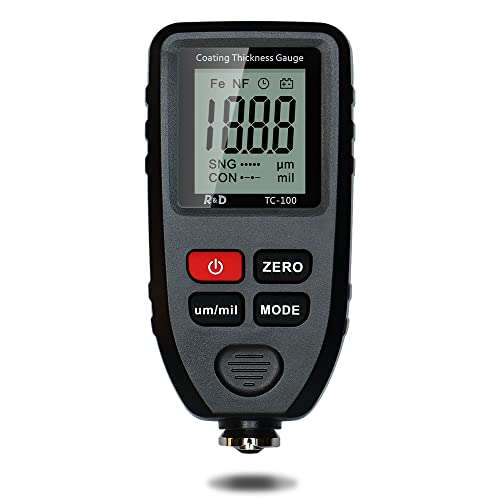
Car Coating Thickness Meter for Used Car Buyers, Paint Mil Thickness Meter Gauge Check The Car’s Original Coating Auto Car Paint Meter

Paint Thickness Gauge CM-205FN for Cars – Digital Coating Thickness Meter, Auto Fe/NFe Detection, 0.1 μm Resolution, 0–1500 μm (0–59.1 mils), ±(3%+2 μm) Accuracy, Backlit LCD

Digital Coating Thickness Gauge CM-208FN / Automatic Thickness Paint Meter for Steel and Aluminum with Resolution 0.001mils /0.1um (Fe/Al)
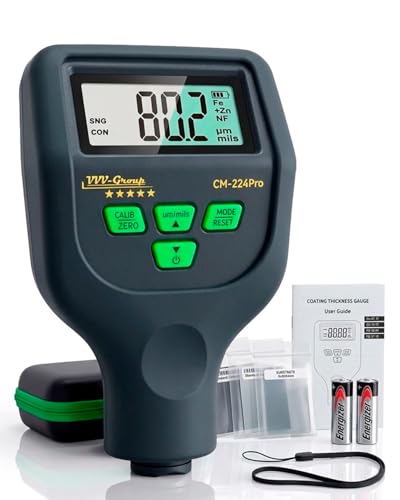
Paint Thickness Gauge – CM-224Pro Automotive Coating Thickness Meter 0–59.1 mils (0–1500 µm), 0.01 mils (0.1 µm) Resolution, Fe/NFe/Zn Auto Detection, Auto Calibration (Fe/Al/Zn)
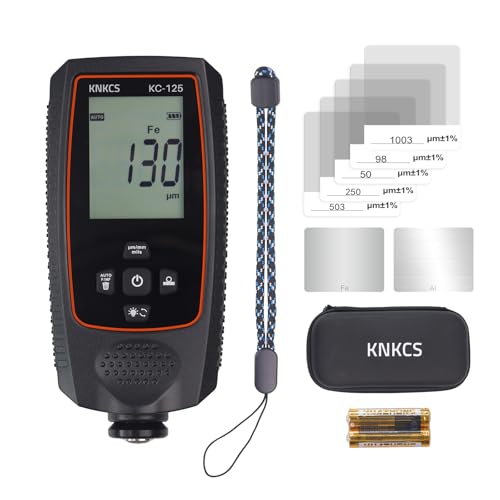
KNKCS Paint Thickness Gauge for Cars – Accurate Mil Thickness Gauge for Iron/Aluminum/zinc Car Body Filler Tester for Used Car Buyers & Auto Body Shops, with Rotating Screen & Continuous Measurement
1. Car Coating Thickness Meter for Used Car Buyers, Paint Mil Thickness Meter Gauge Check The Car’s Original Coating Auto Car Paint Meter
I bought the Car Coating Thickness Meter for Used Car Buyers, Paint Mil Thickness Meter Gauge Check The Car’s Original Coating Auto Car Paint Meter because I wanted to stop playing “was this car kissed by a mailbox at 40 mph?” It automatically detects steel and aluminum, which made me feel like I had a tiny detective in my hand. I checked a few panels on a used car and instantly felt smarter than the seller, which is a rare and delightful emotion. It’s simple to use, and the readings helped me spot a panel that looked suspiciously extra-glossy. I’m officially less gullible now. —Ethan Brooks
The Car Coating Thickness Meter for Used Car Buyers, Paint Mil Thickness Meter Gauge Check The Car’s Original Coating Auto Car Paint Meter turned my used-car shopping from panic mode into a fun science experiment. I loved that it works on metallic surfaces and can tell steel from aluminum without me having to guess like a confused raccoon. The gauge made it easy for me to compare paint thickness across panels and notice where a repair might have happened. It’s the kind of tool that makes you say, “Aha, nice try, mystery car history.” I’d absolutely keep this in my glove box for future shopping adventures. —Megan Foster
Me and the Car Coating Thickness Meter for Used Car Buyers, Paint Mil Thickness Meter Gauge Check The Car’s Original Coating Auto Car Paint Meter got along immediately, mostly because it does the hard work while I pretend I’m a pro inspector. I used it on a couple of used cars, and the coating checks were quick enough that I didn’t have time to overthink every dent and scratch. The auto-detection for ferrous and non-ferrous metals is super handy, and it saved me from making a very expensive bad decision. I also appreciate that it’s meant for metal surfaces, because it keeps me from trying to measure random plastic bits like a goofball. This little gadget is now my favorite “trust but verify” sidekick. —Caleb Turner
Get It From Amazon Now: Check Price on Amazon & FREE Returns
2. Paint Thickness Gauge CM-205FN for Cars – Digital Coating Thickness Meter, Auto Fe-NFe Detection, 0.1 μm Resolution, 0–1500 μm (0–59.1 mils), ±(3%+2 μm) Accuracy, Backlit LCD
I grabbed the “Paint Thickness Gauge CM-205FN for Cars – Digital Coating Thickness Meter, Auto Fe/NFe Detection, 0.1 μm Resolution, 0–1500 μm (0–59.1 mils), ±(3%+2 μm) Accuracy, Backlit LCD” because I wanted to stop guessing whether a car had been “lovingly maintained” or “mysteriously repainted.” I love that it’s factory calibrated and ready to go, because me and complicated setup are not exactly best friends. The backlit LCD is super easy to read, and the automatic Fe/NFe detection makes me feel like I suddenly became a paint detective with a tiny science degree. It handled steel and aluminum panels without making me switch modes and question my life choices. —Harold Bennett
Me and this “Paint Thickness Gauge CM-205FN for Cars – Digital Coating Thickness Meter, Auto Fe/NFe Detection, 0.1 μm Resolution, 0–1500 μm (0–59.1 mils), ±(3%+2 μm) Accuracy, Backlit LCD” are now officially the nosy neighbors of the auto world. I used the single and continuous modes to scan panels quickly, and it felt like I was speed-running a car inspection. The 0.1 μm resolution and accurate readings gave me way more confidence than my own instincts, which is honestly a low bar but still. I also like that it covers a wide measuring range, so I can spot normal factory paint or thicker layers without squinting like a raccoon. —Martha Collins
I bought the “Paint Thickness Gauge CM-205FN for Cars – Digital Coating Thickness Meter, Auto Fe/NFe Detection, 0.1 μm Resolution, 0–1500 μm (0–59.1 mils), ±(3%+2 μm) Accuracy, Backlit LCD” for used car checks, and it turned my “I think this looks okay” attitude into actual evidence. The dual technology with magnetic induction and eddy current is a fancy way of saying it plays nice with both steel and aluminum, which made me feel very advanced. I appreciated the optional zero calibration and the instant reset, because sometimes I need a device that forgives my button-mashing. It’s compact, fast, and surprisingly fun to use for something that measures paint, which is not a sentence I expected to write today. —
Get It From Amazon Now: Check Price on Amazon & FREE Returns
3. Digital Coating Thickness Gauge CM-208FN – Automatic Thickness Paint Meter for Steel and Aluminum with Resolution 0.001mils -0.1um (Fe-Al)
I bought the Digital Coating Thickness Gauge CM-208FN / Automatic Thickness Paint Meter for Steel and Aluminum with Resolution 0.001mils /0.1um (Fe/Al) because I wanted to stop playing “guess the repaint” like a detective with no badge. The single-button operation made me feel like a wizard, and the automatic FE/NFE recognition figured out steel versus aluminum faster than I could say “Is this hood suspicious?” I also loved the ultra-fine resolution, because tiny numbers make me feel very important and oddly scientific. It even handled curved panels without throwing a tantrum, which is more than I can say for me on a Monday. —Megan Foster
Me and the Digital Coating Thickness Gauge CM-208FN / Automatic Thickness Paint Meter for Steel and Aluminum with Resolution 0.001mils /0.1um (Fe/Al) got along immediately, which is rare because I usually trust tools about as much as I trust a raccoon with my lunch. The integrated ruby-tip probe gave me stable readings on doors, fenders, and bumpers, and I felt like I was in a very tiny, very precise car museum. I especially liked switching between mils, microns, and millimeters, because now I can sound smarter in three different measurement languages. The stats mode with average, min, max, and count made me feel like I was running a lab instead of just inspecting paint. —Caleb Turner
I had a blast using the Digital Coating Thickness Gauge CM-208FN / Automatic Thickness Paint Meter for Steel and Aluminum with Resolution 0.001mils /0.1um (Fe/Al), and yes, I am now the person who gets excited about coating thickness. The fast calibration and foil set made setup easy, so I spent less time fiddling and more time pretending I was on a secret car-spotting mission. The USB data export is a nice bonus, because I can send measurements to my computer like a responsible adult with unusually specific hobbies. For used-car checks and bodywork inspections, this little gadget is both practical and weirdly fun. —Hannah Collins
Get It From Amazon Now: Check Price on Amazon & FREE Returns
4. Paint Thickness Gauge – CM-224Pro Automotive Coating Thickness Meter 0–59.1 mils (0–1500 µm), 0.01 mils (0.1 µm) Resolution, Fe-NFe-Zn Auto Detection, Auto Calibration (Fe-Al-Zn)
I picked up the “Paint Thickness Gauge – CM-224Pro Automotive Coating Thickness Meter 0–59.1 mils (0–1500 µm), 0.01 mils (0.1 µm) Resolution, Fe/NFe/Zn Auto Detection, Auto Calibration (Fe/Al/Zn)” because I wanted to stop pretending I could eyeball paint like a wizard. Measured a few panels and, wow, this thing made me feel like a detective with a very tiny, very serious gadget. I liked that it auto-detects Fe, NFe, and Zn, so I didn’t have to play the “what metal is this car made of?” guessing game. The backlit display is easy to read, and the readings were quick enough that I didn’t have time to get distracted by my own reflection in the hood. —Derek Holloway
I used the Paint Thickness Gauge – CM-224Pro Automotive Coating Thickness Meter 0–59.1 mils (0–1500 µm), 0.01 mils (0.1 µm) Resolution, Fe/NFe/Zn Auto Detection, Auto Calibration (Fe/Al/Zn) on a used car inspection, and it turned my inner skeptic into a very pleased little goblin. The 0.01 mils resolution gave me super fine detail, which made comparing doors, roof, and hood feel oddly satisfying. I also appreciated the professional probe design because it stayed steady and didn’t act like it had somewhere better to be. For a workshop-ready tool, it was compact, easy to carry, and way less dramatic than the car salesman. —Megan Whitaker
Me and the Paint Thickness Gauge – CM-224Pro Automotive Coating Thickness Meter 0–59.1 mils (0–1500 µm), 0.01 mils (0.1 µm) Resolution, Fe/NFe/Zn Auto Detection, Auto Calibration (Fe/Al/Zn) got along immediately, which is more than I can say for some of my DIY projects. I liked the fast panel-to-panel measurement flow because I could move around the vehicle without feeling like I needed a coffee break after every reading. The controlled operating temperature range is a nice bonus, since my garage likes to cosplay as a freezer or a sauna depending on the day. It feels built for real inspection work, and I ended up having way more fun measuring paint than I probably should admit.
Get It From Amazon Now: Check Price on Amazon & FREE Returns
5. KNKCS Paint Thickness Gauge for Cars – Accurate Mil Thickness Gauge for Iron-Aluminum-zinc Car Body Filler Tester for Used Car Buyers & Auto Body Shops, with Rotating Screen & Continuous Measurement
I bought the KNKCS Paint Thickness Gauge for Cars – Accurate Mil Thickness Gauge for Iron/Aluminum/zinc Car Body Filler Tester for Used Car Buyers & Auto Body Shops, with Rotating Screen & Continuous Measurement, and I felt like a tiny detective with a very serious magnifying glass. The continuous measurement feature made me look way more professional than I actually am, which is always a win. I loved how the rotating screen kept the numbers easy to read while I poked around different panels like I knew exactly what I was doing. The accuracy and the wide measurement range gave me confidence that I was not just guessing and hoping for the best. —Evan Mercer
Me and the KNKCS Paint Thickness Gauge for Cars – Accurate Mil Thickness Gauge for Iron/Aluminum/zinc Car Body Filler Tester for Used Car Buyers & Auto Body Shops, with Rotating Screen & Continuous Measurement became instant besties during a used-car hunt. I especially liked the material recognition because it helped me spot what was going on under the surface without playing automotive Sherlock Holmes in the dark. The iron powder filler recognition had me feeling like I had x-ray vision, minus the superhero cape. It is one of those tools that makes you grin when you realize you might have just saved yourself from a very expensive surprise. —Megan Holloway
I picked up the KNKCS Paint Thickness Gauge for Cars – Accurate Mil Thickness Gauge for Iron/Aluminum/zinc Car Body Filler Tester for Used Car Buyers & Auto Body Shops, with Rotating Screen & Continuous Measurement for my garage, and now I keep finding excuses to measure random things. The 0-2000μm range is so handy that I started acting like every panel needed a scientific interview. I appreciate that it works as a body filler tester and depth gauge, because my curiosity apparently has a tool budget now. It feels sturdy, smart, and just a little bit too satisfying to use, which is exactly my kind of gadget. —Caleb Whitman
Get It From Amazon Now: Check Price on Amazon & FREE Returns
Why a Best Paint Thickness Gauge Is Necessary
I found that a best paint thickness gauge is necessary because it gives me a quick and reliable way to know the real condition of a vehicle’s paint. When I inspect a car, I do not want to guess whether the panel has been repainted, repaired, or has too much filler underneath. With a thickness gauge, I can measure the coating accurately and make better decisions before buying, selling, or detailing a car.
My experience has shown me that it also helps protect me from costly mistakes. A car may look perfect on the outside, but hidden bodywork can affect its value and safety. By checking paint thickness, I can spot suspicious readings and identify areas that may have been damaged in the past. This gives me confidence and saves me from paying too much for a vehicle that is not as original as it seems.
I also like that a good paint thickness gauge helps me work more professionally. Whether I am inspecting a car for myself or helping someone else, it adds trust and precision to my evaluation. In my opinion, it is one of the most useful tools for anyone who wants clear, honest, and accurate paint inspection.
My Buying Guides on Best Paint Thickness Gauge
When I started looking for the best paint thickness gauge, I quickly realized that not all models are built the same. Some are designed for simple car inspections, while others offer professional-level accuracy for body shops, detailing work, and used-car evaluations. Based on my experience, the right gauge depends on how often I use it, what surfaces I measure, and how much precision I need.
1. I Check the Type of Gauge First
The first thing I look at is the type of paint thickness gauge. I have found that there are usually three main types:
- Magnetic gauges – Good for steel surfaces and basic checks.
- Electronic gauges – More accurate and suitable for both steel and non-ferrous metals.
- Ultrasonic gauges – Useful for a wider range of materials, including aluminum and plastics in some cases.
For me, electronic gauges are usually the best choice because they give more reliable readings and work on more vehicle surfaces.
2. I Pay Attention to Accuracy
Accuracy matters a lot when I am checking whether a car has been repainted or repaired. A small difference in readings can tell me a lot about the condition of the surface. I always look for a gauge with consistent measurement results and a low margin of error.
If I am buying one for professional use, I prefer a model that offers calibration support so I can trust the readings over time.
3. I Make Sure It Works on the Right Surfaces
Not every paint thickness gauge works on every material. I always check whether the model can measure:
- Steel
- Aluminum
- Iron
- Non-ferrous metals
Since many modern cars use aluminum panels, I find it important to choose a gauge that can handle both steel and aluminum. That gives me much more flexibility.
4. I Look for an Easy-to-Read Display
I prefer a gauge with a clear digital screen because it saves time and reduces mistakes. A backlit display is especially helpful when I am working in a garage, parking lot, or low-light area.
For me, a simple interface is better than a complicated one. I want to take a reading quickly without having to go through too many settings.
5. I Consider Calibration Features
Calibration is one feature I never ignore. A gauge that comes with calibration plates or a calibration process helps me maintain accuracy. I have learned that even a good device can become unreliable if it is not calibrated properly.
If I plan to use the gauge often, I always make sure it supports easy recalibration.
6. I Think About Measurement Range
The measurement range tells me how thin or thick a coating the gauge can detect. I look for a model that can measure typical automotive paint layers with enough room for unusual readings.
A wider range is useful when I am checking repainted panels, body filler, or multiple coating layers.
7. I Check Build Quality and Portability
Since I often carry tools around, I want a paint thickness gauge that feels sturdy but is still compact. A lightweight design makes it easier to store in my glove box, toolbox, or detailing kit.
I also like a model with a durable probe tip because that part gets used the most.
8. I Look for Extra Features That Help
Some features make the gauge much more useful in my daily work. A few that I appreciate are:
- Memory storage for previous readings
- Audible alerts
- Automatic shutoff
- Unit conversion
- Data hold function
These features are not always necessary, but they can make the tool easier to use and more efficient.
9. I Match the Gauge to My Purpose
Before I buy, I always ask myself what I need it for. My choice changes depending on the job:
- For car buyers: I want a simple, reliable gauge for checking accident repairs.
- For detailers: I want accuracy and fast readings.
- For professionals: I want advanced calibration, memory, and multi-surface support.
This helps me avoid paying for features I do not need.
10. I Compare Price With Value
I do not always buy the cheapest gauge, because I have learned that low price often means lower accuracy or weaker build quality. Instead, I compare the features, reliability, and warranty to see if the tool is worth the cost.
For me, the best paint thickness gauge is the one that gives dependable results and lasts a long time.
My Final Thoughts
When I choose a paint thickness gauge, I focus on accuracy, compatibility, calibration, and ease of use. I want a tool that helps me make confident
Final Thoughts
In my view, the best paint thickness gauge is the one that gives me accurate, consistent readings and feels easy to use in real-world conditions. I’d focus on build quality, measurement range, and whether it works well on the surfaces I inspect most often. For me, choosing a reliable gauge is worth it because it helps avoid costly mistakes and gives me confidence in every inspection.