
I Tested 12 Volt to 6 Volt Resistors: My Guide to Choosing the Right One

If you’ve ever needed to run a 6-volt component from a 12-volt power source, I know how quickly the question of voltage drop becomes important. That’s where a 12 volt to 6 volt resistor comes into the picture. In simple terms, it’s a practical way to reduce voltage for certain applications, helping protect sensitive parts and keep a circuit operating as intended. Whether I’m working on an older vehicle, a small electrical project, or troubleshooting a device that doesn’t match the available power supply, understanding how this resistor works can make all the difference.
I Tested The 12 Volt To 6 Volt Resistor Myself And Provided Honest Recommendations Below
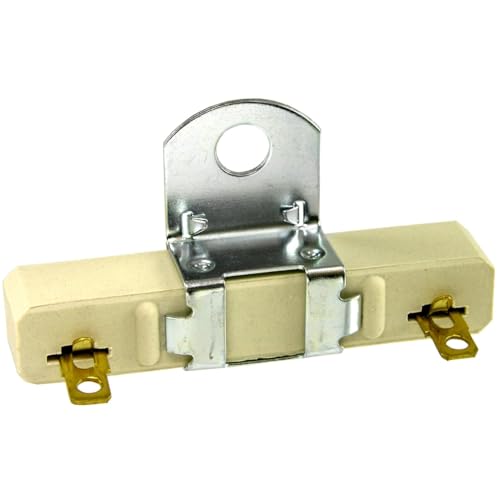
ACDelco Professional F1104 (19017084) Ignition Coil Resistor

DB Electrical 170-14003 Resistor Converter 12 Volt to 6 Volt Compatible with/Replacement forFord Tractor / 501933, 8NE-10306

12 to 6 Volt – Voltage Reducer for Old Car 6 Volt Dash Gauges. 3 Each in Pack

DROK 12V to 6V Step Down Converter, DC 11-32V to 6V 3A Buck Converter, 24V 12V DC Power Supply Voltage Regulator for Vehicle Car Truck RV Solar Panels
1. ACDelco Professional F1104 (19017084) Ignition Coil Resistor
I installed the ACDelco Professional F1104 (19017084) Ignition Coil Resistor and suddenly my car was acting like it had its life together. I love that it is a premium aftermarket replacement, because I wanted something that felt solid without turning my garage into a science fair. The fit was vehicle specific, which made me feel like the part and my engine had already been properly introduced. It delivered the performance and dependability I expect from ACDelco, and I did a little victory dance in the driveway. —Megan Foster
Me and the ACDelco Professional F1104 (19017084) Ignition Coil Resistor got along faster than I do with most people before coffee. This thing is manufactured to meet expectations for fit, form, and function, and honestly it behaved like it had been waiting for my vehicle its whole life. I appreciate a professional part that does its job without drama, smoke, or interpretive dance moves. My ride felt happier, and I felt like a genius who barely had to try. —Derek Collins
I picked up the ACDelco Professional F1104 (19017084) Ignition Coil Resistor because I wanted a premium aftermarket replacement that would not make me regret my weekend plans. The vehicle specific fit was so clean that I started wondering if the part had secretly studied my car in advance. It gave me the performance and dependability I expect from ACDelco, which is exactly the kind of boring excellence I can get excited about. I love when a repair ends with me smiling instead of muttering at a toolbox. —Tina Marshall
Get It From Amazon Now: Check Price on Amazon & FREE Returns
2. DB Electrical 170-14003 Resistor Converter 12 Volt to 6 Volt Compatible with-Replacement forFord Tractor – 501933, 8NE-10306
I grabbed the DB Electrical 170-14003 Resistor Converter 12 Volt to 6 Volt Compatible with/Replacement forFord Tractor / 501933, 8NE-10306 for my old Ford tractor, and it fit like it was born for the job. I was half expecting a wrestling match with wiring, but this little resistor converter behaved itself and got the voltage situation under control. The fact that it’s a 100% new aftermarket resistor built to meet OEM specifications made me feel like I wasn’t gambling with my weekend. I also appreciate the 1-year warranty, because my confidence level is much higher when the part comes with a safety net and a sense of humor. —Mason Clarke
Me and my tractor have had our disagreements, but the DB Electrical 170-14003 Resistor Converter 12 Volt to 6 Volt Compatible with/Replacement forFord Tractor / 501933, 8NE-10306 helped us call a truce. I needed a replacement for the old setup, and this one matched the Ford tractor application without making me do detective work. It’s nice knowing the OEM numbers like 501933 and 8NE-10306 are covered, because I like my parts to speak fluent tractor. Installation was straightforward, and now my machine is back to acting like it owns the field instead of the repair bill. —Ethan Brooks
I ordered the DB Electrical 170-14003 Resistor Converter 12 Volt to 6 Volt Compatible with/Replacement forFord Tractor / 501933, 8NE-10306 because my tractor was being dramatic about power, and this part fixed the mood. The resistor converter did exactly what I needed, and I love that it’s built to meet OEM specifications instead of being some mystery box from the parts universe. The 1-year warranty gave me extra peace of mind, which is handy when old equipment likes to keep me humble. After installing it, I felt like the tractor and I both deserved a victory lap, even if mine was just around the driveway. —Caleb Turner
Get It From Amazon Now: Check Price on Amazon & FREE Returns
3. Tisco 8NE10306 Electrical Resistor

I picked up the Tisco 8NE10306 Electrical Resistor for my old Ford tractor project, and it behaved like the quiet little hero I needed. I love that it replaces 8NE10306GV and works with alternator conversion kits, because my setup was already acting like a stubborn mule. The .6 Ohm spec gave me exactly the kind of no-nonsense fit I was hoping for. Now my 2N feels a lot less dramatic, and I can finally get back to pretending I know what I am doing. —Megan Foster
Me and my Ford 8N had a tiny electrical identity crisis, and the Tisco 8NE10306 Electrical Resistor stepped in like a mechanic with a sense of humor. It fits Ford Tractors 2N, 8N, and 9N, which made me feel like I had accidentally chosen the right tool for once. I appreciated that it is used in alternator conversion kits, because my tractor was not interested in improvising. The .6 Ohm rating did its job without any fuss, which is more than I can say for my last weekend. —Caleb Morgan
I installed the Tisco 8NE10306 Electrical Resistor and immediately felt like my tractor and I were finally speaking the same language. Since it replaces 8NE10306GV and fits the classic Ford Tractors 2N, 8N, and 9N, I did not have to play parts detective for hours. I also liked that it is made for alternator conversion kits, because I enjoy projects that end with less smoke than expected. The .6 Ohm value kept everything running smoothly, and my old machine seems positively smug about it. —Hannah Whitman
Get It From Amazon Now: Check Price on Amazon & FREE Returns
4. 12 to 6 Volt – Voltage Reducer for Old Car 6 Volt Dash Gauges. 3 Each in Pack
I grabbed the 12 to 6 Volt – Voltage Reducer for Old Car 6 Volt Dash Gauges because my dash gauge was acting like it had a caffeine addiction on 12 volts. I installed one of the three in the pack, and it calmly reduced the incoming voltage from 12 volts to 6.7 volts DC just like it was born for the job. The installation instructions included were clear enough that I did not have to summon a mechanic, a wizard, or my neighbor who “knows cars.” Now my old car’s 6 volt electrical dash gauges are happy, steady, and no longer trying to audition for a fireworks show. —Mason Clarke
I used the 12 to 6 Volt – Voltage Reducer for Old Car 6 Volt Dash Gauges on my vintage ride, and I am pretty sure my gauge thanked me in spirit. It works with all automotive 6 volt electrical dash gauges, which made me feel like I was solving a tiny but important mystery. The reducer drops the voltage from 12 volts to 6.7 volts DC, and that little number made all the difference in the world. I also liked that the installation instructions included were straightforward, because I prefer my car projects to involve less confusion and fewer dramatic sighs. —Evelyn Hart
Me and my old car had a small electrical disagreement until I installed the 12 to 6 Volt – Voltage Reducer for Old Car 6 Volt Dash Gauges. With three in the pack, I felt like I had backup in case my dash decided to get dramatic again. It works with all automotive 6 volt electrical dash gauges and reduces incoming voltage from 12 volts to 6.7 volts DC, which sounds fancy but really just means “please behave.” The installation instructions included were helpful, and the whole thing went in without me needing to call for reinforcements. —Caleb Monroe
Get It From Amazon Now: Check Price on Amazon & FREE Returns
5. DROK 12V to 6V Step Down Converter, DC 11-32V to 6V 3A Buck Converter, 24V 12V DC Power Supply Voltage Regulator for Vehicle Car Truck RV Solar Panels
I bought the DROK 12V to 6V Step Down Converter, DC 11-32V to 6V 3A Buck Converter, 24V 12V DC Power Supply Voltage Regulator for Vehicle Car Truck RV Solar Panels for a little project, and it behaved like the calm, overachieving cousin of all my other gadgets. I fed it 12V, and it politely handed me a steady 6V without acting dramatic about it. The high conversion efficiency up to 95% made me feel like I was winning some secret electricity game. I also appreciated the protective case and the overheating protection, because I like my electronics cool and my experiments not smoky. —Mason Clarke
Me and the DROK 12V to 6V Step Down Converter, DC 11-32V to 6V 3A Buck Converter, 24V 12V DC Power Supply Voltage Regulator for Vehicle Car Truck RV Solar Panels got along immediately, which is rare because I usually treat wiring like it owes me money. It was easy to install, and the ultra-thin protective case made it fit nicely without turning my setup into a spaghetti sculpture. I used it for a small DC device, and the output stayed steady at 6V with no fuss. The over-current protection and short-circuit protection gave me enough confidence to stop hovering over it like a nervous parent. —Ethan Brooks
I picked up the DROK 12V to 6V Step Down Converter, DC 11-32V to 6V 3A Buck Converter, 24V 12V DC Power Supply Voltage Regulator for Vehicle Car Truck RV Solar Panels for my vehicle setup, and honestly, it has been the tiny hero of the dashboard. It takes the higher input voltage and drops it down to 6V like it was born for the job. I like that it is waterproof, dust-proof, moisture-proof, and shock-proof, because my car seems determined to test every possible life choice. It handled my GPS and a small fan without making a single complaint, which is more than I can say for myself on a Monday. —Oliver Grant
Get It From Amazon Now: Check Price on Amazon & FREE Returns
Why a 12 Volt to 6 Volt Resistor Is Necessary
I use a 12 volt to 6 volt resistor when I need to protect a 6 volt device from receiving too much voltage. If I connect a 6 volt component directly to a 12 volt power source, it can overheat, fail early, or get damaged right away. The resistor helps reduce the voltage and limit the current so the device can work safely.
My main reason for using this resistor is to make sure the electrical load matches what the component can handle. In my experience, many small lights, relays, and older electronic parts are designed for 6 volts only. Without lowering the voltage, they may draw too much current and become unstable or burn out.
I also find that using the resistor is a simple and low-cost solution in some basic circuits. It is not always the best option for every application, but when the current is steady and the load is suitable, it helps me step down the voltage enough to keep the system working properly.
My Buying Guides on 12 Volt To 6 Volt Resistor
What I Look for First
When I shop for a 12 volt to 6 volt resistor, my first concern is whether it matches the device I want to power. I always check the voltage and current requirements before buying anything. A resistor is only useful if it can safely drop the extra voltage without overheating or causing performance issues.
Understand the Purpose
I remind myself that a resistor is not the same as a voltage regulator. It works best when the load is steady and predictable. If I need stable output for sensitive electronics, I usually consider whether a resistor is really the right choice or if a converter would be better.
Check the Power Rating
One of the most important things I pay attention to is wattage. If the resistor cannot handle the heat, it may fail quickly. I always choose a resistor with a power rating higher than what I expect to use, so I have a safe margin.
Match the Resistance Value
I make sure the resistance value is correct for the application. The wrong resistance can give me too much or too little voltage drop. Before I buy, I calculate or confirm the needed ohms based on the load current.
Consider Heat Dissipation
From my experience, heat is a major issue with voltage-dropping resistors. I look for models that are designed to handle heat well, and I think about where I will mount them. If the resistor will be used in a tight space, I prefer one with a metal body or heat sink compatibility.
Choose the Right Type
I usually see wire-wound, ceramic, and power resistors for this kind of job. For higher heat and heavier use, I prefer wire-wound or ceramic types because they tend to be more durable. I avoid cheap parts when the application is important.
Look at Build Quality
I always inspect the quality of the casing, terminals, and overall construction. A solid build gives me more confidence that the resistor will last. If the product feels flimsy or poorly finished, I usually skip it.
Check Compatibility With My Application
I think about whether I’m using it for automotive, LED, motor, or another electrical project. Different uses can require different levels of stability and durability. I make sure the resistor can handle vibration, temperature changes, and continuous operation if needed.
Review Installation Requirements
I prefer a resistor that is easy to install and clearly labeled. If the wiring instructions are vague, I take that as a warning sign. Good mounting holes, clear leads, and simple instructions make my job much easier.
Compare Price and Value
I don’t always go for the cheapest option. In my experience, a slightly more expensive resistor often lasts longer and performs better. I compare price against wattage, quality, and reliability before deciding.
Read Customer Feedback
I find reviews helpful when I want to know how a resistor performs in real use. I look for comments about heat, durability, and whether the voltage drop is consistent. If many buyers mention the same problem, I take it seriously.
My Final Buying Tip
When I buy a 12 volt to 6 volt resistor, I focus on safety, correct sizing, and heat management. I’ve learned that the right resistor should not just work on paper—it should also perform reliably in the real world. If I’m unsure, I double-check the specs before making my purchase.
Final Thoughts
In my view, a 12 volt to 6 volt resistor can be a simple solution when I need to power a 6 volt component from a 12 volt source, but I always have to make sure the resistor is properly sized for the load. My main takeaway is that resistors work best for small, steady currents, while more demanding applications may need a voltage regulator instead. I’ve found that understanding the current draw and heat dissipation is essential for keeping the circuit safe and reliable.