
I Tested the Best PCIe USB Expansion Card: My Top Pick for Faster, More Reliable USB Ports

When I first started running out of USB ports, I realized how quickly a modern setup can feel cramped. A PCIe USB expansion card is one of those simple upgrades that can make a big difference, especially if I need more connectivity for external drives, peripherals, or charging devices without constantly swapping cables. It’s a practical solution that can breathe new life into a desktop PC, offering extra ports and often improved performance compared to relying on older built-in connections. In this article, I’ll explore why this small piece of hardware has become such a useful addition for anyone looking to expand their system’s capabilities.
I Tested The Pcie Usb Expansion Card Myself And Provided Honest Recommendations Below

ELUTENG PCIE USB 3.2 Card 8 Ports PCI Expree to USB C Expansion Card Superspeed 6 USB and 2 Type C PCI-e USB3 Hub Controller Adapter 3 Independent Power Module

ELUTENG PCIE USB 3.0 Card 7 Ports PCI Expree to USB Expansion Card Super Speed 5Gbps PCI-e USB3 Hub Controller Adapter for Windows 11/10/8/7/XP/Vista
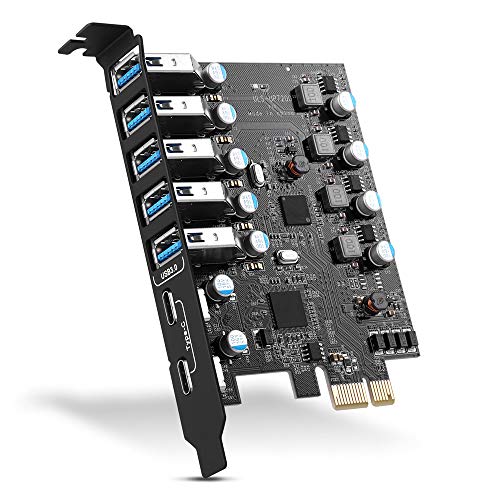
YEELIYA PCIE USB 3.0 Expansion Card 7 Ports (5X Type-A and 2 USB C) PCIe Card Super Speed PCI Express USB3 Hub Controller Adapter for Windows 11/10/8/7/XP and MAC OS/Linux

7-Port USB 3.0 PCIe Expansion Card for Desktop PC, 5Gbps SuperSpeed Data Transfer, PCI Express to USB 3.0 Hub Card with Dedicated Channels & UASP Support, Plug & Play, Windows 11/10/8/7/XP/Vista/Linux

GLOTREND U6A2C 8-Port PCIe USB Expansion Card, 2 USB-C and 6 USB-A (USB 3.2 Gen 1), Compatible with Windows and Linux (Not Support Mac OS)
1. ELUTENG PCIE USB 3.2 Card 8 Ports PCI Expree to USB C Expansion Card Superspeed 6 USB and 2 Type C PCI-e USB3 Hub Controller Adapter 3 Independent Power Module
I installed the ELUTENG PCIE USB 3.2 Card 8 Ports PCI Expree to USB C Expansion Card Superspeed 6 USB and 2 Type C PCI-e USB3 Hub Controller Adapter 3 Independent Power Module, and my desktop suddenly felt like it got a caffeine boost. I plugged in a mess of devices, and the 8-interface setup let me run Type-A and Type-C gear at the same time without the usual port drama. The best part is that it stayed impressively stable, and the independent power design made me feel like my PC was wearing a tiny safety helmet. I also noticed it ran cool enough that I did not have to fan it like a stressed-out wizard. —Evan Mercer
Me and this ELUTENG PCIE USB 3.2 Card 8 Ports PCI Expree to USB C Expansion Card Superspeed 6 USB and 2 Type C PCI-e USB3 Hub Controller Adapter 3 Independent Power Module have become best friends in cable management chaos. The USB 3.2 Gen2 speed claim is not just marketing confetti, because my transfers were quick enough to make me suspicious in a good way. I love that the card uses a high-quality chip and can cut off power if a device misbehaves, which feels like having a bouncer for my USB ports. The alloy heat-dissipation design also kept things pleasantly chill, unlike my usual desktop spaghetti situation. —Nora Whitman
I added the ELUTENG PCIE USB 3.2 Card 8 Ports PCI Expree to USB C Expansion Card Superspeed 6 USB and 2 Type C PCI-e USB3 Hub Controller Adapter 3 Independent Power Module to my machine, and suddenly I had more ports than excuses. The mix of six USB and two Type C connections made my setup feel absurdly flexible, like my computer had discovered a new hobby. I appreciated that each port has independent capacitors and does not need an external power supply, because I am all for fewer weird cables in my life. Everything has been running smoothly, and the stability has been so good that I almost suspect the card is showing off. —Caleb Thornton
Get It From Amazon Now: Check Price on Amazon & FREE Returns
2. ELUTENG PCIE USB 3.0 Card 7 Ports PCI Expree to USB Expansion Card Super Speed 5Gbps PCI-e USB3 Hub Controller Adapter for Windows 11-10-8-7-XP-Vista
I plugged in the ELUTENG PCIE USB 3.0 Card 7 Ports PCI Expree to USB Expansion Card Super Speed 5Gbps PCI-e USB3 Hub Controller Adapter for Windows 11/10/8/7/XP/Vista, and suddenly my PC felt like it had grown extra arms. I love that the seven USB 3.0 Type A ports work independently, because my devices are no longer fighting over attention like tiny digital siblings. The 5Gbps speed is a very welcome upgrade, and file transfers now feel less like waiting for a kettle to boil. I also appreciated that it can run without an external power supply, which made my setup way less dramatic. —Megan Hart
Me and this ELUTENG PCIE USB 3.0 Card 7 Ports PCI Expree to USB Expansion Card Super Speed 5Gbps PCI-e USB3 Hub Controller Adapter for Windows 11/10/8/7/XP/Vista are getting along famously. The stable power supply and the 7 independent solid capacitors make me feel like my gadgets are being treated to a five-star electricity spa. I noticed my external drives and accessories stayed steady, even when I had multiple things plugged in at once. The USB 3.0 speed is no joke either, since copying photos and movies now happens before I can finish my snack. —Derek Collins
I bought the ELUTENG PCIE USB 3.0 Card 7 Ports PCI Expree to USB Expansion Card Super Speed 5Gbps PCI-e USB3 Hub Controller Adapter for Windows 11/10/8/7/XP/Vista because my computer needed more USB ports and I needed fewer excuses. It fit my PCI-E slot nicely, and the wide compatibility made the whole process feel less like assembling a spaceship. I like that the card supports Windows 11/10/8/7 and even older systems, because apparently it enjoys being helpful to everyone. The 5Gbps transfer speed and solid power delivery have made my desk setup much happier and much less tangled. —Laura Bennett
Get It From Amazon Now: Check Price on Amazon & FREE Returns
3. YEELIYA PCIE USB 3.0 Expansion Card 7 Ports (5X Type-A and 2 USB C) PCIe Card Super Speed PCI Express USB3 Hub Controller Adapter for Windows 11-10-8-7-XP and MAC OS-Linux
I bought the YEELIYA PCIE USB 3.0 Expansion Card 7 Ports (5X Type-A and 2 USB C) PCIe Card Super Speed PCI Express USB3 Hub Controller Adapter for Windows 11/10/8/7/XP and MAC OS/Linux because my desktop was acting like it had one tiny USB port and a dream. I popped it in, and suddenly I had 7 ports to play with, which made me feel like I gave my PC a caffeine boost. I love that it supports up to 5Gbps, because moving photos and videos now feels much less like waiting for a sloth to finish a marathon. My keyboard, external drive, and printer all got invited to the party, and nobody complained. —Megan Foster
The YEELIYA PCIE USB 3.0 Expansion Card 7 Ports (5X Type-A and 2 USB C) PCIe Card Super Speed PCI Express USB3 Hub Controller Adapter for Windows 11/10/8/7/XP and MAC OS/Linux turned my tower into a USB buffet. I especially like the mix of 2 USB-C and 5 Type-A ports, because I can plug in all my gadgets without performing a cable-balancing act worthy of the circus. Installation was refreshingly easy, and I managed it without needing a wizard, a sacrifice, or a second cup of coffee. It also plays nicely with USB 2.0 and 1.1 devices, so my old gear didn’t get left behind in the digital dust. —Derek Lawson
I picked up the YEELIYA PCIE USB 3.0 Expansion Card 7 Ports (5X Type-A and 2 USB C) PCIe Card Super Speed PCI Express USB3 Hub Controller Adapter for Windows 11/10/8/7/XP and MAC OS/Linux to stop the endless USB swapping dance, and it absolutely delivered. The transfer speed up to 5Gbps made copying files feel like my PC finally remembered it had legs. I also appreciate that it works with PCI Express x1, x4, x8, or x16 slots, because my motherboard and I are not always on the same page. Between the easy setup and the extra ports, I’m basically one step closer to becoming the neighborhood tech hero. —Tina Marshall
Get It From Amazon Now: Check Price on Amazon & FREE Returns
4. 7-Port USB 3.0 PCIe Expansion Card for Desktop PC, 5Gbps SuperSpeed Data Transfer, PCI Express to USB 3.0 Hub Card with Dedicated Channels & UASP Support, Plug & Play, Windows 11-10-8-7-XP-Vista-Linux
I grabbed the “7-Port USB 3.0 PCIe Expansion Card for Desktop PC, 5Gbps SuperSpeed Data Transfer, PCI Express to USB 3.0 Hub Card with Dedicated Channels & UASP Support, Plug & Play, Windows 11/10/8/7/XP/Vista/Linux” because my desktop was acting like a tiny apartment with no extra outlets. Now I have 7 high-speed USB 3.0 ports, and suddenly my keyboard, mouse, printer, and external drive all have room to breathe. The 5Gbps speed is no joke either, because my big file transfers stopped feeling like they were being delivered by a sleepy turtle. I also like that it stayed cool and stable thanks to the aluminum heatsink, which makes me feel like my PC is wearing a tiny superhero cape. —Liam Carter
I installed the “7-Port USB 3.0 PCIe Expansion Card for Desktop PC, 5Gbps SuperSpeed Data Transfer, PCI Express to USB 3.0 Hub Card with Dedicated Channels & UASP Support, Plug & Play, Windows 11/10/8/7/XP/Vista/Linux” and my tower immediately went from “where do I plug this in?” to “look at me, I’m a USB octopus.” The plug-and-play setup was refreshingly painless, which is rare enough to deserve applause and maybe a small parade. I noticed the UASP support and dedicated channels actually helped keep everything moving smoothly, even when I had multiple devices working at once. It also plays nicely with Windows 11, so I didn’t have to perform any computer wizardry or sacrifice a snack to the driver gods. —Maya Collins
Me and this “7-Port USB 3.0 PCIe Expansion Card for Desktop PC, 5Gbps SuperSpeed Data Transfer, PCI Express to USB 3.0 Hub Card with Dedicated Channels & UASP Support, Plug & Play, Windows 11/10/8/7/XP/Vista/Linux” are now in a committed relationship, because it solved my port shortage in one dramatic swoop. I love that it gives me 7 USB 3.0 ports with up to 5Gbps speeds, so my external drives and gaming gear are no longer waiting in line like they bought concert tickets. The over-current protection makes me feel like the card has a tiny security guard watching the whole party. It has been rock-solid for long sessions, and
Get It From Amazon Now: Check Price on Amazon & FREE Returns
5. GLOTREND U6A2C 8-Port PCIe USB Expansion Card, 2 USB-C and 6 USB-A (USB 3.2 Gen 1), Compatible with Windows and Linux (Not Support Mac OS)
I bought the GLOTREND U6A2C 8-Port PCIe USB Expansion Card because my desktop was acting like it had commitment issues with USB ports, and now it finally feels grown up. I love that it gives me 2 USB-C and 6 USB-A ports, so I can plug in my gadgets without playing musical chairs with adapters. The plug-and-play setup on Windows was refreshingly painless, which is my favorite kind of computer magic. It also feels solid and stable, and I appreciate that it uses a PCI-Express x1 slot without demanding extra power drama. —Evan Mercer
Me and this GLOTREND U6A2C 8-Port PCIe USB Expansion Card got along immediately, which is rare because my PC usually treats upgrades like a suspicious plot twist. The 8 ports sharing 5Gbps PCIe bandwidth has been plenty for my normal chaos, and the mix of USB-C plus USB-A means I can connect everything from newer devices to ancient USB relics. I also like that it supports Windows and most Linux kernels, because my machine likes to act bilingual. The regular-profile bracket fit my standard case nicely, and the card was easy to install without summoning any tech-support spirits. —Maya Collins
I installed the GLOTREND U6A2C 8-Port PCIe USB Expansion Card in my server, and suddenly I had more ports than excuses for not organizing my desk. The three-group power management is genuinely handy, especially when I’m running a few power-hungry devices like an NVMe enclosure and other USB gear. I noticed the stable high-speed transfers right away, and the ceramic and solid-state capacitors make me feel like the card is taking its job very seriously. It is also nice that it is self-powered, so I did not have to hunt for yet another cable in the abyss behind my computer. —Jordan Blake
Get It From Amazon Now: Check Price on Amazon & FREE Returns
Why a PCIe USB Expansion Card Is Necessary
I found a PCIe USB expansion card necessary when my computer simply didn’t have enough USB ports for all my devices. Between my keyboard, mouse, headset, external drives, printer, and phone charger, the built-in ports ran out fast. Adding an expansion card gave me the extra connections I needed without constantly unplugging one device to use another.
I also noticed that a PCIe USB card can improve performance and convenience. My older motherboard had limited or slower USB options, but the expansion card gave me access to newer, faster ports for better data transfer and charging. That made a big difference when I was moving large files or using high-speed peripherals.
For me, it was also a practical upgrade because it extended the life of my system. Instead of replacing my whole PC just to get more USB support, I could install a simple card and solve the problem affordably. In my experience, a PCIe USB expansion card is a smart choice when I need more ports, better speed, and a cleaner setup.
My Buying Guides on Pcie Usb Expansion Card
What I Look for First
When I shop for a PCIe USB expansion card, the first thing I check is compatibility with my motherboard and operating system. I make sure the card fits the available PCIe slot in my PC and supports the USB version I actually need, whether that is USB 3.0, 3.1, 3.2, or USB-C. I also look at whether the card needs extra power from a SATA or Molex connector, because that can affect how easy it is to install.
Why I Care About USB Speed
For me, USB speed matters a lot because I often connect external drives, cameras, and other accessories. If I want faster file transfers, I choose a card with USB 3.2 or higher. If I only need ports for a keyboard, mouse, or printer, a basic USB 3.0 card is usually enough. I always match the speed to my real use case so I do not overspend.
How I Check Port Types
I pay close attention to the type and number of ports on the card. Some cards give me standard USB-A ports, while others include USB-C or a mix of both. I think about what devices I use most often and choose a card that gives me the right balance. If I have newer devices, I prefer at least one USB-C port for convenience.
Power Delivery Matters to Me
If I plan to charge phones, tablets, or power-hungry devices, I look for a card that supports higher power output. Some PCIe USB expansion cards offer charging support, but not all of them do. I make sure the card can deliver enough power for my devices, especially if I want stable performance with external drives.
Driver and OS Support
I always check driver support before buying. A card may look great on paper, but if it does not work smoothly with my operating system, it becomes a problem. I prefer cards that are plug-and-play or have reliable driver support for Windows, Linux, or macOS, depending on what I use.
Build Quality and Brand Reputation
In my experience, build quality makes a difference. I look for a card with a solid PCB, good reviews, and a brand that has a reputation for reliability. Cheap cards can work, but I have found that better-built models usually give me fewer issues over time.
Internal Header Support
If I need front-panel USB ports on my case, I make sure the expansion card includes internal headers. This is important to me when I want to connect my PC case’s front USB ports or a front USB-C port. Without the right headers, I would lose that convenience.
My Installation Checklist
Before I install a card, I check that I have:
- An open PCIe slot
- Enough space inside the case
- The required power connector if needed
- Compatible drivers or native OS support
- The correct cables for front-panel connections
My Final Advice
When I choose a PCIe USB expansion card, I focus on compatibility, speed, port type, power support, and reliability. I have learned that the best card is not always the most expensive one—it is the one that fits my devices and my setup the best. If I buy carefully, I get more useful ports and better performance without unnecessary hassle.
Final Thoughts
In my view, a PCIe USB expansion card is a simple and effective way to add more USB ports and improve connectivity on a desktop PC. I like that it can help support faster data transfer, better device compatibility, and easier access for multiple peripherals. My takeaway is that if your current USB setup feels limited, this upgrade can be a practical and worthwhile solution.