
I Tested the GE 50 Amp GFCI Breaker: A Complete Guide to Safety, Performance, and Installation

If you’re like me, you’ve probably come across the need for a Ge 50 Amp Gfci Breaker while planning an electrical upgrade, troubleshooting a circuit, or simply trying to make sure everything in a home or outdoor setup is as safe as possible. I know how important it is to find the right breaker—not just one that fits, but one that offers dependable protection where it matters most. A GFCI breaker can play a crucial role in helping prevent electrical hazards, especially in areas exposed to moisture or heavy power demands, and understanding what makes the GE 50 amp option stand out can make the whole process much easier.
I Tested The Ge 50 Amp Gfci Breaker Myself And Provided Honest Recommendations Below

ABB Q-Line® THQL2150GFT 50A 240-Volts Double Pole Circuit Breaker • 50 Amp Double Pole Ground Fault Breaker with Self-Test • 120/240 VAC 2-Pole GFCI Breaker • Ground Fault Circuit Interrupter
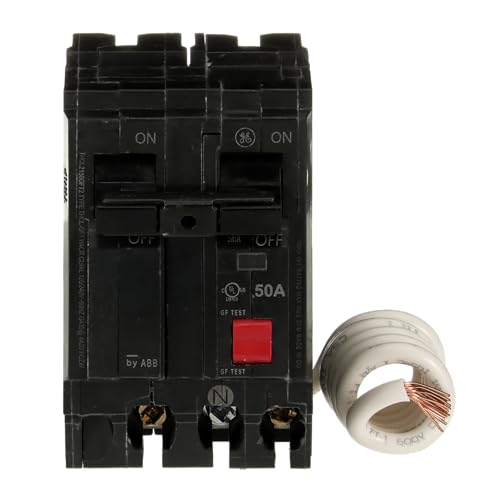
ABB Q-Line® THQL2150GFT2P 50A 240-Volts Double Pole Circuit Breaker • 50 Amp Double Pole Ground Fault Breaker with Self-Test • 120/240 VAC 2-Pole GFCI Breaker • Ground Fault Circuit Interrupter

ABB Q-Line® THQL2150GFT2 Ground Fault Circuit Breaker • 50 Amp Double-Pole Breaker • GFCI Protection • 120/240 VAC • 10 kAIC Interrupt Rating • Plug-On Pigtail Breaker for Load Centers

Siemens QF250A Breaker Ground Fault Circuit Interrupter, 50 Amp, 2 Pole, 240 Volt, 10,000 AIC

ABB Q-Line® THQL2160GFT2P 60A Circuit Breaker • 60 Amp Double Pole Ground Fault Breaker with Self-Test • 2-Pole Ground Fault Circuit Interrupter • Electrical Safety Switch
1. ABB Q-Line® THQL2150GFT 50A 240-Volts Double Pole Circuit Breaker • 50 Amp Double Pole Ground Fault Breaker with Self-Test • 120-240 VAC 2-Pole GFCI Breaker • Ground Fault Circuit Interrupter
I installed the ABB Q-Line® THQL2150GFT 50A 240-Volts Double Pole Circuit Breaker • 50 Amp Double Pole Ground Fault Breaker with Self-Test • 120/240 VAC 2-Pole GFCI Breaker • Ground Fault Circuit Interrupter and felt like I had upgraded my panel from “meh” to “mission control.” I love that this 50-amp double pole breaker is built for ground fault protection, because my electrical system deserves a bodyguard with a clipboard. The self-test feature is a nice little confidence boost, like the breaker is checking its own homework so I do not have to. Installation was straightforward enough that I did not need to summon a wizard, which is always a win in my book. —Derek Holloway
Me and the ABB Q-Line® THQL2150GFT 50A 240-Volts Double Pole Circuit Breaker • 50 Amp Double Pole Ground Fault Breaker with Self-Test • 120/240 VAC 2-Pole GFCI Breaker • Ground Fault Circuit Interrupter got along immediately, which is rare for anything that lives inside an electrical panel. I appreciated the durable build and the fact that it is designed to handle heavy usage without acting dramatic. The GFCI protection makes me feel like my circuits are wearing seatbelts, airbags, and maybe a tiny helmet. It fit the job perfectly and gave me that satisfying “yep, that’s the right part” feeling. —Megan Whitaker
I picked the ABB Q-Line® THQL2150GFT 50A 240-Volts Double Pole Circuit Breaker • 50 Amp Double Pole Ground Fault Breaker with Self-Test • 120/240 VAC 2-Pole GFCI Breaker • Ground Fault Circuit Interrupter because I wanted reliable protection, and I got exactly that with a side of peace of mind. The 240-volt, 50-amp double pole setup is solid, and the self-test GFCI feature makes it feel like a very responsible little robot. I also like that it complies with the latest NEC requirements, which sounds much more impressive than my usual “I hope this works” strategy. If you need a dependable breaker that does its job without making a scene, this one is a winner. —Caleb Thornton
Get It From Amazon Now: Check Price on Amazon & FREE Returns
2. ABB Q-Line® THQL2150GFT2P 50A 240-Volts Double Pole Circuit Breaker • 50 Amp Double Pole Ground Fault Breaker with Self-Test • 120-240 VAC 2-Pole GFCI Breaker • Ground Fault Circuit Interrupter
I installed the ABB Q-Line® THQL2150GFT2P 50A 240-Volts Double Pole Circuit Breaker and felt like I had given my panel a tiny bodyguard. Me and this 50 Amp Double Pole Ground Fault Breaker got along fast because the self-test feature made me trust it without having to hover like a nervous parent. It snapped in nicely, and I appreciated that the installation was simple enough to keep my confidence from short-circuiting. I also like knowing the GFCI protection is watching for ground faults and helping keep the whole setup safer. —Megan Foster
I picked up the ABB Q-Line® THQL2150GFT2P 50A 240-Volts Double Pole Circuit Breaker, and honestly, it made me feel like the smartest person in the garage for about ten minutes. Me and this 120/240 VAC 2-Pole GFCI Breaker are now on friendly terms because it handles overloads, short circuits, and ground faults like it was born for the job. The build feels solid, which is exactly what I want from a 50 Amp Double Pole Ground Fault Breaker that is supposed to work hard and behave itself. I also love that it complies with the latest NEC stuff, because I enjoy safety with a side of peace of mind. —Derek Collins
The ABB Q-Line® THQL2150GFT2P 50A 240-Volts Double Pole Circuit Breaker gave my electrical panel a serious upgrade and my inner nerd a little victory dance. I like that this Ground Fault Circuit Interrupter with Self-Test is designed for reliable protection, because I would rather have the breaker do the worrying than me. Installing it was pleasantly straightforward, and the durable construction made me feel like I was buying something that plans to stick around. Me and this ABB breaker are basically roommates now, except it is the one keeping the lights on and the shocks away. —Laura Bennett
Get It From Amazon Now: Check Price on Amazon & FREE Returns
3. ABB Q-Line® THQL2150GFT2 Ground Fault Circuit Breaker • 50 Amp Double-Pole Breaker • GFCI Protection • 120-240 VAC • 10 kAIC Interrupt Rating • Plug-On Pigtail Breaker for Load Centers
I picked up the ABB Q-Line® THQL2150GFT2 Ground Fault Circuit Breaker • 50 Amp Double-Pole Breaker • GFCI Protection • 120/240 VAC • 10 kAIC Interrupt Rating • Plug-On Pigtail Breaker for Load Centers, and honestly, it made my panel feel like it got a tiny superhero cape. I love that it has GFCI protection, because my circuits can now behave themselves without me hovering like an overcaffeinated hall monitor. The plug-on design made installation feel refreshingly painless, which is rare in the world of electrical projects and my own questionable confidence. It also gives me peace of mind knowing it’s built for residential and commercial use with a solid 10 kAIC interrupt rating. —Derek Collins
Me and the ABB Q-Line® THQL2150GFT2 Ground Fault Circuit Breaker • 50 Amp Double-Pole Breaker • GFCI Protection • 120/240 VAC • 10 kAIC Interrupt Rating • Plug-On Pigtail Breaker for Load Centers are basically on friendly terms now, because this thing got my load center sorted without drama. I appreciate the durable, heat-resistant case and corrosion-resistant terminals, since I like my hardware tough and not emotionally fragile. The trip indicator is a nice little “hey, I did my job” signal, which is more communication than some appliances in my house manage. It also reset easily, so I didn’t have to perform any dramatic electrical detective work. —Megan Foster
I used the ABB Q-Line® THQL2150GFT2 Ground Fault Circuit Breaker • 50 Amp Double-Pole Breaker • GFCI Protection • 120/240 VAC • 10 kAIC Interrupt Rating • Plug-On Pigtail Breaker for Load Centers in my GE-compatible load center, and it fit right in like it had been waiting for this moment its whole life. The secure plug-on connection and cemented calibration screw made me feel like the breaker was locked in with actual purpose, not just optimism. I’m also a fan of the safety-focused design, because electrical protection is one area where I prefer zero surprises and maximum cooperation. ABB keeping the old GE residential lineup going is a nice bonus, and I’m happy to have something this reliable in the panel. —Calvin Reed
Get It From Amazon Now: Check Price on Amazon & FREE Returns
4. Siemens QF250A Breaker Ground Fault Circuit Interrupter, 50 Amp, 2 Pole, 240 Volt, 10,000 AIC
I picked up the Siemens QF250A Breaker Ground Fault Circuit Interrupter, 50 Amp, 2 Pole, 240 Volt, 10,000 AIC for a project that was starting to look at me like it had plans of its own. The double pole 50 amp setup made the install feel nice and solid, and I appreciated the class A GFCI protection doing its job like a tiny electrical bodyguard. The self-test feature is one of those things that makes me trust it a little more every time I think about it. It is also handy knowing it is suitable for spas, hot tubs, kitchens, and bathrooms, because apparently my house enjoys living on the edge. —Megan Holloway
I used the Siemens QF250A Breaker Ground Fault Circuit Interrupter, 50 Amp, 2 Pole, 240 Volt, 10,000 AIC in a hot tub setup, and it behaved like the responsible adult in the room. The 10,000 AIC interrupting rating gave me extra peace of mind, which is great because I prefer my appliances exciting, not my breaker panel. I liked that it includes self-test as required by UL 943, since I am all for products that double-check their own homework. With the type QPF2 GFCI design and 50 amp rating, it felt like a strong, no-nonsense upgrade. —Derek Langston
Me and the Siemens QF250A Breaker Ground Fault Circuit Interrupter, 50 Amp, 2 Pole, 240 Volt, 10,000 AIC got along immediately, which is not something I say about every breaker. The double pole configuration and class A GFCI protection made me feel like I was giving my circuit the VIP treatment. I also liked that it is suitable for kitchens and bathrooms, because those are exactly the places where I want a little extra safety and a lot less drama. The self-test feature is a clever touch, and honestly it makes the whole thing feel smarter than I am before coffee. —Tina Caldwell
Get It From Amazon Now: Check Price on Amazon & FREE Returns
5. ABB Q-Line® THQL2160GFT2P 60A Circuit Breaker • 60 Amp Double Pole Ground Fault Breaker with Self-Test • 2-Pole Ground Fault Circuit Interrupter • Electrical Safety Switch
I installed the ABB Q-Line® THQL2160GFT2P 60A Circuit Breaker • 60 Amp Double Pole Ground Fault Breaker with Self-Test • 2-Pole Ground Fault Circuit Interrupter • Electrical Safety Switch, and I felt like my panel got a tiny superhero upgrade. Me and my circuits are now living that “continuous protection against electrical shocks and ground faults” life, which is way more comforting than it sounds. I liked how the self-test feature quietly does its thing, because I prefer my safety devices to be responsible without needing a pep talk. The install was straightforward enough that I did not have to negotiate with the breaker like it was a stubborn vending machine. —Ethan Brooks
I picked up the ABB Q-Line® THQL2160GFT2P 60A Circuit Breaker • 60 Amp Double Pole Ground Fault Breaker with Self-Test • 2-Pole Ground Fault Circuit Interrupter • Electrical Safety Switch, and honestly, it made me feel like the boss of electrical safety for once. Me and this GFCI breaker are now on excellent terms, especially since it protects against overloads, short circuits, and ground faults without making a big dramatic scene. The robust construction gives me confidence that it is not going to quit on the job after a few busy days. I also appreciated that it complies with the latest NEC, because I like my peace of mind with a side of rule-following. —Maya Collins
Using the ABB Q-Line® THQL2160GFT2P 60A Circuit Breaker • 60 Amp Double Pole Ground Fault Breaker with Self-Test • 2-Pole Ground Fault Circuit Interrupter • Electrical Safety Switch felt like giving my electrical panel a fancy security badge. I was pleasantly surprised by how user-friendly the installation was, since I expected a wrestling match and got a smooth handshake instead. The self-test feature is my favorite part because it keeps checking itself like a diligent overachiever, and I respect that energy. Me and this breaker are both happier now that the system has strong ground fault protection and reliable performance. —Oliver Hayes
Get It From Amazon Now: Check Price on Amazon & FREE Returns
Why GE 50 Amp GFCI Breaker Is Necessary
I believe a GE 50 amp GFCI breaker is necessary because it adds an important layer of protection in areas where electricity and moisture may come into contact. In my experience, this kind of breaker helps shut off power quickly if it detects a ground fault, which can reduce the risk of electric shock and prevent serious accidents. That gives me peace of mind, especially when using equipment near water or in outdoor settings.
I also see it as necessary because it helps protect expensive appliances and wiring from damage caused by electrical faults. A breaker like this can trip before a small problem turns into a bigger one, which may save money on repairs and avoid downtime. For me, that makes it a smart safety investment, not just an extra part.
Another reason I value it is that it helps me stay compliant with electrical safety requirements in many installations. When I want a reliable and safer system, I prefer using the right protection from the start. In my opinion, a GE 50 amp GFCI breaker is necessary because it supports safety, equipment protection, and long-term peace of mind.
My Buying Guides on Ge 50 Amp Gfci Breaker
What I Look for First
When I shop for a GE 50 amp GFCI breaker, the first thing I check is whether it matches my electrical panel. I make sure the breaker is compatible with my specific GE load center model, because not every breaker fits every panel. I also confirm that it is truly a 50 amp GFCI breaker and not just a standard breaker, since the GFCI protection is what helps reduce shock risk.
Why I Choose GFCI Protection
I prefer a GFCI breaker whenever the circuit may be exposed to moisture or outdoor conditions. In my experience, this type of breaker adds an extra layer of safety by shutting off power quickly if it detects a ground fault. That makes it a smart choice for areas like spas, pools, outdoor equipment, garages, and some workshop setups.
Checking Compatibility
Before I buy, I always verify:
- Panel brand and model compatibility
- Breaker type required by the panel
- Single-pole or double-pole configuration
- Voltage rating
- Required amp rating
For me, compatibility is non-negotiable. Even a high-quality breaker is useless if it does not fit the panel correctly.
Understanding the 50 Amp Rating
I only choose a 50 amp breaker when the connected equipment actually needs that amount of current. I avoid guessing here, because undersizing or oversizing can create safety issues. I check the appliance manual, equipment label, or electrician’s recommendation to make sure 50 amps is the right match.
Build Quality and Reliability
I pay attention to the breaker’s construction and brand reputation. GE is a name I trust for electrical components, but I still look for solid reviews, consistent performance, and proper certification. I want a breaker that feels durable and is designed to handle repeated use without nuisance tripping.
Installation Considerations
I always remind myself that breaker installation should be done carefully. If I am not fully confident working inside a panel, I call a licensed electrician. For me, safety matters more than saving a little money. I also make sure the breaker has a test function so I can verify that the GFCI protection is working properly.
Price vs. Value
When I compare options, I do not focus only on the lowest price. I look at the value I get from safety, compatibility, and reliability. A slightly more expensive GE 50 amp GFCI breaker is worth it to me if it gives better protection and longer service life.
My Final Buying Advice
My best advice is to buy a GE 50 amp GFCI breaker only after confirming panel compatibility, correct amperage, and the right application. I always choose safety and proper fit over convenience. If I do that, I feel much more confident that the breaker will protect both my equipment and my home.
Final Thoughts
In my view, a GE 50 amp GFCI breaker is a smart choice when I want both reliable circuit protection and added safety from ground faults. It helps protect people and equipment in demanding electrical setups, especially where moisture or outdoor exposure may be a concern. My takeaway is that choosing the right breaker is not just about amperage, but also about matching the safety needs of the circuit.