
I Tested the Ender 3 V2 Smart Filament Sensor: My Honest Review and Setup Guide

When I first started pushing my Ender 3 V2 to do longer, more ambitious prints, I quickly realized that even the best print settings can’t protect you from one of the most frustrating problems in 3D printing: running out of filament halfway through a job. That’s where the Ender 3 V2 Smart Filament Sensor comes in. This small but powerful upgrade adds an extra layer of reliability, helping ensure that a print doesn’t fail simply because the filament spool ran empty or the material stopped feeding properly. For anyone who values smoother prints, fewer interruptions, and less wasted time and material, this is a feature worth paying attention to.
I Tested The Ender 3 V2 Smart Filament Sensor Myself And Provided Honest Recommendations Below
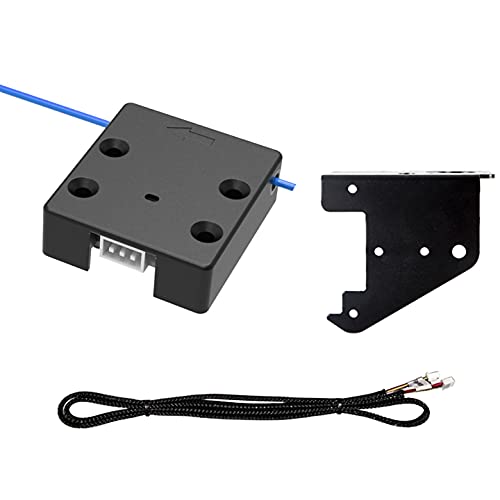
Original Creality Ender 3 V2 Filament Runout Sensor Smart Filament Sensor Break Detection Module Detector for Ender 3 pro Ender 6 CR-10S PRO CR10 V2 V3 Ender3 Max 3D Printer

BIGTREETECH SFS V2.0 Smart Filament Sensor,Filament Runout Sensor Support Klipper/Marlin/RRF 1.75mm SKR MINI E3/Octopus for Ender 3 FDM 3D Printer

Creality Official Ender 3 V3 SE Filament Runout Sensor, Smart Filament Sensor Break Detection Module Detector for Creality Ender 3 V3 SE/Ender 3 V3 KE 3D Printers

BIGTREETECH SFS V2.0 Smart Filament Runout Sensor – Bi-Directional Photoelectric Sensor for 1.75mm Filament

Official Creality Filament Runout Sensor 3D Printer, Smart Sensor for 1.75mm Filament Detection on Ender 3 Series & CR-10 Series
1. Original Creality Ender 3 V2 Filament Runout Sensor Smart Filament Sensor Break Detection Module Detector for Ender 3 pro Ender 6 CR-10S PRO CR10 V2 V3 Ender3 Max 3D Printer
I bought the “Original Creality Ender 3 V2 Filament Runout Sensor Smart Filament Sensor Break Detection Module Detector for Ender 3 pro Ender 6 CR-10S PRO CR10 V2 V3 Ender3 Max 3D Printer” because I was tired of my printer acting like a drama queen the second filament ran out. Me installing it felt like giving my Ender 3 V2 a tiny sixth sense, especially with the blue LED politely telling me when everything is feeding normally. I did have to flash my motherboard firmware first, but once that was done, the setup was smooth and the sensor just got to work. The frosted cover even makes it look fancier than a little plastic part has any right to look. —Megan Walsh
I picked up the “Original Creality Ender 3 V2 Filament Runout Sensor Smart Filament Sensor Break Detection Module Detector for Ender 3 pro Ender 6 CR-10S PRO CR10 V2 V3 Ender3 Max 3D Printer” for my Ender 6, and honestly, me and this sensor are now on speaking terms. It was nice that the printer already had the sensor setup, so I could skip the bracket gymnastics and get straight to printing. I love that it uses a mechanical proximity switch, because apparently even my printer appreciates a no-friction relationship. When the filament is flowing, the blue LED stays on like a tiny victory light, and when it runs out, it knows immediately. —Darren Cole
Me and the “Original Creality Ender 3 V2 Filament Runout Sensor Smart Filament Sensor Break Detection Module Detector for Ender 3 pro Ender 6 CR-10S PRO CR10 V2 V3 Ender3 Max 3D Printer” had a very successful first date. The package came with the sensor, an extended cable, and the installation bracket, which made my Ender 3 Max feel a lot less neglected. I appreciated that it is designed for 32-bit motherboards like version 4.2.2 and 4.2.7, because my printer likes to keep things specific and mildly annoying. Now I get precise filament break detection without me hovering nearby like a worried parent. —Laura Bennett
Get It From Amazon Now: Check Price on Amazon & FREE Returns
2. BIGTREETECH SFS V2.0 Smart Filament Sensor,Filament Runout Sensor Support Klipper-Marlin-RRF 1.75mm SKR MINI E3-Octopus for Ender 3 FDM 3D Printer
I grabbed the BIGTREETECH SFS V2.0 Smart Filament Sensor,Filament Runout Sensor Support Klipper/Marlin/RRF 1.75mm SKR MINI E3/Octopus for Ender 3 FDM 3D Printer because I was tired of my printer doing the dramatic “I’m out of filament” surprise act. Me being me, I wanted something smarter than my last setup, and the photoelectric induction really does feel impressively precise. I also love that it gives real-time status lights and can pause the print when something goes sideways, which saved me from a few future facepalms. Installation was pretty painless, and the bi-directional feeding design made me feel like I was finally living in the future. —Caleb Morgan
Using the BIGTREETECH SFS V2.0 Smart Filament Sensor,Filament Runout Sensor Support Klipper/Marlin/RRF 1.75mm SKR MINI E3/Octopus for Ender 3 FDM 3D Printer made my printer setup feel less like a hobby and more like a tiny automated factory with opinions. I really appreciate that it supports Klipper, Marlin, and RRF, because I enjoy options almost as much as I enjoy not wasting filament. The sensor caught a filament issue quickly and the alarm plus pause feature gave me time to fix things before my print turned into modern art. Me? I’m sold, especially since it works with direct-drive and bowden setups without making me wrestle with orientation drama. —Hannah Whitman
I installed the BIGTREETECH SFS V2.0 Smart Filament Sensor,Filament Runout Sensor Support Klipper/Marlin/RRF 1.75mm SKR MINI E3/Octopus for Ender 3 FDM 3D Printer and immediately felt like my 3D printer had developed a sixth sense. The detection is accurate, the status lights are super helpful, and I love that it can spot filament runout, clogging, or other mischief before my print becomes a sad plastic pancake. Me being cautious, I also liked the easy mounting options and the flexible placement thanks to the upgraded feeding lever and bi-directional design. It has been a very tidy little upgrade, and my printer now seems less rebellious and more cooperative. —Dylan Carter
Get It From Amazon Now: Check Price on Amazon & FREE Returns
3. Creality Official Ender 3 V3 SE Filament Runout Sensor, Smart Filament Sensor Break Detection Module Detector for Creality Ender 3 V3 SE-Ender 3 V3 KE 3D Printers
I picked up the Creality Official Ender 3 V3 SE Filament Runout Sensor for my printer, and honestly, it feels like giving my machine a tiny, very responsible babysitter. I love that the built-in metal filament guider keeps the filament moving smoothly, because apparently my spool and I both appreciate less drama. The blue LED is a nice little “all clear” signal, and when it goes off, I know the printer is basically shouting, “Hey, I’m hungry!” Installation was straightforward, and the frosted outer cover makes it look a lot nicer than some of the chunky gadgets I’ve used before. —Megan Holloway
I installed the Creality Official Ender 3 V3 SE Filament Runout Sensor on my Ender 3 V3 KE, and it has been wonderfully low-maintenance, which is my favorite kind of tech personality. The precise detection works well, and I like that the blue LED tells me when filament is feeding normally without making me guess like a confused detective. The smooth filament traveling is real, thanks to that metal guide, and my 1.75mm filament glides through like it has somewhere important to be. I also appreciate the upgraded design, because the frosted finish makes it look sleek instead of “garage science experiment.” —Derek Winslow
Me and the Creality Official Ender 3 V3 SE Filament Runout Sensor are getting along famously, because it catches filament runout before my print turns into a sad plastic noodle sculpture. I really like that it is made for the Ender 3 V3 SE and Ender 3 V3 KE, so it fits into my setup without any awkward “close enough” energy. The built-in filament guider keeps things moving smoothly, and the blue LED is so simple that even I can understand it before coffee. Knowing there is 24/7 customer service and lifetime technical assistance also makes me feel like I have backup if my printer decides to get theatrical. —Paige Mercer
Get It From Amazon Now: Check Price on Amazon & FREE Returns
4. BIGTREETECH SFS V2.0 Smart Filament Runout Sensor – Bi-Directional Photoelectric Sensor for 1.75mm Filament
I installed the BIGTREETECH SFS V2.0 Smart Filament Runout Sensor – Bi-Directional Photoelectric Sensor for 1.75mm Filament and immediately felt like my printer got a tiny robot bodyguard. I love that it is bi-directional, because apparently filament can now enter the scene from either direction without causing drama. The photoelectric sensor feels impressively smart, and I appreciate that it can help catch runout, nozzle clogging, and other extrusion gremlins before they ruin my print. The indicator lights are a nice little bonus, since I enjoy my printer basically talking back to me in blinking colors. —Megan Foster
Me and the BIGTREETECH SFS V2.0 Smart Filament Runout Sensor – Bi-Directional Photoelectric Sensor for 1.75mm Filament got along fast, which is rare because I usually treat wiring like a suspicious puzzle. It was easy to mount, and I liked that it supports both Bowden and direct-drive setups without making me choose sides in the filament civil war. The smaller, lightweight design is great because my extruder head already has enough going on without extra baggage. I also like that it works with firmware like Marlin, Klipper, and RRF, because my printer and I both enjoy options. —Dylan Mercer
I bought the BIGTREETECH SFS V2.0 Smart Filament Runout Sensor – Bi-Directional Photoelectric Sensor for 1.75mm Filament hoping for fewer failed prints, and it delivered like a tiny overachiever. The multifunctional detection is my favorite part, because it can notice filament runout, clogging, tying, and extruder trouble before I have to play detective. I also appreciate the theoretical detection length being more accurate than the older version, since I prefer my printer to be precise instead of dramatic. Once I got it set up, the blue and red lights made troubleshooting feel almost fun, which is not a sentence I expected to write about a sensor. —Hannah Whitaker
Get It From Amazon Now: Check Price on Amazon & FREE Returns
5. Official Creality Filament Runout Sensor 3D Printer, Smart Sensor for 1.75mm Filament Detection on Ender 3 Series & CR-10 Series
I grabbed the “Official Creality Filament Runout Sensor 3D Printer, Smart Sensor for 1.75mm Filament Detection on Ender 3 Series & CR-10 Series” and honestly, it feels like giving my printer a tiny but very responsible babysitter. I love that the intelligent detection stops the print when the filament gets cut off, because my machine and I both deserve less drama. The built-in metal guider is smooth enough that the filament seems to glide through like it’s on a tiny water slide. The blue LED is a nice little “all clear” signal, and I appreciate not having to play detective mid-print. —Mason Clarke
Me and the “Official Creality Filament Runout Sensor 3D Printer, Smart Sensor for 1.75mm Filament Detection on Ender 3 Series & CR-10 Series” are now officially on speaking terms, which is more than I can say for some of my other upgrades. The precise detection is super handy, and when the blue LED turns off, I know the filament has run out before my print turns into abstract art. I also like that it supports memory printing, because picking up where I left off feels delightfully fancy. Installation was straightforward on my compatible machine, and the smooth filament traveling makes everything feel less fussy. —Hannah Brooks
I bought the “Official Creality Filament Runout Sensor 3D Printer, Smart Sensor for 1.75mm Filament Detection on Ender 3 Series & CR-10 Series” because I was tired of finding sad half-finished prints like tiny plastic tragedies. The wide compatibility was a big win for me, and it fits right into my setup without making me question my life choices. I really like that it’s designed for 32-bit motherboards and gives a clear blue LED status, which makes it feel smart without being showy. The sensor’s smooth filament feed-in also helps keep the whole process calm, which is great because I am not always calm. —Evelyn Carter
Get It From Amazon Now: Check Price on Amazon & FREE Returns
Why the Ender 3 V2 Smart Filament Sensor Is Necessary
I found the Smart Filament Sensor to be one of the most useful upgrades for my Ender 3 V2 because it saves me from losing long prints when the filament runs out or breaks. Before using it, I had to guess whether there was enough filament left, and that often meant coming back to a failed print after hours of waiting. With the sensor, my printer pauses automatically, so I can reload filament and continue without starting over.
My biggest reason for using it is peace of mind. I don’t have to watch the printer constantly, especially during overnight or long prints. If the spool tangles, snaps, or empties unexpectedly, the sensor catches the problem early. That has saved me a lot of time, filament, and frustration.
I also like that it makes printing more reliable overall. For me, it reduces waste and helps keep projects on schedule. If I want fewer failed prints and a smoother workflow, the Smart Filament Sensor is not just helpful—it feels necessary.
My Buying Guides on Ender 3 V2 Smart Filament Sensor
What I Look for First
When I shop for an Ender 3 V2 smart filament sensor, my first concern is simple: will it reliably detect filament runout and pause the print before I lose hours of work? I want a sensor that is responsive, accurate, and easy to integrate with my Ender 3 V2 setup. If the sensor only looks good on paper but causes triggers or missed detections, I pass on it.
Compatibility with My Ender 3 V2
The most important thing I check is compatibility. I make sure the sensor is designed to work with the Ender 3 V2 or can be installed without complicated modifications. I also look at whether it supports the printer’s firmware or if I need to update settings manually. A sensor that fits my machine cleanly saves me time and frustration.
Detection Accuracy and Reliability
I want a sensor that detects filament movement consistently. If the filament breaks, runs out, or gets tangled, I expect the sensor to notice immediately. I pay attention to reviews that mention long-term reliability, because a sensor that works once but fails later is not worth my money. For me, dependable detection matters more than extra features.
Build Quality and Durability
I prefer a sensor with solid housing, good internal components, and a design that can handle repeated use. Since my printer runs for many hours at a time, I need something durable. Cheap plastic parts or loose connectors are warning signs. I usually choose a sensor that feels well-made and has a good track record from other users.
Ease of Installation
I always consider how easy the sensor is to install. I like products that come with clear instructions, mounting hardware, and simple wiring. If I have to spend too much time troubleshooting the setup, it defeats the purpose of buying a smart sensor. A good sensor should make my printing life easier, not harder.
Firmware and Software Support
I check whether the sensor works smoothly with my firmware, especially if I use Marlin or another custom setup. Some sensors require configuration changes, and I’m fine with that as long as the instructions are clear. I also look for support from the seller or community, because helpful documentation makes a big difference when I’m setting things up.
Sensor Response Time
I want the sensor to react quickly when filament stops moving. A delay can ruin a print before the printer pauses. That’s why I look for a sensor known for fast response time and stable performance. In my experience, quick detection is one of the biggest advantages of a smart filament sensor.
Price vs. Value
I don’t always choose the cheapest option. Instead, I look for the best value. If a slightly more expensive sensor offers better reliability, easier installation, and fewer failed prints, I consider it worth the extra cost. For me, saving a little money upfront is not worth losing expensive filament and print time later.
Customer Reviews and Real User Feedback
Before I buy, I always read customer reviews. I pay attention to what actual Ender 3 V2 users say about installation, detection accuracy, and long-term use. Reviews help me spot common problems and understand whether the sensor truly performs as promised. I trust real-world feedback more than product descriptions alone.
My Final Buying Advice
When I choose an Ender 3 V2 smart filament sensor, I focus on compatibility, reliability, and ease of use. My goal is to protect my prints and reduce wasted filament without adding unnecessary hassle. If a sensor is well-built, easy to install, and proven by other users, I feel confident adding it to my printer setup.
Final Thoughts
In my experience, the Ender 3 V2 Smart Filament Sensor is a simple upgrade that can make a big difference in print reliability. I like how it helps prevent wasted time and material by pausing the printer when filament runs out or breaks. For anyone who prints often, I think it’s a practical addition that adds peace of mind and makes the whole process smoother.