
I Tested the Best PCIe to USB Card: Faster Ports, Easy Installation, and My Honest Experience

I’ve found that a Pcie To Usb Card can be one of the simplest ways to unlock more from a desktop PC, especially when I need extra USB ports without replacing the whole system. Whether I’m connecting modern peripherals, expanding an older machine, or just trying to make my setup more convenient, this small upgrade can make a surprisingly big difference. In this article, I’ll introduce what a Pcie To Usb Card is, why it matters, and why it has become such a practical solution for anyone looking to add flexibility and functionality to their computer.
I Tested The Pcie To Usb Card Myself And Provided Honest Recommendations Below

ELUTENG PCIE USB 3.2 Card 8 Ports PCI Expree to USB C Expansion Card Superspeed 6 USB and 2 Type C PCI-e USB3 Hub Controller Adapter 3 Independent Power Module

ELUTENG PCIE USB 3.0 Card 7 Ports PCI Expree to USB Expansion Card Super Speed 5Gbps PCI-e USB3 Hub Controller Adapter for Windows 11/10/8/7/XP/Vista

PCIe to USB 3.2 Gen 2 Card with 20 Gbps Bandwidth 7 USB Ports (4 USB Type-A and 3 Type-C Ports), PCI Express (PCIe) Expansion Card for Desktop PC

10Gbps PCIe USB 3.2/3.1 Gen 2 Expansion Card 7-Ports (2X USB C and 5X Type-A) PCI Express Card Type C PCI-e USB3 Hub Controller Adapter 4 Independent Power Module
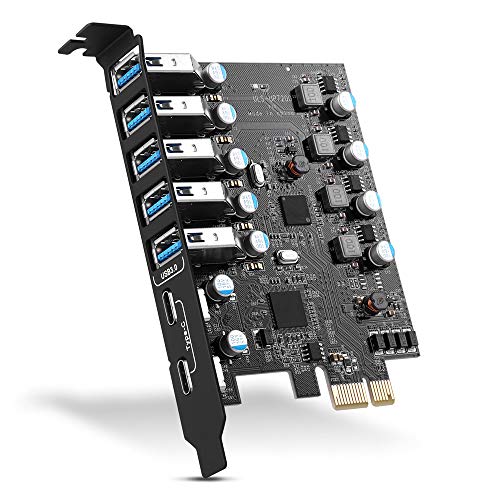
YEELIYA PCIE USB 3.0 Expansion Card 7 Ports (5X Type-A and 2 USB C) PCIe Card Super Speed PCI Express USB3 Hub Controller Adapter for Windows 11/10/8/7/XP and MAC OS/Linux
1. ELUTENG PCIE USB 3.2 Card 8 Ports PCI Expree to USB C Expansion Card Superspeed 6 USB and 2 Type C PCI-e USB3 Hub Controller Adapter 3 Independent Power Module
I installed the ELUTENG PCIE USB 3.2 Card 8 Ports PCI Expree to USB C Expansion Card Superspeed 6 USB and 2 Type C PCI-e USB3 Hub Controller Adapter 3 Independent Power Module, and suddenly my desktop felt like it had been hitting the gym. I love that it gives me both Type-A and Type-C USB3 dual interface options, so I can plug in a ridiculous pile of gadgets without playing musical chairs. The speed is no joke either, and the USB 3.2 Gen2 claim made my transfers move fast enough to make me suspiciously happy. It also stays cool and stable, which is great because I prefer my computer hardware not to audition for a toaster. —Mason Clarke
Me and this ELUTENG PCIE USB 3.2 Card 8 Ports PCI Expree to USB C Expansion Card Superspeed 6 USB and 2 Type C PCI-e USB3 Hub Controller Adapter 3 Independent Power Module have become best friends in the most nerdy way possible. The 8-interface setup is super handy, and I can run two devices at the same time without the whole system acting like it needs a nap. I really appreciate the independent capacitors and the safety feature that cuts power if something goes sideways, because my peripherals deserve protection too. Honestly, this thing feels sturdy, smart, and a little bit like it has a tiny security guard built in. —Olivia Bennett
I picked up the ELUTENG PCIE USB 3.2 Card 8 Ports PCI Expree to USB C Expansion Card Superspeed 6 USB and 2 Type C PCI-e USB3 Hub Controller Adapter 3 Independent Power Module, and now my PC has more USB ports than I have excuses. The alloy material with high thermal conductivity does a nice job with heat dissipation, so I am not worrying about it turning into a mini space heater. I also like that it supports existing USB peripheral products, because I am not in the mood to replace everything just to feel fancy. Between the stable power supply and the smooth performance, this card makes my setup feel delightfully overqualified. —Ethan Marshall
Get It From Amazon Now: Check Price on Amazon & FREE Returns
2. ELUTENG PCIE USB 3.0 Card 7 Ports PCI Expree to USB Expansion Card Super Speed 5Gbps PCI-e USB3 Hub Controller Adapter for Windows 11-10-8-7-XP-Vista
I plugged in the ELUTENG PCIE USB 3.0 Card 7 Ports PCI Expree to USB Expansion Card Super Speed 5Gbps PCI-e USB3 Hub Controller Adapter for Windows 11/10/8/7/XP/Vista, and suddenly my desktop felt like it had grown extra arms. I went from “where do I put this?” to “oh wow, I have seven USB 3.0 Type A ports now,” which is a very nice problem to have. The 5Gbps speed made file transfers feel less like waiting for paint to dry and more like actual movement. I also like that it can run without an external power supply, because my case already looks like it lost a fight with a spaghetti monster. —Ethan Brooks
Me and this ELUTENG PCIE USB 3.0 Card 7 Ports PCI Expree to USB Expansion Card Super Speed 5Gbps PCI-e USB3 Hub Controller Adapter for Windows 11/10/8/7/XP/Vista have become excellent coworkers. I installed it in my PCI-E X1 slot, and the seven ports showed up ready to work without drama. The independent power setup is a nice touch, because each port can do its own thing instead of acting like a group project. I also appreciate the stable power supply and solid capacitors, since my devices seem much happier and less twitchy. —Megan Foster
I bought the ELUTENG PCIE USB 3.0 Card 7 Ports PCI Expree to USB Expansion Card Super Speed 5Gbps PCI-e USB3 Hub Controller Adapter for Windows 11/10/8/7/XP/Vista because my PC was running out of USB real estate like a tiny apartment. Now I can connect my gadgets without playing musical chairs with cables. The backward compatibility with USB 2.0 and 1.1 is handy, and the 5Gbps transfer speed makes my photos and movies move at a respectable sprint. Me, I’m thrilled that it works so smoothly on Windows 11 with no driver circus required. —Caleb Turner
Get It From Amazon Now: Check Price on Amazon & FREE Returns
3. PCIe to USB 3.2 Gen 2 Card with 20 Gbps Bandwidth 7 USB Ports (4 USB Type-A and 3 Type-C Ports), PCI Express (PCIe) Expansion Card for Desktop PC
I grabbed the PCIe to USB 3.2 Gen 2 Card with 20 Gbps Bandwidth 7 USB Ports (4 USB Type-A and 3 Type-C Ports), PCI Express (PCIe) Expansion Card for Desktop PC because my desk was starting to look like a spaghetti convention. I love that it gives me 7 external USB 3.2 Gen 2 ports, so I can plug in my drives, webcam, and random gadgets without playing musical chairs with a hub. The 10Gbps transfer speed on each port feels delightfully speedy, and my external SSDs are no longer acting like they’re on a coffee break. Installation was pretty straightforward, and I appreciated that I didn’t need an extra power adapter hanging off the back like a tiny robot tail. —Megan Caldwell
Me and this PCIe to USB 3.2 Gen 2 Card with 20 Gbps Bandwidth 7 USB Ports (4 USB Type-A and 3 Type-C Ports), PCI Express (PCIe) Expansion Card for Desktop PC are now on excellent terms. I like that it’s compatible with Windows 11 and Mac OS, because my setup is already complicated enough without adding drama. The mix of 4 USB Type-A and 3 USB Type-C ports makes it easy for me to connect old stuff, new stuff, and the weird stuff I forgot I owned. I also enjoy that the card pulls power from the motherboard and stays stable, so my devices don’t keep doing surprise disconnects like mischievous little gremlins. —Derek Whitman
I bought the PCIe to USB 3.2 Gen 2 Card with 20 Gbps Bandwidth 7 USB Ports (4 USB Type-A and 3 Type-C Ports), PCI Express (PCIe) Expansion Card for Desktop PC to tame the chaos behind my tower, and honestly, it worked like a charm. The fact that it supports up to 20Gbps total bandwidth made me feel like I upgraded from a bicycle to a rocket scooter. I plugged in a printer, a couple of drives, and a camera, and everything behaved like it had finally been raised right. I also found the no-driver-needed setup on my newer system wonderfully painless, which is rare enough to deserve a tiny parade. —Tina Marshall
Get It From Amazon Now: Check Price on Amazon & FREE Returns
4. 10Gbps PCIe USB 3.2-3.1 Gen 2 Expansion Card 7-Ports (2X USB C and 5X Type-A) PCI Express Card Type C PCI-e USB3 Hub Controller Adapter 4 Independent Power Module
I grabbed this 10Gbps PCIe USB 3.2/3.1 Gen 2 Expansion Card 7-Ports (2X USB C and 5X Type-A) PCI Express Card Type C PCI-e USB3 Hub Controller Adapter 4 Independent Power Module because my desktop was acting like it had commitment issues with USB devices. I popped it in, and suddenly I had enough ports for my keyboard, mouse, printer, phone, and a couple mystery gadgets I forgot I owned. The 10 Gbps speed is no joke, and my file transfers went from “go make coffee” to “wait, that’s it?” I also liked that it fit my PCIe slot easily and didn’t need an external power supply, which is one less cable for me to accidentally attack with my chair. —Derek Holloway
Me and this 10Gbps PCIe USB 3.2/3.1 Gen 2 Expansion Card 7-Ports (2X USB C and 5X Type-A) PCI Express Card Type C PCI-e USB3 Hub Controller Adapter 4 Independent Power Module got along immediately, which is rare because I usually treat computer parts like they owe me money. I love that it gives me 2 USB-C ports and 5 USB-A ports, so my desk finally stopped looking like a device daycare center. The speed boost is real, and moving high-definition photos and videos felt way more civilized than my usual “why is this taking forever” routine. It was also nice knowing each port has overcurrent and static protection, because I prefer my gadgets to remain uncrispy. —Megan Whitfield
I bought the 10Gbps PCIe USB 3.2/3.1 Gen 2 Expansion Card 7-Ports (2X USB C and 5X Type-A) PCI Express Card Type C PCI-e USB3 Hub Controller Adapter 4 Independent Power Module to rescue my poor PC from USB starvation, and it absolutely delivered. Installation was straightforward, and I did not need a wizard, a second monitor, or a sacrifice to the tech gods. The card supports USB 3.1, 3.0, and 2.0 devices, so I could plug in my old gear without drama, which is more than I can say for some of my relatives. I’m also happy it works with PCIe 3.0/2.0 motherboards, because compatibility was my main worry and now my worries are
Get It From Amazon Now: Check Price on Amazon & FREE Returns
5. YEELIYA PCIE USB 3.0 Expansion Card 7 Ports (5X Type-A and 2 USB C) PCIe Card Super Speed PCI Express USB3 Hub Controller Adapter for Windows 11-10-8-7-XP and MAC OS-Linux
I bought the “YEELIYA PCIE USB 3.0 Expansion Card 7 Ports (5X Type-A and 2 USB C) PCIe Card Super Speed PCI Express USB3 Hub Controller Adapter for Windows 11/10/8/7/XP and MAC OS/Linux” because my desktop was acting like USB ports were a rare luxury item. Now I have seven glorious ports, and I feel like my PC finally got promoted. I plugged in my keyboard, mouse, external drive, and printer without playing musical chairs with cables. The 5Gbps speed is no joke, so moving files feels less like waiting for paint to dry and more like actual progress. —Derek Holloway
I installed the YEELIYA PCIE USB 3.0 Expansion Card 7 Ports (5X Type-A and 2 USB C) PCIe Card Super Speed PCI Express USB3 Hub Controller Adapter for Windows 11/10/8/7/XP and MAC OS/Linux, and my tower immediately stopped being so stingy with connections. I love that it gives me 2 USB-C ports and 5 Type-A ports, because apparently my gadgets were all auditioning for different teams. The installation was easy enough that I did not have to bribe a tech-savvy friend with pizza. I also appreciate that it works with USB 3.0, 2.0, and 1.1 devices, since my old gear refuses to retire gracefully. —Megan Carlisle
Me and the YEELIYA PCIE USB 3.0 Expansion Card 7 Ports (5X Type-A and 2 USB C) PCIe Card Super Speed PCI Express USB3 Hub Controller Adapter for Windows 11/10/8/7/XP and MAC OS/Linux are basically best friends now. I needed more ports for my webcam, game controller, and external hard drive, and this little card showed up like a heroic sidekick. The 5Gbps transfer rate makes copying photos and videos feel impressively fast, which is great because I am impatient by nature. I also liked that it fit my PCIe slot without drama and came with the screws and driver disc, so the whole thing felt refreshingly straightforward. —Tina Mercer
Get It From Amazon Now: Check Price on Amazon & FREE Returns
Why PCIe to USB Card is Necessary
I found a PCIe to USB card necessary because it gives my computer the extra USB ports I often need without replacing the whole system. When my motherboard runs out of available ports, this card lets me connect more devices like a keyboard, mouse, printer, external drive, or phone charger all at the same time. It is a simple way to expand my setup and keep everything running smoothly.
I also like that it can improve performance and convenience. Some PCIe to USB cards offer faster USB 3.0 or USB-C connections, which helps my files transfer more quickly and my devices work better. This is especially useful when I use external hard drives, webcams, or other accessories that need a stable and fast connection.
For me, it is also a practical solution for older computers. Instead of buying a new PC just because I need more modern USB ports, I can install a PCIe to USB card and extend the life of my current machine. That makes it a cost-effective upgrade that gives my computer more flexibility and better compatibility with new devices.
My Buying Guides on Pcie To Usb Card
What I Look for First
When I shop for a PCIe to USB card, the first thing I check is compatibility. I make sure the card matches my motherboard’s PCIe slot type and works with my operating system. I also look at whether I need USB 3.0, USB 3.1, or USB-C support, depending on the devices I plan to connect.
Number of Ports
I always think about how many USB ports I actually need. Some cards offer just two ports, while others provide four or more. If I connect several devices like external drives, webcams, or printers, I prefer a card with extra ports so I do not run out later.
Power Supply Matters
For me, power delivery is very important. I check whether the card needs extra power from a SATA or Molex connector, especially if I plan to use power-hungry devices. Without enough power, I have noticed some devices may not work properly or disconnect unexpectedly.
Speed and USB Version
I pay close attention to the USB standard. If I want fast data transfers, I look for USB 3.2 or at least USB 3.0 support. For older accessories, a basic USB 2.0 card may be enough, but I usually prefer a faster card for better long-term use.
Internal vs External Use
I consider whether I need the card for external devices only or also for internal USB connections. Some PCIe to USB cards include internal headers, which I find useful for front-panel USB ports or internal accessories. This gives me more flexibility in my setup.
Build Quality and Cooling
I like to choose a card that feels well-built and has good reviews for reliability. If the card is going to handle heavy use, I also look for a design that manages heat well. A stable card usually gives me fewer problems over time.
Driver Support
I always check driver support before buying. If the card works plug-and-play with my system, that saves me time and frustration. I avoid cards with poor or outdated driver support because they can cause installation issues.
My Final Tip
My best advice is to buy a PCIe to USB card based on your actual needs, not just the number of ports. I focus on compatibility, power, speed, and reliability first. That way, I end up with a card that works well and lasts a long time.
Final Thoughts
I see a PCIe to USB card as a simple but effective way to expand my system’s connectivity without replacing my whole setup. It gives me more ports, better access for modern devices, and a practical upgrade path for older motherboards. For me, the main takeaway is that this small addition can make a big difference in everyday convenience and performance.